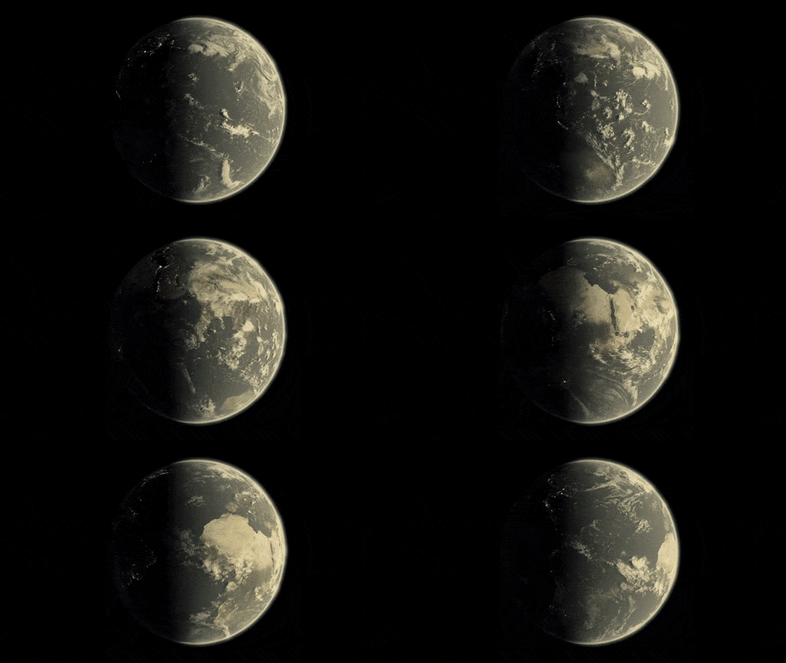
Time is not a straight line. It is a stubborn, fraying rope.
For most of human history, we measured our days by the sun. When the shadow hit the sundial's mark, noon arrived. When the stars turned, the season shifted. But the Earth is a messy, moody clockmaker. Our planet wobbles on its axis. Tides drag at its crust. Earthquakes shift its weight. Deep inside the molten core, liquid iron swirls in unpredictable currents, slowing our rotation by fractions of a millisecond every single day. Discover more on a similar issue: this related article.
Atomic clocks do not care about the Earth. They care about the steady, unyielding hum of cesium atoms, vibrating at a frequency so precise it puts the universe to shame.
By the late 1960s, a collision occurred between these two worlds. The physicists had built clocks that never lied, while the planet continued to spin at its own erratic pace. Left alone, the two timelines would drift apart. Noon would eventually drift into afternoon, and afternoon into dusk. To fix this, humanity invented a strange, invisible patch: the leap second. Additional analysis by CNET highlights similar views on this issue.
Consider what it takes to add a second to human history.
It is not a smooth process. On select days, usually in June or December, engineers around the globe wait for the clock to strike 23:59:59. Then, instead of rolling over to midnight, the world holds its breath for one extra heartbeat. The clock reads 23:59:60.
To a human being, a single second is nothing. It is the blink of an eye. It is the time it takes to draw a ragged breath or catch a dropped pen.
To a machine, a leap second is an eternity of confusion.
Imagine a global financial network routing billions of dollars across continents at the speed of light. Computers do not understand poetic pauses. They thrive on strict, unbroken sequences. When a rogue leap second is injected into the digital bloodstream, automated systems panic. In the past, these extra seconds have crashed airline reservation systems, sent global servers into infinite loops, and scrambled timestamped data for stock exchanges.
The digital infrastructure of the modern world runs on continuous, unbroken rhythm. A stutter in the clock is not a romantic pause; it is a seizure.
For years, metrologists argued behind closed doors. The tension was palpable. On one side stood the traditionalists, who felt a deep, almost spiritual obligation to keep our digital clocks tethered to the rotation of the sun. On the other side stood the architects of the digital age, pleading for sanity, arguing that the cost of keeping cosmic time was breaking earthly systems.
Then came the decision that changed everything. International bodies voted to freeze the insertion of leap seconds for at least a century, allowing the gap between atomic time and celestial time to widen until the discrepancy becomes too large to ignore—a problem for a distant tomorrow.
We have chosen digital harmony over astronomical purity.
We have decided that the machines that guide our lives need stability more than they need the sun.
Yet, as the leap second fades into history, a quiet melancholy remains. We have cut another cord tying our daily existence to the physical mechanics of the solar system. We live behind screens, synchronized to invisible frequencies, further and further removed from the wild, irregular heartbeat of the planet we call home.
The clock ticks forward. No pauses. No hesitation. Just the relentless march of numbers in the dark.