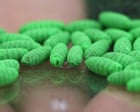
The media is currently hyperventilating over a handful of screwworm cases, treating a standard containment operation like the onset of an ecological apocalypse. Headlines are screaming about outbreaks spreading beyond initial contamination zones, painting a picture of an unstoppable, flesh-eating parasite marching across the American South.
It is a spectacular exercise in historical amnesia and economic illiteracy.
What the mainstream coverage calls an "unprecedented crisis" is actually a predictable, localized fluctuation in a multi-decade biological border war. The panic merchants want you to believe our agricultural biosecurity system is failing. The reality is far more counter-intuitive: the occasional flare-up of Cochliomyia hominivorax (the New World screwworm) is not evidence of a broken system, but proof that our current, absolute-eradication model has reached its logical, diminishing-return limit.
We are spending millions chasing a ghost, ignoring the deeper systemic vulnerabilities of industrial livestock management while hyper-focusing on a single insect.
The Flawed Premise of the Perpetual Quarantine
The lazy consensus among agricultural pundits is simple: step up the quarantine, pour more money into standard containment, and restrict cattle movement until the map turns green again.
This approach completely misses the biological mechanics of how the screwworm was suppressed in the first place. For over half a century, the United States and its partners have relied on the Sterile Insect Technique (SIT). We breed billions of screwworm flies, blast them with radiation to sterilize them, and drop them from airplanes. The wild females mate with the sterile males, lay eggs that never hatch, and the population collapses.
It is a brilliant piece of mid-century genetic engineering. But treating it as a permanent shield is a dangerous delusion.
The current panic treats the border between Panama and Colombia—the Darién Gap, where the permanent sterile fly barrier is maintained—as a static wall. It isn't. The biosphere is fluid. Insisting that a 100% eradication state can be maintained indefinitely across thousands of miles of changing climate and shifting trade routes is a fantasy.
When a few flies slip through via illegal wildlife smuggling or an unchecked trailer, the industry reacts with shock. It shouldn't. In biosecurity, a zero-tolerance policy for infections often creates a fragile ecosystem that collapses under the slightest pressure because ranchers stop looking for the signs.
The Cost of Total Eradication vs. Living with the Margin
Let's look at the cold economic math that the current reporting completely ignores.
The United States was declared free of endemic screwworms in 1966. The cost to maintain the current biological barrier in Central America runs into the tens of millions of dollars annually. When a localized outbreak occurs in the US, the immediate reaction is to deploy federal task forces, restrict regional commerce, and mandate aggressive chemical treatments on herds.
I have spent years watching corporate agricultural entities throw massive capital at minor biological variances because their supply chains are optimized for absolute predictability. They cannot handle a 2% variance in operational cadence.
Imagine a scenario where the cost to eliminate the final 0.1% of a biological threat exceeds the total economic damage that the threat could actually cause to the market. We have passed that threshold with the screwworm.
By treating every isolated detection as a national emergency, the United States Department of Agriculture (USDA) and state agencies inadvertently cause more economic disruption through movement halts and bureaucratic red tape than the larvae themselves inflict on livestock. The cure, quite literally, becomes more expensive than the disease.
Why the "Outbreak" Narrative is Horribly Misunderstood
To understand why the current coverage is so flawed, you have to look at what people are actually asking. If you look at standard consumer queries, the anxiety is palpable: Can screwworms kill humans? Can screwworms ruin the US beef supply?
Let’s answer those with some brutal honesty.
Can they affect humans? Yes. The larvae feed on the living tissue of warm-blooded animals. If you have an open wound and expose it to a fertile female fly, you can get myiasis. But unless you are living in conditions of extreme neglect without access to basic modern sanitation, the risk to the general public is functionally non-existent. Framing this as a public health crisis is sensationalism at its worst.
Can they ruin the beef supply? Not even close. The modern American livestock industry is highly mechanized, intensely managed, and chemically insulated. A screwworm infestation requires an open wound—such as a brand, a tick bite, or a fresh umbilical cord—to take hold. Ranchers who inspect their animals regularly can treat infestations easily with topical parasiticides like ivermectin.
The only operations truly threatened by a minor flare-up are those relying on low-labor, hands-off management models where animals are left unmonitored for weeks at a time. The "crisis" isn't a failure of biosecurity; it is an exposure of lazy animal husbandry.
The Dark Side of the Sterile Insect Weapon
No one wants to talk about the systemic risks of our absolute reliance on the Sterile Insect Technique.
Because we have kept the North American continent entirely free of the parasite for decades, our livestock populations have zero natural resilience. More importantly, our cattle ranchers have lost the muscle memory required to manage the pest. A generation of stockmen has grown up never having to check an ear notch or a castration wound for maggots.
Furthermore, the biological barrier relies on a single massive production facility in Pacora, Panama. If that facility experiences a structural failure, a labor strike, or a localized disease outbreak among the breeding stock, the barrier drops.
By insisting on an all-or-nothing eradication strategy, we have created a single point of failure. The current rise in cases should be treated as a warning shot, but not for the reasons the media thinks. It’s a warning that our centralized, techno-bureaucratic approach to ecology has made the agricultural sector profoundly fragile.
Dismantling the Bureaucratic Playbook
The standard industry response to the current rise in cases follows a tired sequence:
- Declare an emergency zone.
- Pour millions into localized fly releases.
- Imprint strict penalties on small-scale producers who fail to report a single suspicious wound.
This approach protects the major corporate feedlots while crushing the independent rancher. Massive corporate operations can afford the compliance costs, the veterinary oversight, and the supply chain delays caused by quarantine zones. The smallholder, operating on razor-thin margins, is ruined by a three-week movement ban.
If we want a resilient agricultural system, we need to stop treating biology like a software engineering problem where every bug must be patched to zero. We need to shift from a strategy of total eradication to one of managed tolerance and decentralized resilience.
Stop treating the discovery of a few larvae as an ideological failure. Teach ranchers how to identify, treat, and contain the pest locally without triggering a federal panic. Invest in decentralized veterinary infrastructure rather than pouring every dollar into a single fly-breeding mega-factory in Central America.
The flies are going to keep coming. Nature does not respect a bureaucratic decree or a line drawn on a map. The faster the livestock industry accepts that biological perfection is a trap, the faster we can build an agricultural economy that doesn't panic every time an insect lays eggs in a wound.