The red tally light above the camera lens does not flicker when the state comes to take it. It simply dies.
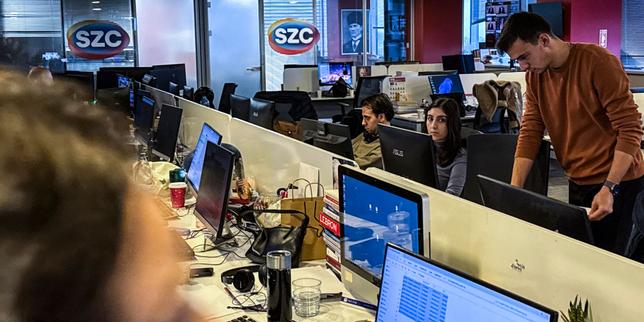
Picture a newsroom in Istanbul just before dawn. Let us call the producer Deniz—a composite, yes, drawn from the dozens of Turkish broadcast journalists who have spent the last decade sleeping with one eye on the police blotter and the other on the broadcast regulator’s midnight faxes. At 5:14 a.m., the smell in Deniz’s edit bay is stale çay and burnt circuit boards. Downstairs, the heavy boots of the financial crimes unit hit the linoleum. By 6:00 a.m., the servers are bagged in static-free plastic, the accounting ledgers are loaded into unmarked vans, and a state-appointed trustee—a kayyım—sits in the managing editor’s ergonomic chair. Read more on a related topic: this related article.
Silence.
For millions of viewers waking up across Turkey, from the damp apartments of Kadıköy to the sun-baked balconies of İzmir, turning on Sözcü TV that morning felt less like changing a channel and more like watching a window get bricked over from the outside. The authorities had raided the broadcaster and placed it under state trusteeship, effectively swallowing the last major independent television network standing in a country of eighty-five million people. Additional analysis by BBC News highlights comparable views on the subject.
To an outsider scrolling past a wire headline in Paris or New York, it looks like another procedural tremor in a notoriously turbulent region. A raid. A regulatory seizure. An opposition outlet silenced. You sigh, maybe feel a passing pang of sympathy for press freedom, and swipe to a recipe or a stock ticker.
That reaction is a mistake. Because what happened inside Sözcü TV is not a distant Turkish anomaly; it is a masterclass in how modern democracies are hollowed out without ever needing to burn a single book in a public square.
The Architecture of a Quiet Takeover
When we think of censorship, our minds default to twentieth-century theater: jackboots kicking down printing press doors, black ink smeared across newspaper columns, crude state propaganda blaring from loudspeakers. Modern autocracy is far more hygienic. It wears a bespoke suit, carries a tax audit folder, and speaks the soothing dialect of corporate compliance.
Consider how the trusteeship mechanism works in Turkey. Under legal frameworks expanded aggressively after the 2016 coup attempt, the state does not need to prove treason in a public trial to seize a private company. A prosecutor merely alleges financial irregularities, tax evasion, or murky links to outlawed networks. Instantly, the courts can appoint a kayyım—a state administrator—to take over management.
Think of it like a hostile corporate takeover where the buyer uses your own tax dollars to pay the lawyers, locks you out of the boardroom, and keeps your company’s logo on the building so the customers don’t notice the new management right away.
I have sat in newsrooms across Istanbul over the past fifteen years, watching this exact playbook unfold in slow motion. First came the Doğan Media Group in 2018—once the titan of Turkish journalism, home to Hürriyet and CNN Türk—sold off to a pro-government conglomerate after years of crushing tax fines. Then came the slow strangulation of smaller outlets through advertising bans imposed by the Press Advertising Agency, starving critical newspapers of state notices while feeding loyalist tabloids millions in public funds.
Through all of it, Sözcü—first as a fiercely Kemalist, secularist daily newspaper, and later through its television arm, Sözcü TV—remained an irritant the palace could not easily scratch. It was loud. It was populist. It was unapologetically adversarial. When inflation hollowed out the Turkish lira and families stood in municipal queues for subsidized bread, Sözcü TV put the cameras on the faces in line. When earthquakes leveled southern cities in 2023 and state rescue teams arrived agonizingly late, Sözcü’s anchors did not read government press releases; they read the names of the missing.
That visibility was its crime. In an ecosystem where roughly ninety percent of mainstream national media has been consolidated into hands friendly to President Recep Tayyip Erdoğan’s administration, Sözcü TV was the final crack in the glass.
The Invisible Stakes of the Living Room
Why does a single television channel matter in the age of smartphones, encrypted messaging apps, and viral social media clips? If you want the truth in Istanbul today, can’t you just open X, YouTube, or Telegram?
Ask a retired schoolteacher in Bursa. Ask a shopkeeper in Adana.
Social media is an echo chamber for the already convinced and a minefield of state-sponsored bot farms for everyone else. Television, by contrast, is the hearth of the Turkish household. It runs in the background during breakfast, murmurs through afternoon tea, and anchors the evening meal. When an opposition channel broadcasts live from the studio, it confers something that a shaky smartphone video on YouTube never can: legitimacy. It tells an isolated citizen sitting in a conservative province that they are not crazy, they are not alone, and their anger over the price of tomatoes or the imprisonment of an elected mayor is shared by millions.
Take away that broadcast license—or better yet, hand the microphone to a state-appointed trustee who quietly softens the headlines, cancels the sharpest political talk shows, and replaces investigative segments with benign travelogues—and you break the circuit of collective reality.
This is the psychological genius of the kayyım system. The channel doesn't go to static. The news anchors may even stay on air for a few weeks, reading sanitized copy under the watchful eye of bureaucrats who wouldn't know a scoop from a subpoena. To the casual viewer, the furniture is still in the exact same place. Only the air in the room has been replaced with carbon monoxide.
Let us return to our hypothetical producer, Deniz, standing on the sidewalk outside the Sözcü TV building after the raid. His press badge is still clipped to his belt, though the electronic keycard inside it no longer opens the turnstile. Around him, camera operators smoke cigarettes in silence, their phones buzzing with messages from colleagues at rival networks—messages filled with half-hearted solidarity and unmistakable relief that the axe fell somewhere else this morning.
What does Deniz do now?
If he stays under the trustee, he becomes a stenographer for the very power he spent twenty years holding to account. If he walks out, there is nowhere left to go. The independent digital outlets that still survive—places like Medyascope, Bianet, or T24—operate on shoestring budgets, crowdfunded grants, and the sheer stubbornness of journalists willing to work for a fraction of a living wage while facing constant prosecution under Turkey’s sweeping "disinformation" laws.
The Anatomy of Self-Censorship
There is a moment in every journalist’s life under authoritarian drift when the external censor becomes redundant. You internalize the cop.
I remember sitting in a café near Taksim Square years ago with a veteran Turkish columnist who had survived three military coups and four prime ministers. He pulled out a napkin and drew two concentric circles. "The outer circle," he said, tapping his pen on the paper, "is the red line everyone knows. You don't insult the president. You don't touch the military operations in the southeast. You don't question the family's foundations."
He tapped the inner circle. "This is the real prison. This is where you start asking yourself whether a story about a poisoned river in Anatolia might upset the local governor, who is friends with a minister, who controls the construction permits for your publisher's other businesses. So you kill the story yourself. Nobody arrests you. Nobody raids your office. You just slowly shrink until you fit inside the box."
Sözcü TV refused to shrink. That refusal required immense financial and legal exposure, and in a system where the judiciary operates as an extension of executive will, exposure is fatal. When prosecutors launch a financial investigation into a media company, the guilt or innocence of the shareholders is almost beside the point. The process is the punishment. Freezing bank accounts, seizing servers, and installing trustees achieves the political objective years before a judge ever bangs a gavel.
And look at the timing. Media crackdowns rarely happen in a vacuum; they are weather vanes for political anxiety. Whenever economic pressure mounts, whenever municipal opposition gains momentum, whenever an election—early or scheduled—looms on the horizon, the state tightens its grip on the narrative machinery. By neutralizing Sözcü TV, the authorities did not merely punish a broadcaster; they preemptively cleared the battlefield before the next political storm could gather.
What Happens When the Watchdog Sleeps
To understand the tangible cost of losing an investigative broadcaster, you have to trace the money and the concrete.
In Turkey, the line between state governance and mega-construction projects has been blurred for two decades. Highways, bridges, hospitals, and sprawling housing developments form the economic engine of the ruling coalition. When independent journalists are watching, bid-rigging becomes risky. Environmental shortcuts get exposed. Substandard building codes—the silent killers that turned apartment blocks into concrete pancakes during the 2023 earthquakes—face public scrutiny before the mortar dries.
When the last major television cameras are turned off or handed over to state trustees, corruption does not merely increase; it becomes invisible. Without a broadcaster capable of reaching ten million living rooms at eight o'clock at night, a whistleblower inside a ministry has no amplifier. A mother fighting for accountability after a factory explosion has no studio lights to illuminate her grief.
People often ask why Turkish citizens don't simply rise up in the streets every time a newspaper is shuttered or a television network is seized. It is an easy question to ask from a sofa in a country where riot police do not greet peaceful assemblies with tear gas and water cannons, and where a single critical tweet does not cost a civil servant their pension or land a university student in pre-trial detention for eight months.
Fatigue is a political weapon. When crisis follows crisis—currency collapses, mass arrests of opposition mayors, constitutional standoffs, media raids—the human nervous system eventually numbs itself just to survive the workday. You worry about your child’s school fees. You worry about the rent doubling in Kadıköy. You turn off the news because watching the country you love get dismantled in real time hurts too much.
The architects of media capture count on that exhaustion. They know that outrage has a half-life, and once the headlines move on, the kayyım remains in the chair.
The Echo Beyond the Bosphorus
It is tempting to treat Turkey as a cautionary tale safely quarantined across the Mediterranean, a place with unique historical baggage where democracy was always fragile. That comfort is an illusion.
Look closely at the mechanisms deployed against Sözcü TV: weaponized tax audits, regulatory harassment disguised as financial oversight, slander campaigns painting journalists as traitors or financial criminals, and the systematic consolidation of media ownership into the hands of ideological allies. None of these tools require a dictatorship to function. They operate entirely within the polished shell of legalism, using courts, regulators, and corporate law to suffocate dissent without ever declaring martial law.
We see echoes of this choreography from Budapest to New Delhi, and in quieter, creeping forms across Western democracies where billionaire owners, algorithm shifts, and strategic lawsuits against public participation increasingly dictate which stories live and which die in darkness. The Turkish model is simply further down the road—a preview of what happens when a society allows its independent press to be picked off one outlet at a time while telling itself that each individual raid was just a tax dispute or a regulatory matter.
Back on the sidewalk in Istanbul, night falls early over the Bosphorus. The ferries still cut white wakes through the dark water between Europe and Asia, carrying millions of commuters home through the chill. Inside the Sözcü TV building, the studio lights are switched back on for the evening broadcast. The anchors sit behind the polished desk. The graphics spin cleanly across the screen. To anyone flipping past the channel, everything looks entirely normal—except that the questions nobody wanted asked will never be spoken into the microphone again.