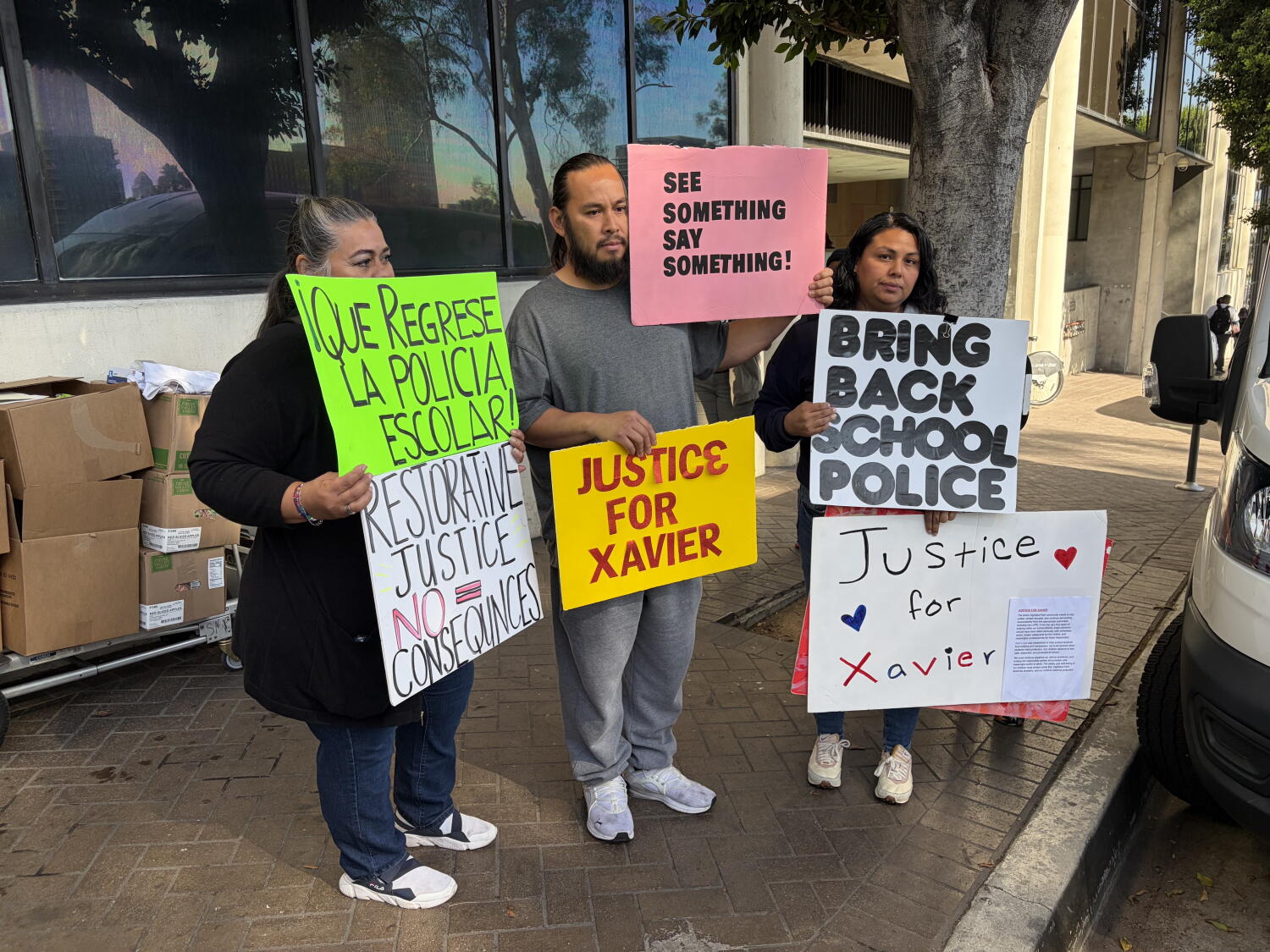
Grief demands an enemy. When a student dies in a fatal fall at school, the reflex is instant, loud, and predictable. Families demand tougher security. Districts promise more patrols. Headlines treat a complex, agonizing tragedy like a simple lock-and-key failure.
That reaction is comforting. It is also dangerously incomplete. Don't miss our earlier post on this related article.
Whenever a tragedy strikes a campus—whether at a bustling urban school like Franklin High or a quiet suburban campus—the lazy consensus forms within hours. More guards. Locked doors. Extra cameras. Stricter accountability for administrators. On paper, it looks like decisive action. In reality, it is often institutional theater designed to protect reputations rather than prevent the next catastrophe.
I have spent years advising organizations and public institutions on safety systems, risk architecture, and crisis response. I have watched leadership teams pour millions of dollars into visible security upgrades right after a tragedy, only to leave the underlying environmental, operational, and psychological blind spots untouched. A badge scanner does not fix a design flaw. A patrol car idling near a courtyard does not stop a split-second crisis on an upper balcony or stairwell. If you want more about the history of this, NBC News offers an excellent breakdown.
Real accountability is necessary. Families who lose a child deserve answers, honesty, and structural change—not canned press releases or defensive stonewalling. Yet equating accountability with piling on superficial security measures confuses motion with progress.
The False Comfort of Guard-Heavy Campus Safety
Ask most people how to make a school safer after a fatal fall, and you will hear the same answer: tighten security and hold someone responsible. That framing treats a school building like a high-security vault rather than a living, crowded, high-traffic environment filled with teenagers operating under intense social, academic, and emotional pressure.
Security personnel have real value. They can deter trespassers, manage emergencies, clear hallways during lockdowns, and act as calm adults when chaos erupts. Pretending guards are useless would be reckless. Pretending a bigger security footprint solves fatal falls is wishful thinking.
Consider the basic mechanics of how fatal falls happen in multi-level buildings. They rarely occur because a mysterious intruder slipped past a front desk. They happen near rooflines, ledges, stairwells, unguarded drop-offs, open windows, or elevated walkways—places where building geometry, supervision gaps, impulse, distress, or horseplay intersect in seconds. A guard stationed at a main entrance or patrolling a ground-floor corridor cannot be inside every stairwell or beside every ledge at the exact moment gravity takes over.
When districts respond to a tragedy by adding security headcount without auditing physical hazards and supervision blind spots, they create an illusion of control. Parents feel slightly less helpless. Board members can point to a budget line item. Meanwhile, a poorly designed railing, an unlocked roof access point, or an unmonitored upper tier stays exactly as it was.
Security theater makes adults feel like they did something. Physical safety engineering makes tragedy harder to occur in the first place.
There is another trap in the standard narrative: treating "accountability" as a hunt for a single villain. When a tragedy occurs, public anger naturally looks for someone to blame—a principal, a supervisor, a district official. Holding negligent institutions accountable for ignored warnings or broken rules is essential. Yet reducing every failure to individual malice or laziness misses how complex systems break. Often, a fatal incident is the result of stacked small failures: outdated architectural standards, unclear supervision protocols, understaffed monitoring, and a culture where minor hazards are normalized until someone pays with their life.
Why "Who Is to Blame?" Is the Wrong Starting Point
Search queries after any high-profile campus tragedy tend to cluster around two questions: How do we increase school security? and Who is held accountable when a student dies at school? Both questions come from a place of pain and urgency. Both also steer attention away from the questions that actually reduce future risk.
The better question is not simply, "How many more eyes can we put on campus?" It is, "Where does our physical environment and daily routine leave zero margin for error?"
In safety engineering and human factors—a discipline shaped by thinkers like James Reason, known for the Swiss cheese model of system accidents—catastrophes rarely stem from a single isolated mistake. They happen when holes in multiple layers of defense align at the same moment. A distraction. A misjudgment. A physical barrier that is too low or too easy to climb. A lack of immediate intervention.
Think about how we design almost everything else when the stakes are high. Aviation, industrial manufacturing, and bridge construction do not rely solely on people "paying closer attention" or being punished after a crash. Engineers build physical guardrails, redundant barriers, fail-safes, and clear sightlines so a single moment of human error does not become fatal.
Imagine a scenario where a school has a three-story atrium with a waist-high glass barrier and a wide ledge along the edge. A student leans back, sits on the ledge, or loses balance during a crowded passing period. Even if a security guard walks past ten seconds later, the physical geometry already created the hazard. Raising the barrier height, eliminating climbable ledges, restricting access to high-risk zones, and placing eyes where drop-offs exist changes the odds far more reliably than hiring another guard to walk a hallway.
When we focus almost exclusively on security enforcement and post-hoc blame, we treat human behavior as something we can simply police into perfection. Teenagers are not robots. They push limits, misjudge risks, experience sudden emotional crises, and move in crowds. Any safety plan that assumes teenagers will always act cautiously—or that guards can predict every impulse—is built on sand.
Common Questions People Ask After a Campus Fall
Do more school security guards prevent accidental or crisis-related falls?
Only in narrow situations, such as when a staff member spots a hazard or a student in distress early and intervenes in time. Guards are not a substitute for physical fall prevention, secure access controls on elevated areas, and proper supervision in high-risk zones.
What does real institutional accountability look like after a student death?
It starts with transparency, independent review, and fixing verified system failures rather than hiding behind legal boilerplate. True accountability means publishing what went wrong, correcting physical and procedural hazards, and verifying that changes actually hold over time.
Should schools prioritize surveillance cameras or physical barriers?
Physical barriers and hazard elimination come first because cameras only record events—they do not stop a fall in progress. Cameras help with investigation and monitoring, but a solid physical barrier prevents the drop entirely.
The Uncomfortable Trade-Offs of Taking Safety Seriously
If physical barriers, strict access controls, and honest system audits work better than security theater, why don't institutions jump straight to them? Because real safety work is expensive, slow, and politically inconvenient.
Upgrading railings, securing roofs and balconies, redesigning access points, and maintaining proper staffing ratios cost real money. Unlike hiring a few extra guards or issuing a stern statement, capital improvements require budgets, permits, inspections, and time. Districts under financial strain often look for cheaper, faster optics.
There is also a tension between safety and openness. Schools are meant to be places of learning, growth, and community—not prisons. Lock everything down indiscriminately, turn every hallway into a checkpoint, and you can create an oppressive atmosphere that damages trust between students and adults. Trust matters enormously in crisis prevention; students who feel alienated or surveilled are less likely to seek help when they are struggling.
Even my own contrarian push toward environmental design and system accountability has limits and downsides. Focusing heavily on physical hazards and institutional systems can sometimes sound too clinical when a family is grieving a sudden, violent loss. People hurting from a tragedy need empathy and moral clarity, not a lecture on architecture. Furthermore, no physical barrier or policy can eliminate every tragic choice or freak accident in a complex world. Pretending we can engineer away all risk is another form of delusion.
Still, acknowledging limits is not an excuse for inaction. It is a call to put resources where they actually matter instead of chasing easy headlines.
What Actually Works When Tragedy Strikes
When a family calls for security and accountability after a devastating loss, they are expressing a fundamental truth: the system failed to protect someone precious, and pretending everything is fine is unacceptable. Honor that demand by doing the hard work, not the easy work.
Start with a blunt physical audit of every elevated surface, stairwell, window, roof access point, and open drop-off on campus. Measure barrier heights. Look for climbable ledges, footholds, or unlocked doors that should never be open. Fix physical vulnerabilities first, because steel, height, and controlled access do not blink or take breaks.
Demand independent, thorough investigations into how policies were followed or ignored leading up to the incident. Real accountability means looking at communication breakdowns, ignored maintenance requests, and supervision gaps—not just scapegoating the lowest person on the org chart or protecting senior leadership from embarrassment.
Pair physical safeguards with real human support. Train staff to recognize acute distress early, keep counseling and crisis support accessible without stigma, and maintain consistent adult presence in high-traffic and high-risk areas.
Stop settling for visible toughness that leaves real hazards standing. Build environments that forgive a moment of distraction, punish negligence with real reform, and treat every student's life as worth more than a press release.