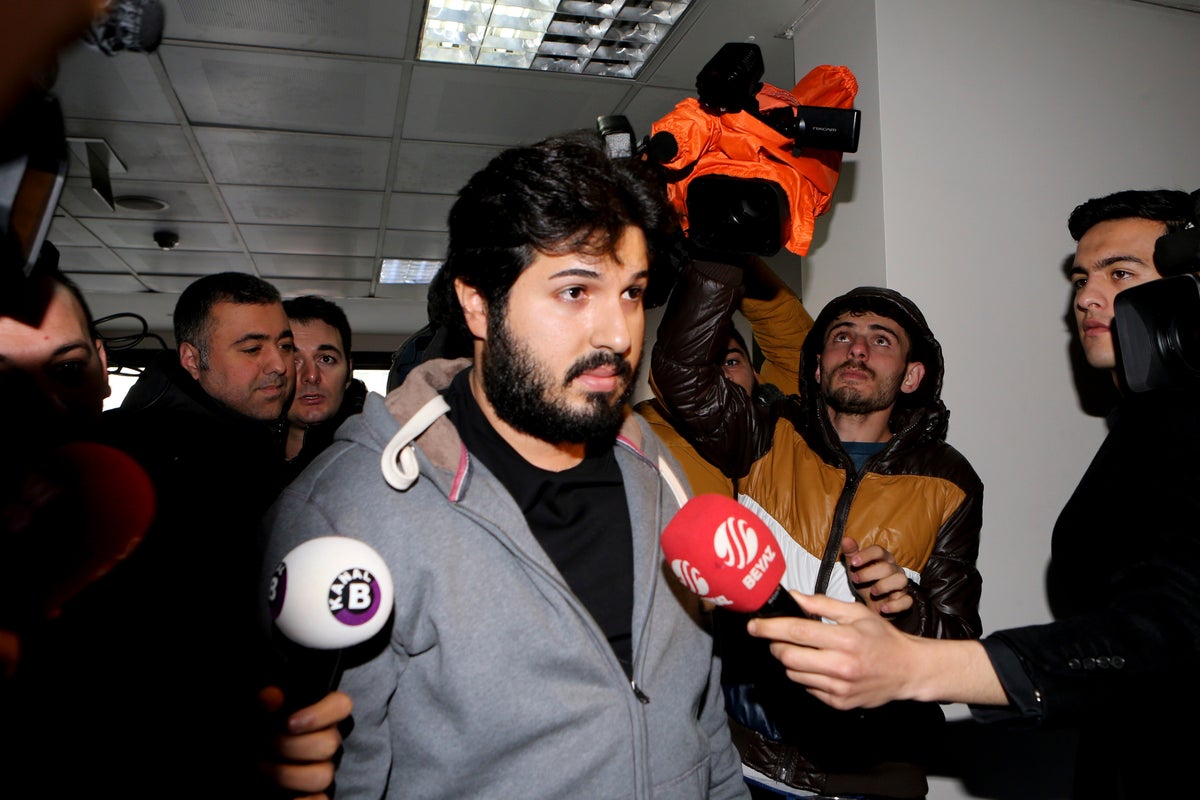
The mainstream media loves a neat, cinematic geopolitical narrative. A flashy gold trader is arrested. Billions of dollars move through shadow banking systems. Diplomatic cables catch fire, and suddenly, we are told a single court case in New York "strained US-Turkey relations to the breaking point."
It is a comforting bedtime story for bureaucrats. It suggests the international financial system works exactly like a crime procedural—that Washington enforces rules, Ankara pushes back, and a Turkish-Iranian gold trader named Reza Zarrab was the epicenter of a massive geopolitical rift.
It is also completely wrong.
The breathless reporting around Zarrab’s sentencing to time served ignores the cold, transactional reality of statecraft. The Zarrab affair did not cause the fracture between Washington and Ankara; it merely exposed a structural divergence that was already set in stone. Believing a gold trader broke the US-Turkey alliance is like blaming the thermometer for the fever.
The Myth of the Sovereign Shock
Mainstream journalists treat sanctions enforcement as a moral crusade. When Halkbank—Turkey’s state-owned bank—was implicated in the multi-billion-dollar "gas-for-gold" scheme to bypass Iranian sanctions, the consensus was immediate: Turkey was acting as a rogue state, sabotaging Western security for quick cash.
Let’s dismantle that premise.
I have spent years analyzing cross-border capital flows and the backroom deals that govern economic warfare. Nation-states do not destroy multi-decade strategic alliances over a compliance breach. They do it over fundamental misalignments of national interest.
When Zarrab was arrested in Miami in 2016, the US-Turkey relationship was already hollowed out. The true friction points had nothing to do with gold bars or Manhattan courtrooms. They were entirely structural:
- The Syrian Civil War: Washington was actively arming Kurdish YPG militias, which Turkey views as an existential terrorist threat directly linked to the PKK.
- The 2016 Coup Attempt: Ankara blamed Fethullah Gülen, a cleric living in Pennsylvania, and grew furious at Washington's refusal to extradite him on demand.
- The S-400 Missile Deal: Turkey chose to purchase Russian air defense systems, fundamentally incompatible with NATO architecture.
Against this backdrop, the Zarrab case was not a geopolitical crisis. It was leverage.
Washington’s Selective Amnesia on Sanctions Architecture
The public is led to believe that Treasury sanctions create an impenetrable wall around target economies. If a crack appears, it must be the work of a criminal mastermind like Zarrab or a corrupt foreign minister.
This view fundamentally misunderstands how international trade functions under secondary sanctions.
Trade, like water, finds the path of least resistance. When you sanction a massive energy exporter like Iran, you do not stop the demand for energy; you merely subsidize the premium for smuggling it.
Turkey shares a 330-mile border with Iran. In the early 2010s, Turkey was entirely dependent on foreign energy imports, and Iran was its primary supplier of natural gas. Washington’s sanctions regime forced Turkey into a corner: starve its domestic industrial base or find a loophole.
The "gas-for-gold" mechanism was not a secret underground conspiracy hatched in a smoky room. It was a glaring, predictable structural flaw in the sanctions design itself. Turkey used Iranian gas, paid for it in Turkish liras deposited into Halkbank, and those liras were then used to buy gold, which was shipped to Dubai and ultimately turned into hard currency for Tehran.
To suggest this "strained" relations implies Washington was shocked by it. They weren't. They knew the math. They tolerated the leakiness of the system for years because enforcing a total embargo would have collapsed the Turkish economy—a key NATO ally—long before it collapsed Iran's.
The Courtroom Theater: Why Time Served Makes Perfect Sense
When Zarrab flipped to become the U.S. government's star witness, the media predicted a diplomatic apocalypse. He testified against Mehmet Hakan Atilla, the deputy general manager of Halkbank. He implicated high-level Turkish officials. The headlines screamed that this was the end of bilateral cooperation.
Yet, look at the actual outcome. Zarrab spent years in a sort of luxurious federal custody, vanished into a witness protection program, and emerged with "time served."
If the Zarrab affair was truly the existential crisis reporters claimed, why did it end with a whimper?
Because the entire trial was an exercise in geopolitical theater. The Department of Justice needed the data Zarrab possessed to map out the financial networks of the Islamic Revolutionary Guard Corps (IRGC). Once they had the data, Zarrab’s utility dropped to zero. For all the moral grandstanding about upholding the rule of law, the resolution of the case was a classic, transactional asset swap. Zarrab traded names for his freedom; Washington traded a harsh sentence for intelligence.
Ankara blustered publicly to satisfy domestic nationalists, but behind closed doors, the status quo remained untouched. Halkbank was fined, Turkey grumbled, and the underlying business of hosting U.S. nuclear weapons at Incirlik Air Base continued.
The Flawed Premise of "People Also Ask"
If you look at the public interest surrounding this case, the questions asked are fundamentally broken.
Did Turkey help Iran evade sanctions out of hostility toward the West?
No. Turkey helped Iran because of basic economic survival and geographic reality. Western analysts sitting in Washington apartments routinely forget that Turkey cannot simply unplug its economy from Middle Eastern energy grids. Ankara’s actions were driven by domestic necessity, not ideological alignment with Tehran.
Did the Zarrab trial destroy US-Turkey trust?
You cannot destroy what does not exist. Trust between Washington and Ankara was already dead by 2016. The trial was used by both sides as a convenient scapegoat. For the U.S., it was a tool to penalize Turkey for its independent foreign policy. For President Erdoğan, it was a perfect narrative to show his domestic base that the West was waging an economic war against Turkey.
The Price of Counter-Intuitive Foreign Policy
There is a downside to seeing the world through this realist lens. It forces you to abandon the comfort of moral binaries. It means admitting that international law is a polite fiction used by powerful states when convenient, and discarded when it gets in the way of realpolitik.
If you are an international business operating under the assumption that compliance is a purely legal issue, you are exposed. The Zarrab case proves that compliance is deeply political. Halkbank didn't get caught because their compliance officers were lazy; they got caught because the geopolitical wind shifted, and Washington decided it was time to collect on a debt.
Stop analyzing global events through the lens of individual actors and legal briefs. Reza Zarrab was a symptom, not the disease. The US-Turkey relationship changed because the Cold War ended, regional priorities shifted, and Ankara decided it no longer wanted to be a subordinate outpost of Western foreign policy. A billions-of-dollars gold laundering scheme was just another Tuesday in the history of global trade.

