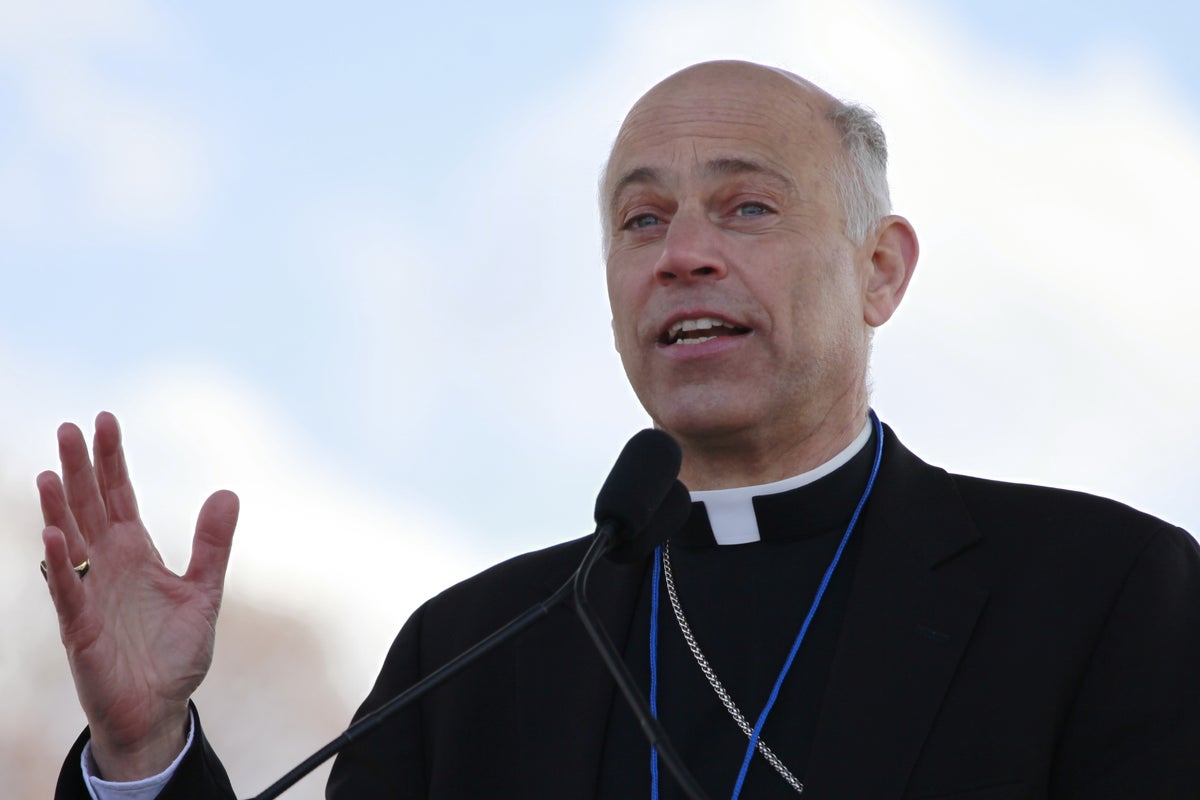
The $395 Million Illusion
The headlines are predictable. "Justice served." "A historic day of reckoning." As the San Francisco Archdiocese agrees to a $395 million settlement with hundreds of survivors of clerical sexual abuse, the media is running its standard playbook. They treat the dollar amount like a scoreboard, suggesting that a massive financial payout equates to systemic reform or genuine resolution.
It is a comforting narrative. It is also entirely wrong. If you liked this piece, you might want to check out: this related article.
This massive settlement is not a sign of institutional accountability; it is a clinical, corporate risk-management maneuver designed to buy silence, freeze litigation, and ensure survival. By focusing exclusively on the staggering headline number, the public misses the cold mechanics of how modern institutions navigate moral bankruptcy through Chapter 11. The $395 million figure is an illusion of consequence. In reality, the system is working exactly as it was designed to protect the entity, not the victims.
The Strategic Masterclass of Chapter 11
To understand why this settlement is a win for the bureaucracy of the Church, look at the timeline. The Archdiocese filed for Chapter 11 bankruptcy protection in August 2023, citing more than 500 lawsuits unleashed by California’s AB 218—a law that temporarily opened a window for decades-old childhood sexual abuse claims. For another angle on this development, see the latest coverage from NBC News.
The casual observer views bankruptcy as total ruin. Corporate lawyers know better. Bankruptcy is a shield.
When an organization like the Archdiocese enters bankruptcy court, it triggers an automatic stay on all pending litigation. Individual plaintiffs lose their right to drag church leadership through discovery, depositions, and public trials. The narrative shifts immediately from a horrific moral reckoning to an algorithmic math problem handled by specialized restructuring attorneys.
How the Corporate Shield Works
- Centralization: Hundreds of unique, devastating individual stories are consolidated into a single class of creditors.
- Asset Insulation: Parishes, schools, and specific real estate holdings are frequently held under separate legal corporations sole. The central administration claims poverty while the underlying real estate remains insulated.
- The Injunction: The ultimate prize of a Chapter 11 reorganization plan is a permanent injunction. Once this settlement is finalized and approved by the court, the Archdiocese is legally immunized from future liability regarding these specific claims.
I have watched institutions burn millions of dollars on crisis PR to spin these moments as "healing initiatives." Let’s drop the charade. This is a debt restructuring mechanism. The Church used the legal system to cap its liabilities, stop the public bleeding of discovery, and secure an existential guarantee for its future operations.
Who Actually Pays the $395 Million?
The media frames this as the Church paying for its sins. That premise collapses under basic financial scrutiny.
Archdioceses do not keep $400 million in liquid cash sitting in a vault. The funding of this settlement is a complex jigsaw puzzle of insurance contributions, asset liquidation, and loan restructuring.
| Funding Source | Institutional Impact | Real Victim |
|---|---|---|
| Historical Insurance Policies | Zero current cash flow impact | Future policy premiums |
| Real Estate Divestment | Sale of non-essential parcels | Local communities losing non-profit spaces |
| Parish Assessments | Internal reallocation of capital | Lay believers who fund the pews weekly |
A significant portion of this money will come from decades-old insurance policies fought over in secondary lawsuits. Another chunk will come from selling off real estate assets. The central administration will continue to exist, its leadership will remain intact, and the actual financial pain will be pushed downward to local parishes, schools, and community programs funded by ordinary parishioners who had nothing to do with the crimes.
The institution does not feel the pain; the community does. Treating a bankruptcy settlement as a punitive victory ignores the fact that the leadership who enabled the crisis rarely suffers a single financial consequence.
The Flawed Premise of "People Also Ask"
Look at the standard questions circulating around this case. The premise of the public discourse is fundamentally broken.
"Will this bankrupt the Catholic Church in San Francisco?"
No. It will streamline it. Chapter 11 is not liquidation (Chapter 7); it is reorganization. The Archdiocese will emerge leaner, legally insulated, and free from the overhang of existential litigation. They lose some property; they keep the franchise.
"Does this settlement bring closure to the survivors?"
Money provides resources for therapy and a stark validation of harm, but treating a financial transaction as "closure" is a corporate lie designed to let the public move on. True institutional reform requires structural transparency, the total elimination of clerical privileges, and the independent oversight of internal archives. A cash payout guarantees none of these. It actually prevents the public trials that would expose how deep the rot went.
The Dangerous Precedent of the Payout Structure
There is an uncomfortable truth that nobody in the legal tech or corporate defense world wants to say out loud: Mass tort settlements favor the system, not the individual.
When a lump sum like $395 million is negotiated for over 500 claimants, the money is not distributed evenly. It is funneled into a trust overseen by a plan administrator.
- The Legal Toll: Before a single victim sees a dime, plaintiff attorneys will take their cut—frequently ranging from 33% to 40% of the gross settlement, plus millions in accumulated expenses.
- The Matrix: Claimants are then subjected to a point system or an evaluation matrix that quantifies their trauma based on severity, duration, and corroboration.
- The Dilution: After legal fees and administrative costs, individual payouts are heavily diluted. A victim who endured years of systemic abuse might end up with a fraction of what a jury would have awarded in a standalone civil trial.
By forcing a global settlement through bankruptcy, the Archdiocese effectively capped the value of human suffering to a predictable corporate line item. They turned a moral crisis into an administrative payout process.
Stop Demanding Payouts; Demand the Archives
If the public wants to change how powerful entities respond to systemic abuse, the strategy must pivot away from chasing massive financial figures. Money is a resource the system can always manufacture, borrow, or extract from its base.
The only thing an opaque institution fears is total exposure.
Instead of cheering for a $395 million settlement that acts as a legal curtain drop, the focus must shift to non-monetary, structural demands that cannot be wiped out by a bankruptcy court:
- Unconditional Archive Access: Full, unredacted release of all internal personnel files, secret archives, and correspondence regarding abusive clergy to public law enforcement and independent historians.
- Stripping Corporate Sole Protections: Legislation that pierces the corporate veil of religious institutions, treating the entire network of parishes and schools as a single financial entity during litigation so assets cannot be hidden in separate legal shells.
- The Elimination of Private Mediation: Banning non-disclosure agreements (NDAs) and private arbitration clauses in settlements involving organizational harm to minors.
The San Francisco Archdiocese did not settle because they suddenly found their moral compass. They settled because the financial model of Chapter 11 gave them an exit strategy that protects their core assets and terminates their legal liability.
Celebrating this payout as a triumph of justice is a fundamental misunderstanding of power. The check will clear, the lawyers will take their millions, the permanent injunction will be signed, and the institution will keep its doors open. That isn't accountability. It’s capitalism.