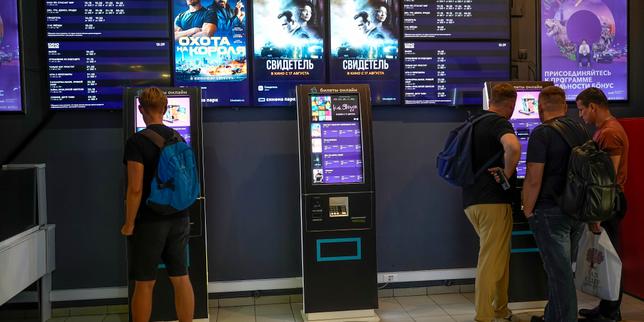
Read enough coverage of Russian movie theaters and you get the exact same story on repeat. Heavy-handed state censors. Patriotic blockbusters shoved down throats. Audiences sitting in the dark absorbing marching orders straight from the Kremlin.
Neat story. Lazy analysis.
I have spent years watching media systems up close, and I have seen analysts, cultural critics, and studios blow millions misreading how audiences actually behave under state pressure. When commentators treat Russian cinema like a giant Soviet megaphone, they confuse noise with persuasion. Worse, they ignore the commercial and psychological mechanics running inside those multiplexes every single night.
Propaganda exists. Censorship is real. Nobody serious denies that the Russian state polices cultural boundaries, funds ideological projects, and punishes filmmakers who cross red lines.
Yet assuming that state control equals audience mind-control is an analytical shortcut. It lets outsiders feel smart without doing the harder work of explaining why people buy tickets, what stays on screen, and where the state's grip actually frays.
The Lazy Consensus About Cinema as Mind Control
The standard narrative treats theatergoers as passive sponges. A ministry signs off on a script, a studio shoots a historical epic or a gritty war drama, seats fill up, and citizens walk out with rewired politics.
That model breaks down the second you look at human behavior. People do not go to the movies to be lectured. They go for escapism, spectacle, romance, laughs, or a break from grim news cycles. Even when a film carries explicit state themes, viewers filter it through their own fatigue, irony, cynicism, and personal memory.
Media theorists from Harold Lasswell to Elihu Katz have argued for decades that direct "hypodermic" effects rarely work as cleanly as authorities hope. Audience reception is messy. When viewers sense heavy-handed messaging, they often tune out, roll their eyes, or treat the film like background noise before hitting a café.
Calling Russian cinemas pure brainwashing centers misses a deeper truth. The Kremlin does not just want applause. It wants compliance, distraction, and an absence of organized pushback. Those are not the same thing. A bored viewer who shrugs at a state-backed drama is very different from a zealous convert.
You Are Asking the Wrong Question About Censorship
Most coverage asks a deceptively simple question: How is the Kremlin using movies to brainwash the public?
That question already leads you into a ditch. It assumes the state's primary win is ideological conversion inside the screening room.
A sharper question is this: How does cultural gatekeeping reshape the market when foreign blockbusters vanish, budgets get political, and risk becomes career suicide?
When you ask that question, the picture changes fast. Censors do not have to rewrite every line of dialogue if producers self-censor before pitching a project. Nobody needs a commissar standing behind the camera when a director already knows which themes get funding killed, which distributors get pressured, and which careers stall overnight.
Pre-emptive caution is cheaper for the state than overt bans. It keeps the system tidy. It also makes outside observers over-index on dramatic censorship moments while overlooking quiet structural distortion.
What People Actually Ask About Russian Movie Theaters
Do Russians actually love state-backed patriotic films?
Sometimes they watch them. Loving them is another story.
Box office numbers alone do not prove ideological devotion. If a high-budget action picture or historical drama has big production values, stars, and a wide release in a crowded holiday slot, people will buy tickets—especially when options feel narrower or ticket prices and timing line up with a night out.
Audience turnout tracks convenience, entertainment value, and social routine far more closely than political purity. A packed auditorium does not mean a radicalized crowd. Often it just means people wanted two hours out of the cold.
Is censorship in Russian cinemas really total?
No, and pretending it is total makes you blind to contradictions that expose how the system works.
Cultural enforcement in authoritarian and semi-authoritarian systems rarely operates like a Swiss watch. Agencies overlap. Commercial interests clash with ideological directives. Regional exhibitors care about keeping lights on and seats filled, while ideological hardliners care about messaging and optics.
Imagine a scenario where a theater chain owner faces a choice between a loud, politically approved release that draws half a room and a commercially reliable genre title that sells out evening shows. Over time, economic survival pushes operators to care deeply about audience appetite, even inside a tightly policed environment.
Friction happens inside the machine. Ignoring those cracks makes the state look omnipotent when it is often just reactive, clumsy, or selective.
Can art survive when funding and distribution are tightly controlled?
Yes, though rarely in the clean, heroic way outsiders imagine.
Filmmakers under pressure adapt. Some leave. Some take state money and make compromises they justify in private. Some slip subtext, ambiguity, or human complexity into stories that pass surface inspection. Others retreat into safe commercial formulas—comedies, thrillers, family fare—where politics stays muted and ticket sales keep the lights on.
Calling every single release on screen "Kremlin propaganda" flattens all of that into one caricature. It erases the difference between blatant state messaging, commercial escapism, and compromised survival art.
Why Commercial Survival Complicates the Narrative
Here is the part that annoys ideological purists on both sides: movie theaters are businesses first.
A multiplex has rent, projectors, staff, concessions, and debt. Empty seats kill a cinema faster than a stern memo. When global studio releases dry up or shift, local theaters feel the squeeze immediately. Filling screens becomes a logistics and revenue problem, not just an ideological triumph.
State subsidies can prop up production, yet subsidies do not magically guarantee cultural magnetism. You can fund a big-budget film; you cannot force strangers to care about the characters for two hours. Audiences vote with their wallets, and even captive or constrained markets still punish dull storytelling.
That tension creates a weird hybrid space. On one side stand state priorities, narratives, and taboos. On the other stand commercial survival, audience taste, and ordinary human distraction. Treating the theater as a single monolithic instrument misses the tug-of-war happening right under the marquee.
Where My Contrarian Take Can Burn You
Let me be candid about the blind spot in pushing back against the "propaganda machine" cliché.
If you overcorrect, you can understate real coercion. People have lost livelihoods, faced legal trouble, or watched projects vanish because they crossed political boundaries. State pressure shapes what gets made, what gets shown, and what stays unsaid. Pretending censorship is minor or merely commercial would be reckless.
The trap is swinging from one lazy extreme to the other. The state does not control every thought in the dark, nor is the theater floor a neutral free market untouched by power. Both halves of that reality exist at once.
How to Read Cultural Coverage Without Getting Played
If you want to understand what is actually happening in Russian cinemas—or any heavily policed media market—stop reading headlines for moral outrage and start tracking incentives.
- Follow the money, not just the message. Look at who funds the film, who distributes it, and whether it relies on state backing or box office survival.
- Separate production from reception. A film's political backing tells you what the system wanted to make; ticket sales and word of mouth tell you what audiences actually tolerated or enjoyed.
- Watch for silence and self-censorship. Often the sharpest sign of control is not the movie that got banned, but the story nobody dared pitch in the first place.
- Drop the mind-control myth. Assume viewers bring skepticism, distraction, and self-interest into the room with them.
Screens do not program people like software. They frame choices, narrow horizons, and set moods—which is already plenty dangerous without inventing superpowers the censors do not have.



