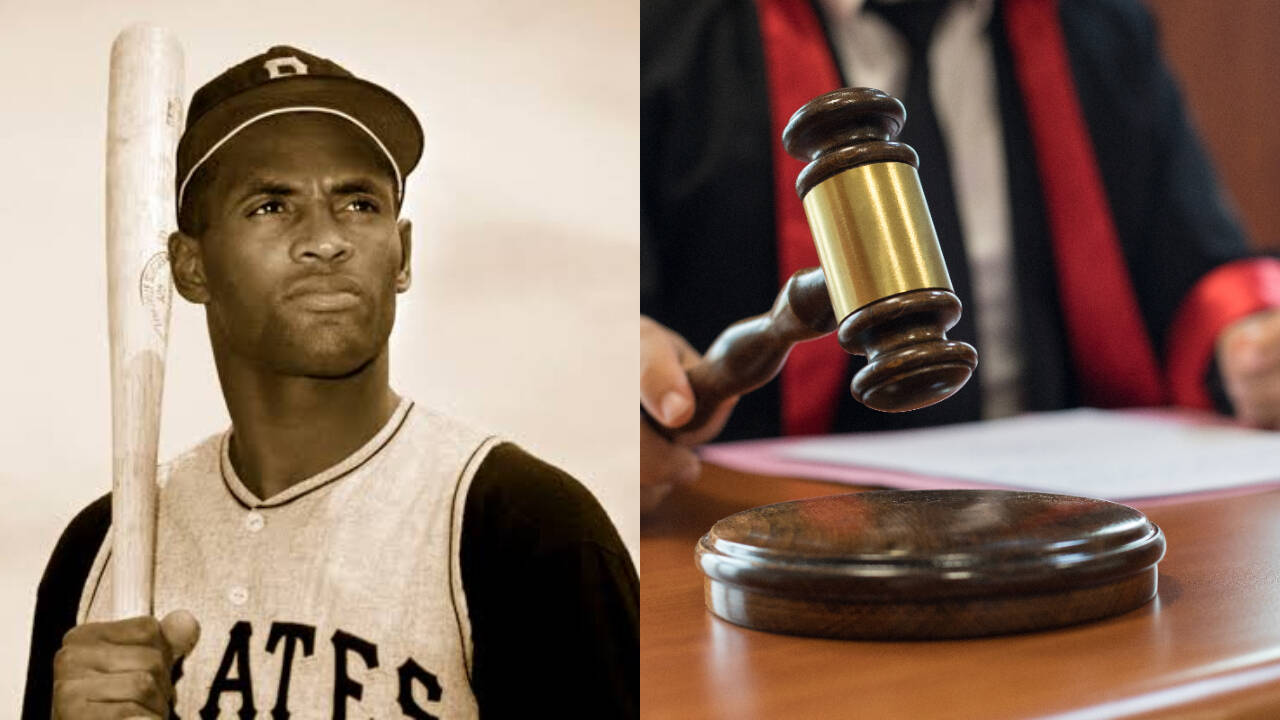
Everyone loves a clean David-versus-Goliath narrative. The grieving sons of a baseball saint fighting a massive government bureaucracy over a sacred image. It pulls at the heartstrings. It generates easy clicks. And in the case of Roberto Clemente’s heirs losing their U.S. Supreme Court appeal over Puerto Rico’s commemorative license plates, it is completely backwards.
The mainstream sports and legal press framed this refusal by the nation’s highest court as a tragic corporate-style steamrolling of a family’s intellectual property. They want you to believe that the Commonwealth of Puerto Rico stole the likeness of a national hero, printed it on commemorative license plates and tags to fund a sports district, and got away with daylight robbery because the Supreme Court couldn't be bothered to take the case. You might also find this similar coverage insightful: Why a Private Prosecution Bid Against a Former Footballer Is Such a Rare Legal Move.
That is lazy consensus. It ignores the brutal realities of constitutional law, the structural purpose of the right of publicity, and the horrifying precedent that would have been set if Luis and Roberto Clemente Jr. had actually won.
If the Clemente family had prevailed, every state government, municipal park, public school, and civic memorial in America would have been held hostage by the distant descendants of historical figures. Public memory would have been privatized. History itself would have been put behind a paywall. As highlighted in latest coverage by FOX Sports, the results are widespread.
The Sovereign Immunity Reality Check
Let’s strip away the emotional fog and look at the actual legal mechanism that killed this lawsuit before it even got to a jury. The Supreme Court didn’t rule that Puerto Rico’s license plates were tasteful, or that the Clemente family doesn't care deeply about their father's legacy. The Court simply declined to overturn the First Circuit Court of Appeals, leaving intact a bedrock principle of American governance: sovereign immunity.
Under the Eleventh Amendment, states—and, as federal courts have consistently held, the Commonwealth of Puerto Rico—cannot be sued in federal court by private citizens for money damages unless the government explicitly consents to be sued or Congress validly overrides that immunity.
I have watched dozens of high-profile IP litigators burn through millions of dollars in client retainers trying to pierce sovereign immunity. They treat it like a minor procedural speed bump rather than a concrete wall. In 2020, the Supreme Court decided Allen v. Cooper, a landmark case involving Blackbeard’s sunken pirate ship, the Queen Anne’s Revenge. A videographer sued North Carolina for copyright infringement after the state used his footage without permission. Justice Elena Kagan, writing for a unanimous court, made it painfully clear: Congress cannot strip states of sovereign immunity for intellectual property infringement unless there is a documented history of widespread, intentional constitutional violations by the states.
The Clemente brothers tried to argue that Puerto Rico’s use of their father’s image on license plates constituted an unconstitutional "taking" under the Fifth Amendment—essentially claiming the government seized private property without just compensation.
Think about the sheer audacity of that argument.
If a state commemorative license plate honoring a dead public figure counts as an unconstitutional seizure of private property, then every state quarter, every commemorative postage stamp, and every municipal statue erected without a licensing deal from an estate becomes an actionable Fifth Amendment violation. The First Circuit saw right through it. The Supreme Court didn't even need oral arguments to agree.
Stop Confusing Trademarks with Civic Memorials
To understand why the public commentary around this case is so broken, you have to understand the difference between commercial exploitation and civic commemoration. Most commentators lump them together under the vague umbrella of "image rights." That is an amateur mistake.
The Right of Publicity exists to prevent a third party from commercially exploiting a person's identity—name, image, or likeness—to sell a product or imply an endorsement without permission. If a soda company slaps Roberto Clemente’s face on a can of cola, or a sneaker brand sells "Clemente 21" high-tops without paying the estate, that is textbook misappropriation. The estate owns the commercial goodwill attached to that identity, and they deserve every cent of damages they can extract.
Puerto Rico did not put Roberto Clemente on a can of soda.
In 2022, ahead of the 50th anniversary of Clemente’s tragic death in a plane crash while delivering aid to earthquake victims in Nicaragua, the Puerto Rican legislature passed Law 67-2022. The law authorized special commemorative license plates and registration tags featuring Clemente’s image and his iconic number 21. The revenue generated from those optional plates was earmarked directly for the Roberto Clemente Sports District—a public initiative designed to rebuild youth sports facilities and honor his humanitarian legacy on the island.
Let’s look at the mechanics of this transaction:
- The Purpose: Public commemoration of a cultural icon on the 50th anniversary of his passing.
- The Revenue: Funneled into public youth sports infrastructure bearing his name, not into the pockets of private shareholders.
- The Intent: Civic pride, not commercial endorsement.
When an estate tries to block a government from honoring a native son because the estate didn't get a cut of the administrative fees, we have crossed the line from protecting a legacy to monetizing a monopoly.
What the Critics Get Wrong About Athlete Estates
People frequently ask: "Don't an athlete's children have the absolute right to control how their father is remembered?"
The brutally honest answer is no. Nor should they.
Once a public figure ascends to the level of historical icon—think Jackie Robinson, Muhammad Ali, Babe Ruth, or Roberto Clemente—their image ceases to be purely private family property. It becomes part of the shared cultural currency. The law recognizes this tension. That is why copyright expires. That is why patents run out. And that is why the right of publicity, in jurisdictions where it even survives death, is heavily restricted by First Amendment protections and public interest exceptions.
If you hand absolute, perpetual veto power over historical commemoration to biological heirs, you invite chaos. Biological descent does not guarantee good stewardship.
Look at the history of celebrity and athlete estates. For every fiercely protective, mission-driven foundation, there are three estates run by warring factions of grandchildren, second spouses, and opportunistic licensing agencies who will slap a dead icon's face onto crypto tokens, cheap whiskey, or predatory gambling apps the moment the check clears.
Imagine a scenario where the heirs of every historical figure held a strict Fifth Amendment veto over state-issued tributes.
- State Parks and Highways: Every state department of transportation would have to negotiate licensing fees with estates before naming a bridge or highway after a local hero.
- Public Schools: School boards would face federal lawsuits for painting a mural of a civil rights leader or local athlete in a gymnasium without clearing the rights through a Beverly Hills talent agency.
- Civic Monuments: Cities would abandon public art and historical markers entirely because the legal compliance costs would dwarf the construction budgets.
By shutting the door on the Clemente appeal, the Supreme Court prevented the weaponization of the Takings Clause against public memory.
The Real Fight Isn't in Washington
Here is the nuance the legal pundits completely missed: losing at the U.S. Supreme Court does not mean the Clemente family has zero leverage. It just means they brought a knife to a gunfight in the wrong jurisdiction.
Federal courts are bound by the Eleventh Amendment and strict constitutional thresholds. State and territorial legislatures, however, operate on political accountability and local statutory frameworks. Puerto Rico actually recognizes a robust right of publicity under its own local laws—specifically Act No. 139 of 2011, known as the Right of Publicity Act.
The Clemente brothers chose to wage war in federal court, swinging for the fences with a constitutional Fifth Amendment claim to bypass Puerto Rico’s sovereign immunity. That was a massive strategic miscalculation. When you swing for a home run on a constitutional theory that threatens the fiscal autonomy of all fifty states, the Supreme Court will strike you out every single time.
For athlete estates, brand managers, and IP attorneys watching this unfold, the takeaway is painfully clear. If you want to protect a legacy from government overreach, you do not sue the sovereign in federal court. You do three things instead:
- Negotiate Before Legislation Passes: When a legislature drafts a commemorative bill, the estate needs lobbyists in the committee room shaping the statutory language. You secure a seat on the oversight board for the funds rather than trying to enjoin the law after the Governor signs it.
- Separate Commercial Trademarks from Civic Likeness: Register specific, stylized logos, signatures, and foundations under federal trademark law (the Lanham Act). While sovereign immunity still complicates damages against states, clear trademark boundaries prevent third-party vendors hired by the state from spinning off unauthorized merchandise.
- Control the Narrative Through Partnership: Fighting a government over a tribute to your own father makes the estate look greedy, even when the underlying motivation is genuine quality control. Co-opting the tribute—demanding design approval in exchange for public endorsement—wins the PR war and protects the brand integrity without spending seven figures on appellate lawyers.
The Uncomfortable Truth About Legacy
There is a legitimate downside to the legal status quo affirmed by this decision. Sovereign immunity is a blunt instrument. Because states cannot be easily sued in federal court for IP infringement, bad-faith actors inside state agencies can occasionally abuse their power, using protected works without paying creators who genuinely rely on that income to survive. In Allen v. Cooper, the videographer who filmed Blackbeard's ship got burned by North Carolina, and the Supreme Court essentially told him that only Congress could fix the loophole—and Congress still hasn't bothered to pass a constitutionally compliant fix.
That is a real flaw in American IP law. When a state steals a living artist's photograph or a software developer's code, sovereign immunity feels like legalized theft.
But Roberto Clemente is not a struggling freelance photographer trying to pay rent. He is an immortal figure in baseball and humanitarian history, and his family already controls a massive, lucrative global brand. Using the Fifth Amendment to block the people of Puerto Rico from honoring their greatest hero on a license plate—especially when the money goes directly to youth sports on the island—was never about protecting a vulnerable creator. It was about establishing total territorial control over a cultural icon.
The Supreme Court’s refusal to hear the case isn't a tragedy for Roberto Clemente’s legacy. His legacy is cemented in 3,000 hits, twelve Gold Gloves, and a fatal flight to Managua on New Year's Eve 1972. No license plate can diminish that, and no lawsuit can enhance it.
Public heroes belong to the public that loves them—not to the lawyers who manage their estates.