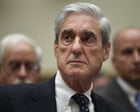
Robert S. Mueller III, the former FBI Director and Special Counsel who became the unlikely face of a fractured American psyche, died Friday night at 81. His family confirmed his passing on Saturday, March 21, 2026, marking the end of a life defined by a rigid, almost monastic devotion to the Department of Justice. For decades, Mueller was the personification of the "Institutional Man"—a figure who believed that the process was more important than the person, and that the law, if followed with enough precision, would always provide a clear answer.
His death comes at a moment when the very institutions he spent fifty years defending are under more scrutiny than ever. Mueller died on a Friday, the same day of the week he often chose to release his most significant indictments, a small coincidence that feels like a final nod to his obsession with routine. He had been privately battling Parkinson’s disease for several years, according to those close to him, a diagnosis he kept largely out of the public eye.
The Burden of the Bronze Star
Mueller was not born into the brawling world of federal law enforcement. He was a product of the Ivy League and the elite prep schools of the Northeast, but he was fundamentally shaped by the mud of Vietnam. While many of his peers used their status to avoid the draft, Mueller led a rifle platoon in the Marine Corps. He came home with a Bronze Star, a Purple Heart, and a permanent skepticism toward anyone who prioritized their own comfort over their duty.
That wartime experience explains the "Mueller Way" that later defined the FBI. When he took over the Bureau in 2001, just one week before the September 11 attacks, he didn't just manage the agency; he rebuilt it. He forced a domestic crime-fighting organization to become a global intelligence machine. It was a brutal transition. He fired people who couldn't keep up and demanded a level of technical and legal proficiency that had previously been optional. He stayed for twelve years, two years longer than the statutory limit, because President Obama believed he was the only person capable of keeping the machine running.
The Special Counsel Trap
The 2017 appointment of Mueller as Special Counsel was supposed to be the moment the Institutional Man saved the country from its own chaos. Instead, it became the moment the institution met a force it wasn't designed to handle.
Mueller approached the investigation into Russian interference and Donald Trump’s campaign like a textbook exercise. He hired the best "pit bulls" in the legal world, followed every lead, and spoke only through court filings. But while Mueller was playing by the rules of 1950, the world was playing by the rules of 2020. He expected his final report to speak for itself. He believed that if he laid out the facts—ten instances of potential obstruction of justice and a detailed map of Russian hacking—the "system" would take it from there.
It didn't. The system had changed. The 448-page report was instantly weaponized by both sides, and Mueller’s refusal to provide a "yes or no" answer on criminal conduct was seen by some as a failure of nerve and by others as a vindication.
The Cost of Neutrality
The core of the Mueller tragedy is that his greatest strength—his absolute neutrality—became his greatest weakness in the eyes of a polarized public.
- The Legalist's Limit: He refused to indict a sitting president because of an Office of Legal Counsel (OLC) memo, even though he clearly believed the evidence of obstruction was substantial.
- The Communication Gap: He viewed the public's need for a narrative as beneath the dignity of the law.
- The Institutional Shadow: He protected the Department of Justice so fiercely that he may have inadvertently prevented it from acting when it was most needed.
A Final Act of Silence
In his later years, Mueller retreated into a quiet life at WilmerHale, the law firm that served as his home base between government stints. Even as the political world continued to scream about his legacy, he remained silent. He didn't write a memoir. He didn't go on a speaking tour. He didn't join a cable news network as a paid contributor.
That silence was his final statement. He believed that a public servant’s work should be done in the shadows and that the rewards should be the work itself, not the fame that follows. It is a philosophy that feels increasingly like a relic.
Robert Mueller was the last of a specific kind of American leader: the one who believed that the rules mattered more than the outcome. Whether that makes him a hero or a cautionary tale depends entirely on whether you still believe the rules can save us. His passing doesn't just mark the end of a career; it marks the closing of a chapter on how the American government views its own power.
If you would like to explore the specific legal precedents set by the Mueller Report that are still being litigated today, I can break down the current standing of the OLC memo regarding presidential immunity.