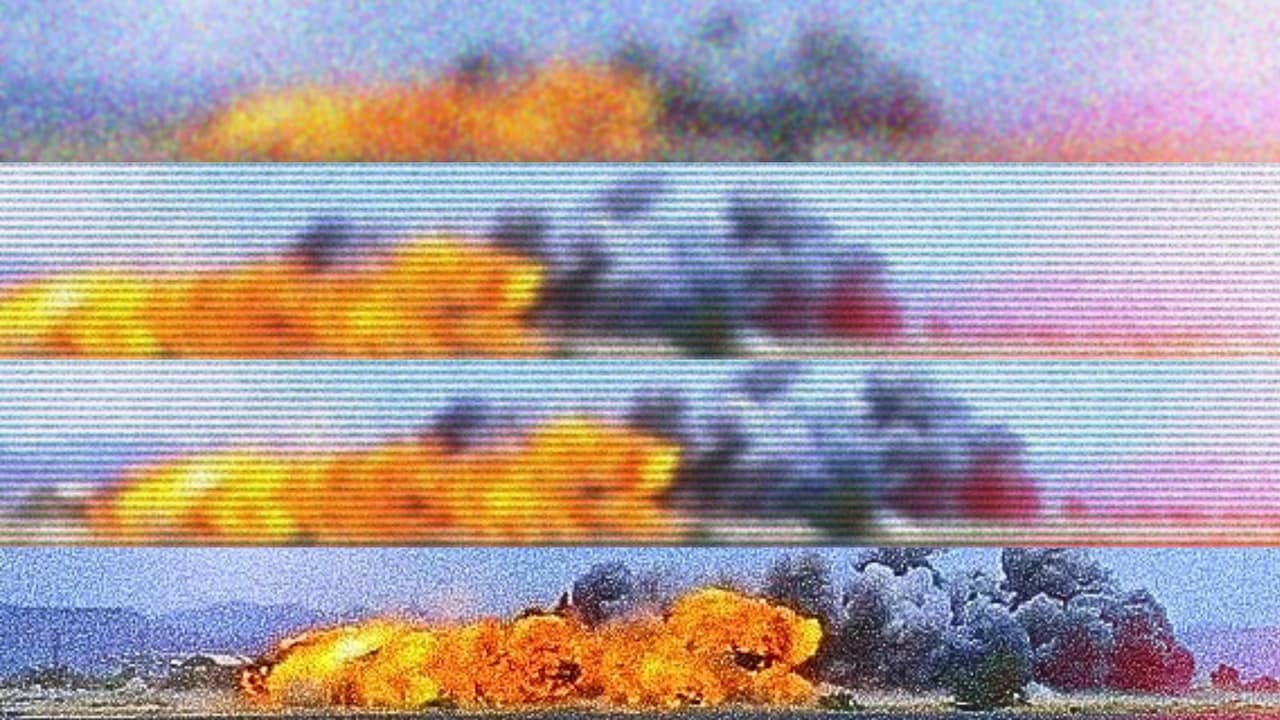
For years, foreign policy analysts treated the Saudi intervention in Yemen like a tragic comedy of errors. The narrative was cozy, predictable, and fundamentally lazy. Giant petrodollar state looks south, ignores a simmering tribal insurgency, assumes a fractured neighbor is someone else's headache, and gets rudely awakened when cruise missiles slam into oil processing plants at Abqaiq. The conventional wisdom paints Riyadh as a sleepy titan caught flat-footed by barefoot fighters wearing sandals and carrying old rifles.
It is a clean story. It is also entirely wrong.
Riyadh did not miscalculate. They calculated with cold, ruthless precision for a very different set of variables than the ones journalists like to track. When you evaluate statecraft through the lens of short-term quarterly headlines rather than long-term structural repositioning, you miss the entire architecture of modern Middle Eastern strategy. The kingdom knew precisely who the Houthis were before the first airstrike hit Sanaa in 2015. They understood the tribal topography, the religious lines, and the logistical nightmares of the rugged northern mountains. They went in anyway, not because they expected a quick three-week victory parade, but because inaction carried an even higher price tag on their domestic political stability.
To understand why the standard analysis collapses, you have to look past the smoke of burning oil facilities and examine the core economics of modern deterrence.
Every armchair strategist loves to mock the Saudi military budget. They point to multi-billion-dollar defense acquisitions from Washington, London, and Paris, contrasting shiny F-15s against asymmetric drone swarms. The lazy consensus states that money cannot buy competence. But this critique misunderstands what defense spending actually achieves in a rentier state. Riyadh was never trying to build an expeditionary marine corps capable of pacifying hostile mountain ranges cave by cave. They were building an aerial shield designed to buy time.
Consider the mathematics of asymmetric attrition. A single Patriot missile interceptor costs roughly three million dollars. A crude, delta-wing loitering munition assembled from off-the-shelf commercial parts costs twenty grand. Critics shout about this financial imbalance as proof of strategic failure. But in statecraft, cost inefficiency is often a rational tax paid for risk mitigation. Riyadh’s calculus was simple: keep the war kinetic enough to prevent a hostile, heavily armed, Iran-aligned militia from cementing an unassailable strategic fortress directly on their porous southern border, while keeping casualties low enough to avoid domestic blowback.
When those drones hit Abqaiq in September 2019, temporarily halving Saudi oil production, the western commentariat gasped. They called it Riyadh’s Pearl Harbor. They declared that the chickens had finally come home to roost.
That interpretation misses the real story entirely. That strike was not a wake-up call that forced Riyadh to realize they had a problem; it was the exact piece of data they needed to convince their western security guarantors that passive containment was dead. For years, Washington had told Riyadh to handle its own backyard while simultaneously tying its hands with human rights rhetoric and half-hearted diplomatic pressure. The Abqaiq attack provided the undeniable proof required to shift Washington’s posture. It demonstrated that regional instability could not be hermetically sealed off behind border walls and Patriot batteries.
Suddenly, the narrative changed from "Saudi Arabia is bogged down in a quagmire of its own making" to "Saudi Arabia’s security is an indispensable pillar of global energy stability." That is not a failure of statecraft. That is high-stakes shock therapy applied to an alliance.
To grasp the depth of this misread, you have to look at how western intelligence agencies and media outlets mischaracterize the Houthis themselves. The lazy shorthand describes them as a puppet regime taking direct daily orders from Tehran. It paints a picture of Islamic Revolutionary Guard Corps generals sitting in basement bunkers in Tehran, drawing arrows on maps of Marib and Hodeidah.
This is a cartoonish distortion of reality.
I have watched diplomats spend decades trying to force complex, decentralized tribal movements into neat, state-sponsored proxy boxes. It never works. The Ansar Allah movement, colloquially known as the Houthis, is a deeply indigenous Yemeni sociopolitical phenomenon rooted in Zaydism, centuries of northern marginalization, and fierce tribal independence. Iran did not create the Houthis; Tehran simply recognized an organic opportunity and injected asymmetric capital into an existing fire.
Treating the Houthis as a mere remote-controlled extension of Iran leads to fatal strategic errors. When you believe an adversary is just a proxy, you look for the master switch in Tehran to turn them off. You chase diplomatic normalization with Iran, expecting that a handshake between foreign ministers in Beijing will magically convince northern Yemeni fighters to lay down arms they have held for generations.
Riyadh realized the fallacy of this approach long before anyone else in the region. They understood that even if Iran signed ten peace treaties, the Houthis would keep fighting because their ambitions are local, sectarian, and territorial. They want political hegemony in Sanaa, economic control of national ports, and constitutional recognition as the dominant force in Yemen. They do not care about the geopolitical grand strategy of the Iranian axis any more than is strictly necessary to secure weapons parts and ballistic missile telemetry.
This brings us to the real reason Saudi policy shifted: Vision 2030.
Megaprojects like Neom, the Red Sea tourism developments, and the massive diversification away from oil dependency cannot happen in the middle of a regional war zone. Capital is cowardly. Investors do not pour billions into futuristic smart cities in the desert if surface-to-surface missiles are raining down on Riyadh every other Tuesday.
The conventional narrative says that Saudi Arabia lost the war in Yemen, sued for peace out of exhaustion, and accepted a humiliating stalemate. This ignores the brilliant pivot embedded in the recent Saudi diplomatic strategy. Riyadh stopped trying to impose a military solution on a country that has defeated every foreign invader since the Ottoman Empire, and instead weaponized diplomatic exhaustion.
By opening direct channels with Sanaa, bypassing the internationally recognized government that sat comfortably in Riyadh hotels, the Saudi leadership did something remarkable. They legitimized their primary adversary in exchange for a binding security guarantee along their border. They traded the illusion of a friendly, centralized Yemeni puppet state for the hard reality of a quiet border.
Critics call this appeasement. They argue that leaving the Houthis in control of northern Yemen empowers a hostile non-state actor. But ask any seasoned risk assessor what matters more to a sovereign state: ideological purity in a neighboring failed state, or uninterrupted GDP growth and zero civilian infrastructure damage at home. The answer is obvious. Statecraft is the art of abandoning unwinnable crusades to secure vital national interests.
Consider the timing of the Beijing-brokered detente between Riyadh and Tehran. Western pundits hyperventilated, claiming that the United States had been sidelined in its own sphere of influence, and that authoritarian monarchies were carving up the Middle East behind Washington's back.
That analysis completely misunderstands the mechanics of modern leverage. Riyadh did not abandon the United States; they simply proved that they had alternative strategic partners who could deliver specific logistical outcomes. By forcing Washington’s hand through independent diplomacy, Saudi Arabia created a dynamic where western powers suddenly became much more willing to provide advanced defense tech and intelligence sharing without the moralizing lectures that used to accompany every arms sale.
When you look at the human cost of the war, the tragedy is undeniable. Hundreds of thousands dead, millions displaced, a humanitarian catastrophe of staggering proportions. But my job is not to offer moral comfort; it is to strip away the lazy media tropes that obscure how power actually operates in the twenty-five-nation landscape of West Asian geopolitics.
The moralizers told you that Saudi Arabia walked into a trap in Yemen because they were arrogant, overconfident, and blind to asymmetric warfare. The truth is much colder and much more calculated. They went in because doing nothing invited greater long-term chaos on their southern flank. They stayed as long as it took to reshape the diplomatic and security architecture of the peninsula. And they got out the moment the cost-benefit ledger tipped away from kinetic action toward economic transformation.
Stop buying the fairy tale of the clumsy giant. The kingdom’s leaders are playing a multi-decade chess game while most observers are still trying to figure out the rules of checkers.
The next time you read a headline about a sudden shift in Middle Eastern alliances, look past the pious editorials about human rights or the breathless panic over shifting spheres of influence. Follow the capital flows. Watch where the sovereign wealth funds are deploying their billions. Check the balance sheets.
That is where you will find the real strategy. The rest is just noise designed for people who prefer their geopolitics simple, moralistic, and wrong.


