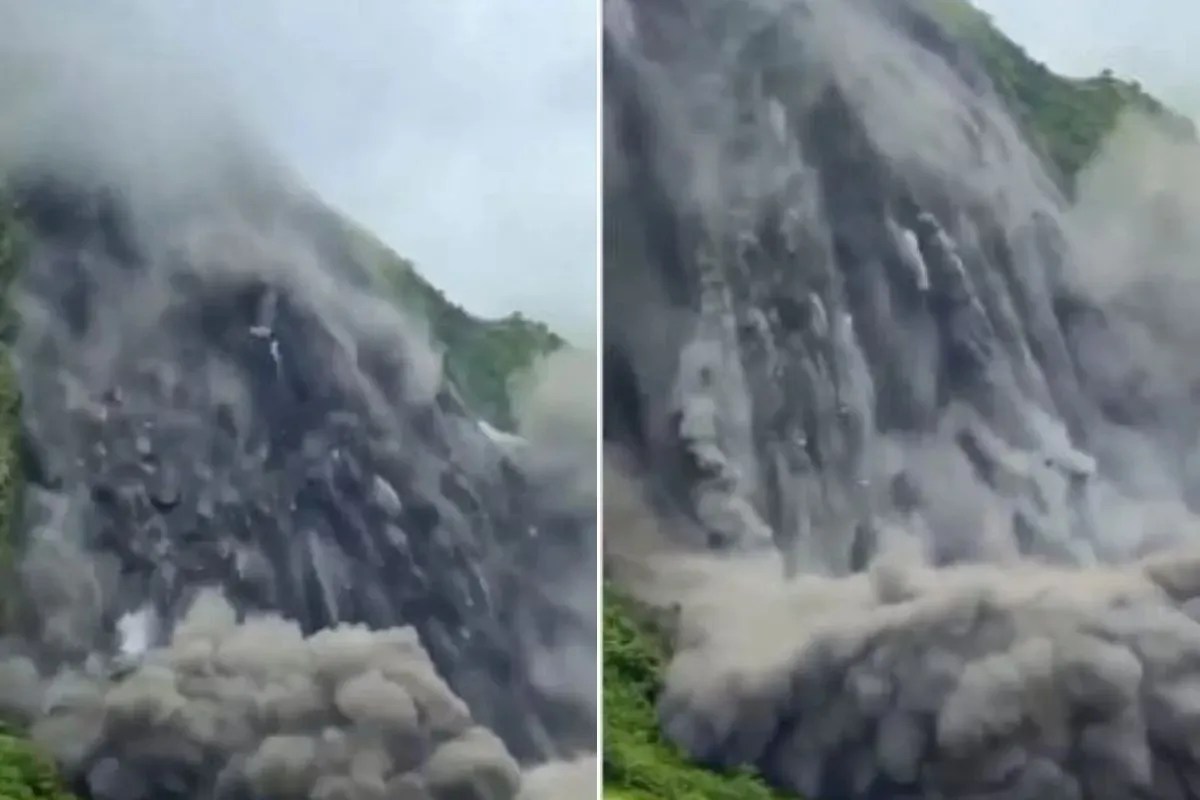
Water does not negotiate. It does not pause to consider the history of a village, the laughter of children echoing through a stone courtyard, or the quiet prayers whispered over morning tea. Water remembers only the geometry of gravity. It follows the lowest line until the earth gives way.
Listen closely. If you stand near the banks of the Budhi Gandaki river in central Nepal right now, you hear a sound that does not belong to the tranquil hills. It is a deep, shifting rumble—the voice of boulders grinding beneath a swollen, churning surface. It is a sound that makes the elders look up from their porch steps, their eyes narrowing as they track the color of the water. Muddy. Heavy. Swollen with the sudden, merciless grief of an unseasonal cloudburst high up in the Himalayan cradle.
An alert has been issued. The authorities call it a warning. The people living along the lower stretches call it an old ghost returning.
The Weight of the Monsoon
To understand why a river valley holds its breath when the rains intensify, you have to understand the geography of survival in the shadow of the mountains. Imagine waking up in a house built of slate and mud-mortar, perched on a terraced slope carved out by generations of calloused hands. Below you, a ribbon of turquoise water cuts through the gorge. It looks peaceful from a distance, almost ornamental.
Until it isn't.
In Nepal, the monsoon is not a weather event. It is a tectonic actor. When excessive rainfall hammers the upper catchments, the Budhi Gandaki—a vital artery feeding into the mighty Trishuli—transforms almost overnight. It swells from a rushing stream into a liquid battering ram. Landslides triggered by saturated slopes tumble downward, creating temporary natural dams. For hours, or sometimes days, the water pools behind these earthen walls, building an invisible, terrifying pressure.
Then, the wall breaks.
That is the nightmare that keeps local disaster management committees awake through the night. A sudden, catastrophic surge of water and debris racing down the valley at breakneck speed, giving families minutes—sometimes seconds—to choose what they can carry and what they must leave behind.
The Anatomy of an Alert
Official bulletins are written in sterile, bureaucratic prose. They speak of water levels exceeding danger marks, hydrological stations recording critical millimetres of rainfall, and emergency response teams standing by.
Statistics matter. They tell us about cubic meters per second, gauge heights, and evacuation radii. But numbers do not capture the reality of Ramesh, a sixty-two-year-old farmer whose family has tilled the river-adjacent terraces of Gorkha for as long as oral memory stretches.
Ramesh knows the river by its moods. He knows the difference between the steady, life-giving flow of spring snowmelt and the venomous brown rush of a flood warning. When the sirens sound or the local authorities broadcast warnings through community radio networks to move to higher ground, Ramesh doesn't look at graphs. He looks at his grandchildren.
"We have seen the water rise before," Ramesh says, his gaze fixed on the churning current below his fields. "The land belongs to the river. We only rent our time here."
Moving to higher ground sounds simple on paper. In practice, it means abandoning the hearth, locking the wooden doors, driving livestock up steep, slippery goat trails in the dark, and trusting that when you return—if you return—the stone walls of your home will still be standing against the onslaught. It is an evacuation born of hard-earned generational wisdom. People who stay behind often do so not out of defiance, but because the alternative means walking away from everything they own into an uncertain, penniless displacement.
The Invisible Stakes
Why does the Budhi Gandaki demand such constant vigilance? Because the landscape here is dynamic, fragile, and intensely vulnerable to shifting climate patterns. Extreme weather events are becoming sharper, shorter, and far more violent. A cloudburst that once occurred once a decade now arrives with alarming frequency, dumping months of rain into steep gorges in a matter of hours.
When a river like the Budhi Gandaki floods, the consequences ripple far beyond the immediate banks. Hydroelectric infrastructure—the very backbone of the nation's energy ambitions—faces immense stress as silt loads choke turbines and roaring debris threatens diversion dams. Bridges that connect isolated mountain communities are swept away in a heartbeat, instantly severing trade, medical access, and communication lines.
It is a stark reminder of human fragility in the face of planetary forces. We pave highways, string power lines, and build concrete retaining walls, but the earth ultimately decides what remains.
The Long Walk Upward
As the afternoon light fades behind the jagged peaks, the orange glow of emergency alerts flickers on mobile phones across the valley. Shopkeepers pull down their corrugated iron shutters. Families gather bundles of clothing, vital documents, and bags of rice, shouldering them as they begin the arduous, silent trek up the stone staircases leading to the ridges above the flood zone.
There is no panic. There is only the grim, practiced choreography of resilience. Nepalese villagers have danced this ancient, exhausting waltz with the monsoons for centuries. They know how to bend so they do not break.
The river continues its furious descent through the gorge, blind and indifferent to the human drama unfolding along its banks. But high above the dark, surging water, lights begin to dot the upper slopes. Small campfires flare in the dusk, casting long, wavering shadows against the cliffside.
People are safe tonight, huddled together on the high ground, listening to the muffled roar of the valley below, waiting for the river to remember its manners and settle back into its bed.


