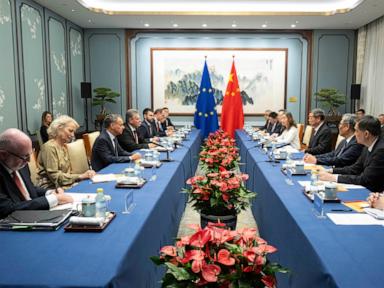
A regional governor waves a glossy rendering of a deep-water berth and calls it a "Chancay alternative." Port executives applaud. Trade reporters type furiously.
Stop. Take a breath. Look at the bathymetry, the road gradients, and the balance sheets.
The lazy consensus in maritime logistics right now goes like this: because COSCO Shipping Ports and Peru's Volcan built a mega-hub in Chancay—designed to cut trans-Pacific sailing times between South America and Asia—every coastal governor from Piura to Ilo wants a rival deep-water terminal to siphon off cargo, check Chinese influence, or grab a slice of feeder traffic. The competitor headline treats a governor's pitch about Chinese interest in an alternative deep-water port as a real threat to Chancay's positioning.
It misses the basic economics of container shipping. A deep draft is table stakes, not a moat.
In container shipping, draft is simply the vertical distance from the waterline to the lowest point of a hull. Ultra-large container vessels need deep water so they do not run aground at low tide or while maneuvering. Transshipment happens when cargo moves from one vessel to another at an intermediate hub instead of sailing direct on a smaller ship. Hinterland is the inland territory a port actually serves via road, rail, or river—not the territory a politician draws with a marker on a wall map.
The Mistake Everyone Makes About "Alternative" Ports
I have watched logistics operators and municipal planners burn tens of millions of dollars chasing "second port" dreams in emerging markets. The script is always identical. A port authority points to open coastline, promises deep water, and announces talks with foreign terminal operators or state-backed builders. Local boosters assume that if one port attracts mega-ships and Asian trade volume, a competing site nearby can split the pie simply by offering capacity or courting the same capital pool.
That assumption confuses real estate with network gravity.
Container lines do not dispatch 14,000-to-24,000-TEU vessels—where a TEU is a twenty-foot equivalent unit, the standard container size—to a port because a governor held a press conference. They deploy mega-ships where three conditions lock together:
- Cargo density and schedule integrity: A mega-ship burns huge amounts of fuel per day and loses money fast if it sits idle waiting for containers or customs clearance.
- Inland evacuation: Moving thousands of boxes off a terminal requires paved highways, rail corridors, staging yards, and customs bottlenecks that do not choke the moment two ships berth at once.
- Network positioning: Carriers build hub-and-spoke networks around anchor nodes. Adding a secondary terminal down the coast does not automatically create a second mainliner call unless volumes justify splitting strings—and splitting strings often raises unit costs for everyone.
Even when a regional leader mentions Chinese interest, treat that phrase with cold realism. Chinese state-linked firms and commercial operators—like COSCO Shipping Ports, Hutchison Ports, or engineering contractors—evaluate projects by commercial return, sovereign risk, concession terms, and strategic fit. Interest in talking, surveying, or bidding is not a signed concession with guaranteed vessel calls. Politicians love using foreign capital interest as leverage in domestic budget fights. Analysts who treat a governor's pitch as an imminent rival hub are reading press releases as shipping schedules.
What Chancay Actually Changed—and What It Did Not
Chancay matters because it targets a real bottleneck on South America's Pacific coast: moving large volumes of trade between Peru and Asia without relying solely on congested legacy terminals or circuitous routing. Industry observers like Jean-Paul Rodrigue and maritime research outfits such as Drewry and Clarkson Research have long emphasized that maritime networks reward concentration at well-connected gateways rather than scattering deep-water berths along every stretch of coast.
Yet calling every proposed terminal a "Chancay alternative" gets the geography and economics backward.
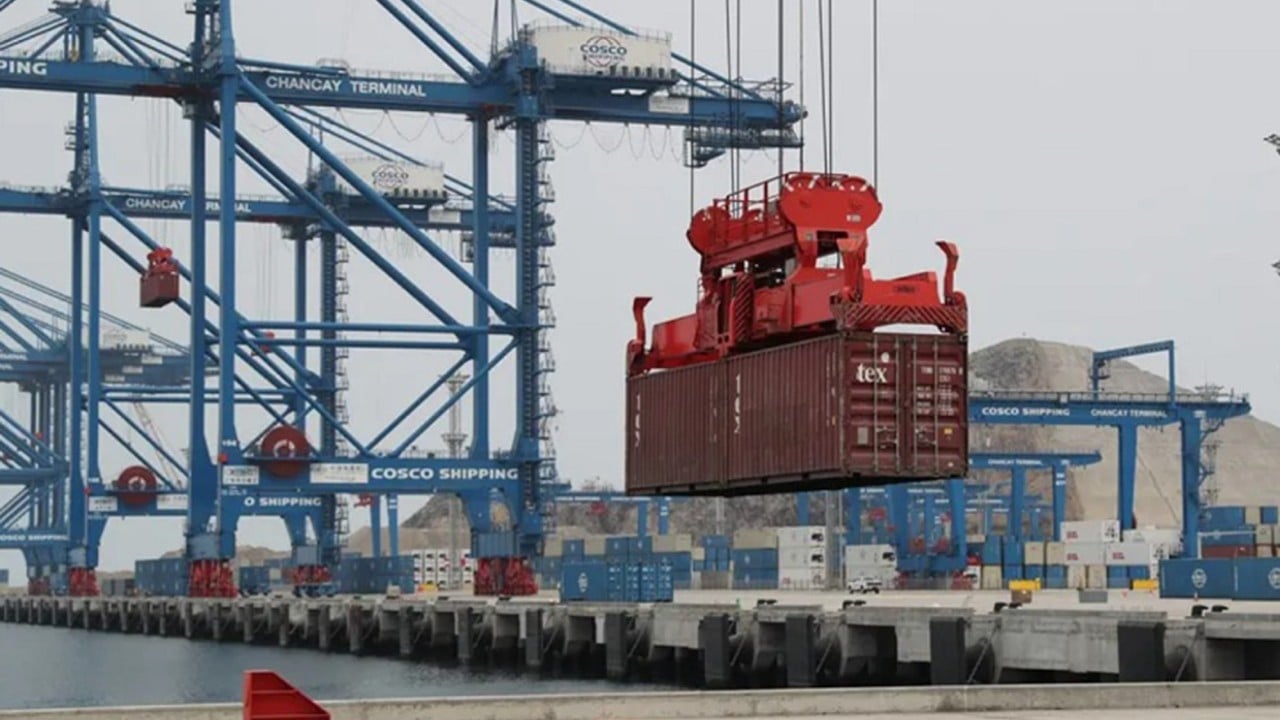
Look closely at what happens in the visual above: massive stacks of standardized boxes, tall ship-to-shore gantry cranes, and tight turnaround choreography. Every minute a vessel of that size spends alongside is expensive. A rival terminal does not win just because its channel is deep enough for the hull. It wins only if drayage trucks, rail links, warehousing, and cargo origin/destination match the economics of the vessel.
Imagine a scenario where a regional port fifty or a hundred miles away dredges a deep basin and lands a memorandum of understanding with a foreign builder. On paper, both ports sit on the Pacific and can handle big ships. In practice, if exporters of minerals, agricultural goods, or retail imports still face winding mountain passes, congested access roads, or thin local container volumes, ocean carriers will keep routing mainliners to the established gateway and use smaller feeders—or trucks—where the math works.
Why "Competing With Chancay" Is the Wrong Question
Ask yourself: if you run a container line or a major exporter, do you wake up hoping for a duplicate deep-water terminal down the coast, or do you worry about what happens behind the quay wall?
Most commentary obsesses over port-to-port rivalry—as if South American trade were a zero-sum tug-of-war between two coastal cranes. The harder, more consequential question is whether Peru and neighboring corridors can fix landside friction fast enough to turn coastal capacity into real trade growth.
Consider the "People Also Ask" questions that flood trade briefings whenever a governor floats a new port plan:
- Can a rival deep-water port overtake Chancay? Only if it solves hinterland bottlenecks, secures steady anchor cargo, and convinces ocean carriers that splitting calls lowers total door-to-door cost. Dredging a berth is the easy part. Rewiring inland logistics and carrier rotations takes years and massive coordination.
- Does Chinese interest in another port threaten Chancay's role? Not by itself. A single investor or contractor looking at multiple sites is normal project development, not a guaranteed rival gateway. Real competition comes from cargo flows, rail and road corridors, customs efficiency, and port tariffs—not headlines about diplomatic or commercial outreach.
- Should regional governments push for more deep-water ports? Not blindly. Public money spent chasing prestige infrastructure without guaranteed inland connections and anchor shippers starves roads, bridges, and border crossings that actually move goods today.
Where My Contrarian View Can Bite You
Being skeptical of "alternative port" hype has a real blind spot if you push it too far.
First, monopolies and single-gateway bottlenecks hurt shippers. If one mega-terminal dominates a corridor without credible competition or strong regulatory oversight, terminal handling charges, congestion fees, or labor disputes can squeeze exporters and importers. Competition—or at least the credible threat of it—keeps pricing honest.
Second, a secondary port does not have to beat a flagship hub on total container volume to matter locally. A specialized or regional terminal can carve out a profitable niche in bulk commodities, project cargo, or specific agricultural/industrial catchments if its inland access fits that exact commodity. Dismissing every non-flagship port as a "vanity project" is just as lazy as calling every pitch a Chancay-killer.
What Smart Operators Should Do Instead
If you are an exporter, importer, freight forwarder, or regional policymaker, stop reacting to every speech about a new deep-water contender. Do this instead:
- Audit inland door-to-quay cost, not berth depth. Calculate total landed cost—inland trucking or rail rates, dwell time, demurrage, and customs clearance—rather than bragging about channel meters.
- Follow vessel schedules and feeder economics, not MOUs. Watch where ocean alliances actually commit capacity, how feeder loops connect secondary ports, and where cargo consolidates.
- Prioritize connectors over concrete. If you influence infrastructure budgets or supply-chain contracts, bet on feeder roads, staging yards, rail spurs, and intermodal transfer points that unlock existing cargo before funding another mega-berth from scratch.
- Build optionality into contracts. Avoid single-port lock-in where possible, keep routing flexible across coastal and inland options, and price in weather, road closures, and ramp-up delays on any new facility.
Ports do not create trade out of thin air. Cargo creates ports—and only the terminals connected to real freight flows survive the math.