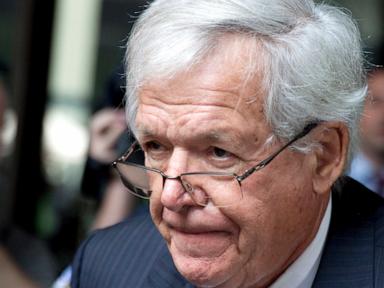
Dennis Hastert spent years as the most powerful Republican in the United States House of Representatives. He held the speaker's gavel for eight consecutive years, guiding legislation through turbulent political waters with a quiet, unassuming demeanor that masked ruthless tactical instincts. Yet, history won't remember him for his legislative majorities or his longevity in Washington. Instead, his name remains permanently tied to a shocking federal investigation, secret hush money payouts, and a prison sentence that shredded his public legacy. Hastert passed away at the age of 84 at his home in Kendall County, Illinois, leaving behind a complex and deeply tarnished political footprint.
Before he ever set foot in the halls of Congress, Hastert was a high school civics teacher and wrestling coach in Yorkville, Illinois. That background shaped his public persona entirely. He projected the image of a plainspoken, Midwestern high school mentor who understood ordinary working families. When he entered politics by winning a seat in the Illinois legislature in 1980 and later jumped to federal office in 1986, he brought that rust-belt humility with him. Colleagues often underestimated him, mistaking his soft-spoken cadence for a lack of ambition. That was a major mistake.
When Newt Gingrich resigned following Republican losses in the 1998 midterms, and Bob Livingston bowed out due to personal scandals, Hastert emerged as the consensus choice to lead the House. He became speaker in 1999 without seeking the job aggressively. During his tenure, he mastered the internal machinery of the GOP caucus. He kept his members united, worked closely with the George W. Bush administration, and became the longest-serving Republican Speaker of the House in American history. For a long time, outsiders viewed him as a stable, steady hand at the wheel of American governance.
The narrative collapsed completely years after he left Washington. In 2015, federal prosecutors indicted Hastert for violating banking laws. The investigation revealed a dark and hidden reality. Hastert had agreed to pay a total of $3.5 million to an individual—referred to in court documents as "Individual A"—to conceal decades-old sexual abuse that occurred while Hastert was still a high school wrestling coach. To avoid
Why Dennis Hastert Left a Complicated Legacy Behind
news
Power changes people. Sometimes, it corrupts them entirely. Dennis Hastert rose from a quiet high school wrestling coach and history teacher in Illinois to become the longest-serving Republican Speaker of the House in American history. He held the gavel through the turbulent years of the Clinton impeachment, the tragedy of September 11, and the early years of the Bush administration. He was viewed as a pragmatic Midwesterner who understood how to count votes and keep his caucus in line.
Then he died at 84. And when the obituary writers sat down to type out his legacy, they didn't lead with his legislative victories or his power plays in the Capitol. They led with the federal prison sentence that shattered his reputation at the very end of his life.
History rarely offers neat, comfortable stories. Hastert's life stands as a glaring reminder of how quickly a public legacy can unravel when private secrets come to light.
The Rise of the Quiet Coach from Illinois
J. Dennis Hastert didn't look like a revolutionary political mastermind. He looked like what he was: a former high school civics teacher and wrestling coach from Yorkville, Illinois. He entered the House of Representatives in 1987, keeping a relatively low profile while mastering the unglamorous mechanics of legislative politics. He built alliances, listened to his colleagues, and avoided the ideological grandstanding that consumed many of his peers.
When the House Republican leadership imploded in 1998 following the abrupt resignation of Bob Livingston amid a sex scandal, the party needed a steady hand. They turned to Hastert. He was a surprise choice. He wasn't aiming for the job, which actually made him more attractive to warring factions within the caucus.
As Speaker from 1999 to 2007, Hastert wielded significant influence. He presided over the passage of the Bush tax cuts, the creation of the Department of Homeland Security, and the authorization of the Iraq War. He ran a disciplined floor operation. If you talk to old Capitol Hill hands, they'll tell you Hastert understood the human element of legislation better than almost anyone. He knew who needed a favor, who needed a phone call from the president, and who just needed to vent.
Yet, the institutional power he accumulated masked deep vulnerabilities. Politics is a game of exposure, and Hastert's past was waiting in the shadows.
The Downfall That Stunned Washington
The true reckoning for Hastert didn't happen while he held the gavel. It happened years later, in 2015, when federal prosecutors indicted him. The charges weren't related to legislative corruption, campaign finance violations, or insider trading. They were much darker and deeply personal.
Federal investigators discovered that Hastert had been paying off a former student from his days as a high school wrestling coach to keep quiet about historical sexual misconduct. To evade bank reporting requirements, Hastert withdrew large sums of cash in structured amounts—a federal crime in its own right.
The ensuing court case tore away the veneer of the kindly Midwestern statesman. Hastert pleaded guilty to federal currency-structuring violations. During the sentencing hearing, a victim came forward to describe the abuse he suffered at Hastert's hands decades earlier. The judge called Hastert's conduct a serial betrayal and sentenced him to 15 months in federal prison.
For a man who once stood second in line to the presidency, it was a staggering collapse. He served his time, mostly in a federal medical center, and lived out his final years in relative obscurity and poor health.
What the Hastert Era Teaches Us About Power
We love simple narratives in politics. We want leaders to be either heroes or villains. Hastert defies that lazy categorization, which is precisely why his story matters.
He was a competent legislator who passed monumental bills. He was also a man who harbored profound, destructive secrets. The political system that elevated him cared deeply about vote counts and majority control, but it was largely blind to the personal demons of the people steering the ship.
When we look back at the Hastert years, we see the fragility of institutional trust. The Republican majority he led eventually fractured, worn down by ethics scandals, fiscal drift, and internal rebellions that paved the way for a different style of populist politics. Hastert represented an older, more transactional era of Washington—an era that looked stable on the surface while rotting from the inside.
His death closes a dark chapter, but the questions he left behind about accountability, institutional blind spots, and the true cost of political power remain completely unanswered.