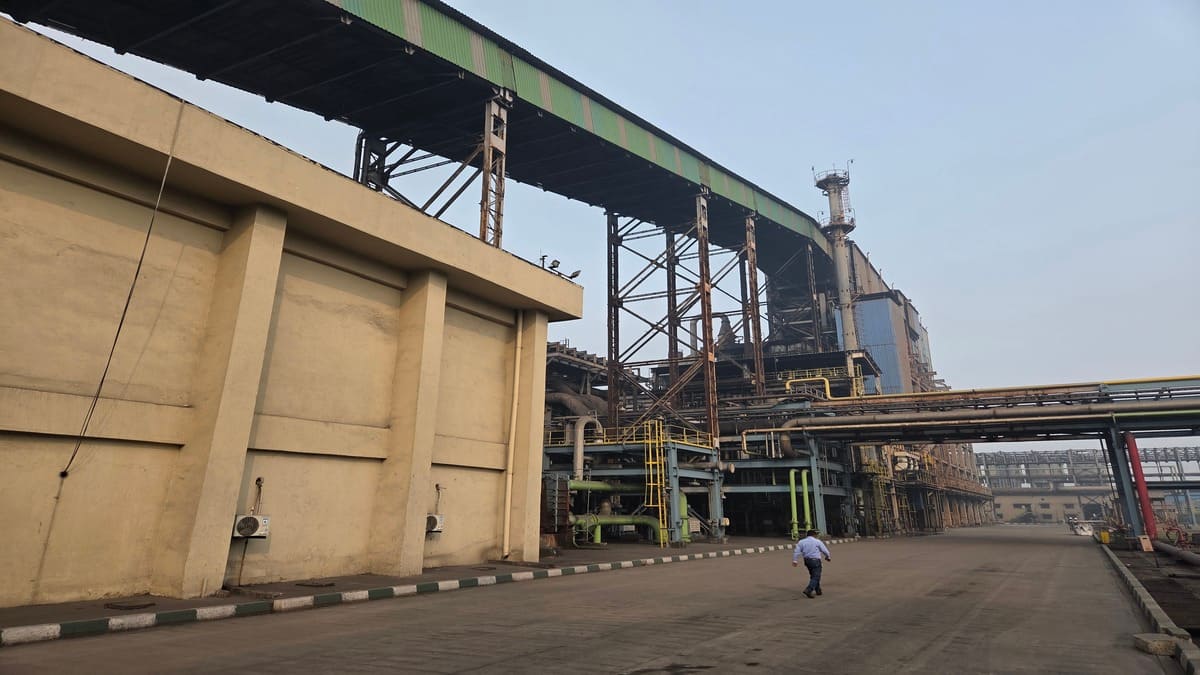
Steelmaking has always been a carbon nightmare. You've got these massive blast furnaces and gasifiers chugging through coal like there's no tomorrow, pushing out more than two tonnes of $CO_2$ for every single tonne of metal produced in India. That’s significantly higher than the global average of 1.8 tonnes. But a world-first trial in Odisha just proved we don't need to reinvent the wheel—or build multibillion-dollar hydrogen plants—to fix it.
Researchers from CSIRO and the Indian Institute of Science (IISc) recently finished a commercial-scale test at a Jindal Steel facility. They didn't use some space-age polymer or expensive "captured" carbon. They used rice husks. Specifically, they turned agricultural waste into pellets and fed them into industrial gasifiers. It worked.
The Logistics of Turning Waste Into Fuel
Most "green" tech sounds great on a whiteboard but fails the second it hits a real-world factory floor. This didn't. The team, working with RESCONS Solutions, blended 5% and 10% rice husk pellets with the usual coal feed. The gasifiers didn't choke. The synthesis gas (syngas) production didn't drop. Performance stayed stable.
Honestly, it's a bit of a relief. India produces about 228 million tonnes of surplus crop residue every year. Most of that gets burned in open fields because farmers have no other choice. It’s a waste of energy and a public health disaster. By densifying this husk into pellets, you solve the two biggest headaches of biomass: low energy density and terrible transportability.
Why This Beats the Hydrogen Hype
Everyone’s talking about green hydrogen. It's the "holy grail," right? Maybe, but the infrastructure for green hydrogen doesn't exist yet. It's expensive, requires massive amounts of renewable energy, and needs entirely new plant designs.
Rice husk pellets are different. They fit into the existing Direct Reduced Iron (DRI) process. In a country like India, where 80% of DRI production relies on coal, being able to swap out a portion of that fossil fuel without rebuilding the entire plant is a massive win. You're basically retrofitting the present instead of waiting for a distant future.
Breaking Down the Numbers
The environmental impact isn't just a rounding error. If this process goes nationwide, we're talking about a potential 50% reduction in emissions for the Indian steel sector. That’s roughly 357 million tonnes of $CO_2$ saved every year.
To put it in perspective, using biomass in this specific way can drop net emissions by about 1.19 tonnes of $CO_2$ per tonne of crude steel. When you consider that India wants to hit a production capacity of 300 million tonnes by 2030, the math says we can't afford not to do this.
The Challenges Nobody Mentions
I'm not going to tell you it's all sunshine and rainbows. There are real hurdles.
- Ash and Silica: Rice husks have a high silica content (around 15-20%). If you go higher than a 10% or 20% blend, you risk slagging and buildup in the machinery.
- The Supply Chain: Moving 100 million tonnes of rice husk from thousands of tiny farms to a handful of massive steel plants is a logistical beast.
- Economics: Right now, coal is still the king of cheap. Unless there are carbon taxes or heavy government incentives, many mid-sized players won't make the jump.
The CSIRO team actually built an interactive map that overlays India’s steel infrastructure with regional biomass availability. It's a smart move. It shows where the "low-hanging fruit" is—plants located right next to the biggest rice-producing hubs where transport costs are low.
What This Actually Means for the Industry
This trial is a proof of concept that agricultural waste isn't just "trash" to be burned in a field; it’s a strategic industrial asset. It links the rural economy directly to the heavy industry sector. Farmers get a new revenue stream for their waste, and steelmakers get a pathway to meet tightening green export standards like the EU’s Carbon Border Adjustment Mechanism (CBAM).
The next phase is already looking at higher replacement rates and testing other types of biomass. If we can get that blend up to 20% or 30% without damaging the equipment, the carbon profile of Indian steel changes overnight.
If you're in the industrial or energy sector, you should be looking at the CSIRO-RESCONS biomass map immediately. Identify the facilities sitting in high-residue zones and start auditing your gasifier specs for pellet compatibility. The tech is validated; now it's just a matter of who scales the supply chain first.