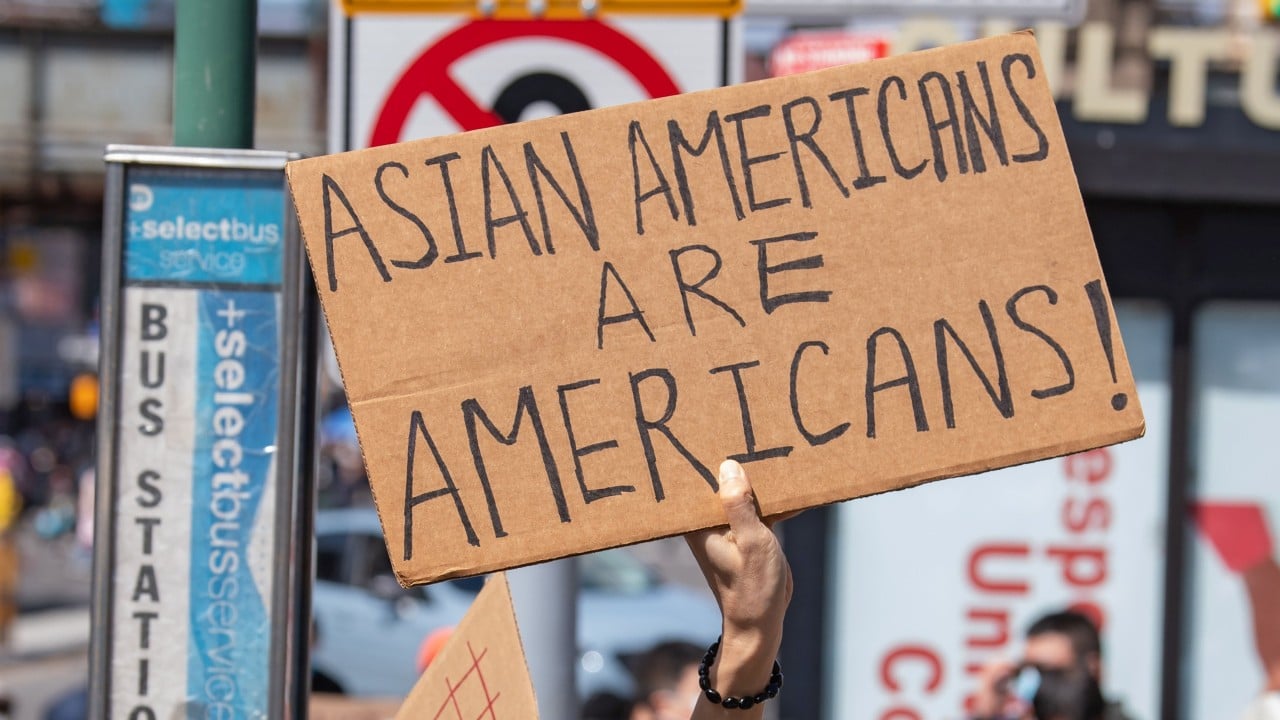
Political communication operates as a structural signal that lowers the operational cost of public bias. When executive or candidate rhetoric links a specific domestic demographic to external geopolitical or public health crises, it creates an algorithmic feedback loop that shifts public behavior from implicit bias to explicit hostility. This analysis establishes a formal transmission model showing how political statements transition from media broadcasts into measurable interpersonal and systemic discrimination against Asian-American populations.
Data from the Center for the Study of Hate and Extremism indicates that anti-Asian hate crimes in 16 of the largest United States cities rose by 149% in 2020, even while overall hate crimes dropped by 7%. This inverse relationship demonstrates that localized surges in bias are not random fluctuations; they are driven by specific systemic variables. To comprehend this variance, the underlying mechanics must be categorized into distinct behavioral and structural pillars.
The Three Pillars of Rhetoric Transmission
The translation of political speech into public action depends on three distinct structural mechanics.
+------------------------------------+
|      Executive/Political Speech    |
+------------------------------------+
                  |
                  v
+------------------------------------+
| 1. The Validation Premium          |
|    - Lowers social friction        |
+------------------------------------+
                  |
                  v
+------------------------------------+
| 2. Geopolitical Blurring           |
|    - Merges foreign policy with    |
|      domestic identity             |
+------------------------------------+
                  |
                  v
+------------------------------------+
| 3. Digital Amplification Cascade   |
|    - Algorithmic engagement loops   |
+------------------------------------+
                  |
                  v
+------------------------------------+
|  Measurable Offline Discrimination |
+------------------------------------+
1. The Validation Premium
Societal norms act as a regulatory tax on public bigotry. When an elite political actor utilizes explicit or thinly veiled xenophobic language, that regulatory tax is effectively removed. The speaker provides structural validation, lowering the psychological friction required for individuals to express latent animosity. In March 2020, data tracking showed that an immediate spike in anti-Asian hate incidents occurred concurrently with the introduction of highly racialized nomenclature for the SARS-CoV-2 virus by executive leadership. Conversely, when political figures deliberately used neutral language on specific days, localized police departments noted a brief, measurable flattening in daily incident reports, illustrating the direct cause-and-effect link between official communication and public safety.
2. Geopolitical Blurring
The second mechanism is the deliberate conflation of foreign state actors with domestic populations. When trade disputes, intellectual property theft, or national security threats are discussed using broad national markers rather than precise institutional designations, the public struggles to differentiate between a foreign government and an American citizen of that ethnic descent. This creates an existential threat framing. For example, public focus on specific technologies or visa programs, such as the H-1B visa debate or the emergence of foreign artificial intelligence tools, frequently correlates with immediate, non-localized surges in digital harassment.
Data compiled by Stop AAPI Hate between late 2024 and early 2025 revealed a 66% increase in targeted online slurs within monitored domestic violent extremist spaces immediately following national political shifts. Within this subset, South Asian communities bore 75% of the targeted slurs during peak periods of public immigration and visa debates, highlighting how specific legislative rhetoric shifts the target profile dynamically.
3. The Digital Amplification Cascade
The third pillar rests on algorithmic optimization. Modern information systems prioritize high-arousal negative emotions, specifically anger and moral outrage. When high-profile political actors issue stigmatizing statements, digital platforms multiply the reach of those statements via engagement-maximizing algorithms. This creates a dense, self-reinforcing information environment. The translation from digital amplification to physical threat is direct: online threats of violence against Asian communities increased by 59% in a single month during periods of intense online policy debates.
Quantifying the Systemic Friction
The impact of this rhetoric is not limited to physical or verbal security breaches; it imposes a continuous tax on the daily operations of the targeted demographic. Pew Research Center data indicates that 58% of Asian adults in the United States have experienced racial discrimination. Breaking down this metric reveals specific operational bottlenecks:
- Interpersonal Friction: 37% of Asian adults report being subjected to offensive name-calling by strangers in day-to-day interactions.
- Perceptual Bias: 78% of Asian adults report being treated as foreigners, regardless of their generation or place of birth.
- Systemic Scrutiny: Regional origin creates asymmetrical outcomes. For example, 35% of South Asian adults report being detained or selected for secondary screening at security checkpoints, compared to 15% of Southeast Asians and 14% of East Asians.
This differential exposure underscores the reality that "Asian-American" is not a monolithic analytical unit. The systemic friction adjusts depending on the specific focus of national political discourse—shifting between economic protectionism, public health anxieties, and national security containment.
The Cost Function of Model Minority Mythologies
A significant analytical failure in standard media reporting is the omission of how positive stereotyping functions as a tool of isolation. The concept of the "model minority" acts as a structural buffer that masks systemic vulnerability.
+-----------------------------------------------------------+
|               Model Minority Stereotype                   |
+-----------------------------------------------------------+
                              |
            +-----------------+-----------------+
            |                                   |
            v                                   v
+-----------------------+           +-----------------------+
| Strategic Isolation   |           | Psychological Deficit |
| - Minimizes access to |           | - Diverts resource    |
|   civil rights defense|           |   allocation away     |
|   mechanisms          |           |   from mental health  |
+-----------------------+           +-----------------------+
This framing creates two clear structural limitations. First, it minimizes the perceived need for civil rights protections, legal aid, and public funding for Asian-American communities. Because the demographic is broad-brushed as socioeconomically secure, institutional defense mechanisms are frequently underfunded or completely absent.
Second, it generates a psychological deficit. Second-generation Asian adults—the U.S.-born children of immigrants—view the model minority label as a negative mechanism at a rate of 62%, compared to only 26% of first-generation immigrants. This generational divergence demonstrates that as a demographic becomes more integrated into the domestic political environment, the awareness of how these labels are weaponized to dismiss systemic discrimination increases.
Strategic Mitigations for Organizational Leadership
To counteract the volatility introduced by political rhetoric, institutional leaders cannot rely on passive diversity statements. Organizations must implement objective, data-driven security and support frameworks.
First, corporations and academic institutions must decouple global geopolitical risk assessments from internal human resource management. When international tensions escalate, security teams must proactively scale up monitoring for internal harassment and deploy anonymous reporting mechanisms specifically calibrated for ethnic discrimination.
Second, legal and operational resources must be misaligned with broad categories and realigned with precise data. Funding should be directed toward localized tracking networks that measure immediate spikes in community harassment following national policy shifts, allowing for real-time asset deployment to protect vulnerable populations.
The baseline reality is clear: political rhetoric is an economic and physical variable that directly alters the safety and operational efficiency of millions of citizens. Organizations that fail to treat this rhetoric as a measurable risk factor will consistently fail to protect their workforce and optimize their operational security.