Entertainment journalism has run out of ideas, so it is digging through a 2012 trash can to manufacture outrage about a casting rumor that does not even reflect how modern franchises operate.
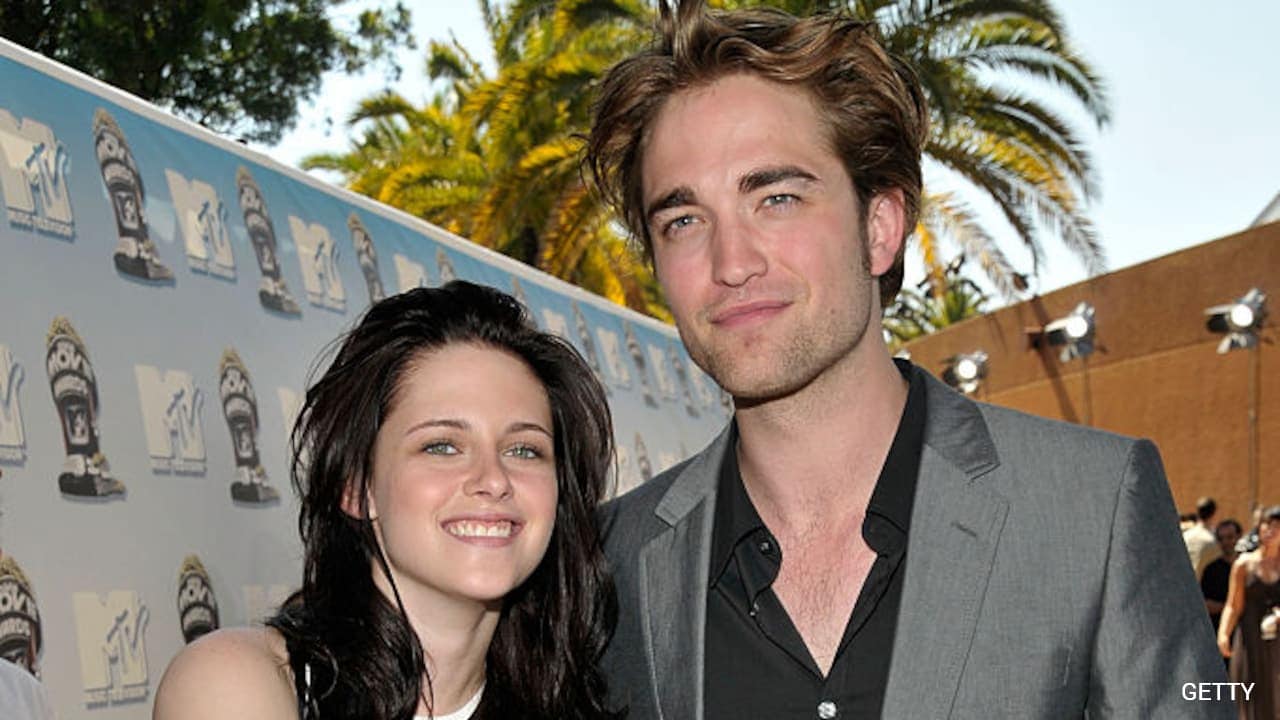
Every few months, the internet performs the exact same ritual. A fresh round of James Bond casting rumors hits the trades, Robert Pattinson’s name floats to the top of the betting odds, and within hours, digital editors dust off Donald Trump’s decade-old tweets telling Pattinson to "dump" Kristen Stewart. The framing is always identical. It is treated as a quirky pop-culture time capsule, an ironic collision of politics and prestige cinema, or an awkward piece of baggage trailing a leading man into the biggest role of his career.
That entire narrative is lazy. Worse, it fundamentally misunderstands what actually drives intellectual property value, how casting risk is priced in contemporary studio boardrooms, and why Donald Trump’s 2012 Twitter feed is the least relevant variable in the entire Bond equation.
If you are still reading articles connecting a hypothetical 007 contract to a fourteen-year-old celebrity breakup feud, you are falling for traffic-farming nostalgia disguised as industry analysis.
The Anatomy of a Manufactured News Cycle
Let us look at the mechanics behind why this story keeps returning from the dead.
First, the URL in the competitor’s brief is literally undefined because the story itself is evergreen clickbait. Digital entertainment desks operate on predictable search-volume triggers. Whenever "Robert Pattinson" and "James Bond" spike simultaneously in search trends, content management systems flag secondary high-volume keywords historically associated with Pattinson. Years of tabloid indexing ensure that "Trump" and "Kristen Stewart" remain permanently tethered to Pattinson’s entity graph.
Algorithms do not care about narrative relevance. They care about co-occurrence. So an editor assigns a 600-word aggregation piece connecting the two, pretending there is a cultural through-line between a billionaire reality star live-tweeting Twilight drama in October 2012 and Amazon MGM Studios evaluating a multi-hundred-million-dollar espionage franchise in 2026.
I have sat in digital media war rooms where editors openly admit that nostalgia-rage mashups outperform actual reporting by a factor of three to one. You do not need sources at Eon Productions or MGM to write about old tweets. You just need an embed code and a snarky subheadline.
The real story is not that Trump once tweeted relationship advice at Edward Cullen. The real story is why legacy studios and modern streamers are terrified of making a decisive Bond casting choice—and why Pattinson represents a fascinating, high-variance financial gamble that has nothing to do with his tabloid past.
What Everyone Gets Wrong About Casting Baggage
The prevailing wisdom among entertainment commentators is that high-profile franchise leads must arrive with sanitized, friction-free public histories, or else their past controversies will distract from the marketing campaign.
That premise died roughly ten years ago.
Consider the actual history of James Bond casting. When Daniel Craig was announced in October 2005, the backlash was immediate, vicious, and relentless. Tabloids ran front-page campaigns calling him "James Bland." Fans launched boycotts over his blonde hair, his height, and his perceived lack of aristocratic charm. Casino Royale went on to gross over $600 million worldwide and reset the entire action genre.
Before Craig, Pierce Brosnan spent years trapped in contractual limbo with Remington Steele, while Timothy Dalton was dismissed by casual audiences as too theatrical and insufficiently glamorous.
Audiences do not reject actors because of weird internet trivia from a previous decade. Audiences reject movies when the tone is muddled, the script is committee-written sludge, or the marketing promises something the film fails to deliver.
Trump’s 2012 tweets—where he claimed Stewart cheated on Pattinson "like a dog" and predicted Pattinson would thank him later—are not a liability for a Bond campaign. They are not even a speed bump. In fact, treating them as a notable talking point insults the intelligence of moviegoers who watched Pattinson spend the last decade systematically dismantling his teen-idol image.
The Pattinson Pivot Nobody Wants to Measure Properly
To understand why Pattinson’s name even enters the Bond conversation, you have to look at his post-2012 career trajectory as a deliberate, high-risk capital allocation strategy.
Most actors who survive a massive young-adult franchise cash in immediately. They take a mid-budget studio comedy, sign onto a secondary superhero property, or launch a lifestyle brand while their Q Score is peaking. Pattinson did the exact opposite. He deliberately cratered his mainstream commercial visibility to rebuild his credibility from the ground up.
Look at the sequence of choices:
- 2012–2014: Working with David Cronenberg on Cosmopolis and Maps to the Stars, projects guaranteed to alienate the Twilight demographic.
- 2017: Good Time with the Safdie brothers, a frantic, unglamorous crime thriller shot on gritty New York streets that proved he could carry a movie purely on nervous kinetic energy.
- 2019: The Lighthouse with Robert Eggers, an experimental black-and-white two-hander where he spent two hours screaming at seagulls and descending into madness.
- 2020–2022: Leveraging that indie credibility back into studio tentpoles—first as Neil in Christopher Nolan’s Tenet, and then as Bruce Wayne in Matt Reeves’s The Batman.
By the time Pattinson put on the cowl in The Batman, nobody cared about Twilight, and nobody cared about 2012 gossip blogs. He had successfully engineered a complete perceptual reset.
Here is the nuance the clickbait articles completely miss: Pattinson does not need James Bond, and James Bond might not actually survive Pattinson.
Why James Bond Is Facing an Existential Structural Crisis
When commentators ask, "Would Robert Pattinson make a good James Bond?" they are asking the wrong question. The real question is whether the James Bond franchise still possesses a coherent identity capable of supporting a generational actor.
For sixty years, Eon Productions operated as a fiercely independent family business run by Albert "Cubby" Broccoli and later by Barbara Broccoli and Michael G. Wilson. Their model was simple: long gaps between installments, tight creative control, theatrical exclusivity, and an obsession with protecting the core brand from over-exposure.
Then Amazon acquired MGM for $8.5 billion in 2022.
Everything changed the moment Bond moved under the roof of a trillion-dollar tech conglomerate whose primary business metric is Prime ecosystem retention. Even with creative guardrails in place, the structural tension between boutique theatrical filmmaking and algorithmic content farming has paralyzed the franchise. It has been years since No Time to Die killed off Daniel Craig’s iteration of 007—the first time in franchise history the character explicitly died on screen.
Think about what that narrative choice actually did. It severed continuity completely. Whoever steps into the tuxedo next is not just putting on a watch and ordering a martini; they are tasked with justifying why a Cold War-era British intelligence operative still matters in an era of drone warfare, cyber-espionage, and algorithmic surveillance.
If you cast a safe, conventional leading man—someone who looks great in a Tom Ford suit and reads lines smoothly without subverting the material—you get a nostalgic museum piece. It will do respectable box office in the UK and Europe, underperform with Gen Z in North America, and quietly fade into streaming background noise.
If you cast Robert Pattinson, you are inviting chaos into the building.
The Real Risk of Casting Pattinson as 007
Let us be brutally honest about the downsides of putting Pattinson in the role—the real commercial and creative risks that have zero connection to Donald Trump.
First, franchise fatigue and brand confusion. Pattinson is already the face of Warner Bros.’s The Batman universe. Asking global audiences to accept the same actor simultaneously as the brooding, nocturnal billionaire vigilante of Gotham City and the suave, globe-trotting operative of MI6 creates massive visual and tonal overlap. Both characters are wealthy orphans traumatized by violence who wear tailored black outfits, drive custom vehicles, and operate outside legal boundaries. Even with different accents and lighting palettes, marketing both franchises concurrently dilutes the singularity of each brand.
Second, Pattinson’s artistic temperament. Throughout his career, Pattinson has shown a consistent allergy to playing things straight. In Tenet, he played an intelligence operative with breezy, slightly detached irony. In Mickey 17, he leaned into physical comedy and vocal eccentricity. In The Batman, he played Bruce Wayne not as a charming playboy, but as a socially stunted, Nirvana-listening recluse.
James Bond, by contrast, requires a baseline commitment to classic, unironic masculinity—even when deconstructed, as Craig did in Casino Royale and Skyfall. If Pattinson treats 007 as an exercise in postmodern deconstruction, half the core audience will walk out feeling mocked.
Third, schedule compression. Major franchises demand multi-picture commitments spanning a decade or more. Pattinson has spent his entire adult career guarding his schedule so he can pivot between big-budget films and idiosyncratic auteur projects. Locking himself into a rigid 007 production cycle—complete with six-month press tours, luxury watch endorsements, and relentless physical conditioning—runs counter to every career instinct he has demonstrated since 2012.
Notice that none of these obstacles involve a single tweet from a former president. Studio executives do not sit in greenlight meetings worrying about what happened on Twitter during the Obama administration. They worry about overlapping IP contracts, international presales, insurance bonds, and whether an actor will show up to a red carpet in London willing to sell a $250 million investment without rolling his eyes at the press junket.
Dismantling the "People Also Ask" Myths
Whenever a rumor cycle like this catches fire, search engines flood with surface-level questions that reinforce the wrong framing. Let us tear down the three most common ones directly.
"Did Donald Trump’s tweets hurt Robert Pattinson’s career?"
No. They did the exact opposite, though not in the way pundits think. At the time, the tweets briefly prolonged a tabloid cycle that Pattinson desperately wanted to escape. By refusing to engage—never tweeting back, never taking the bait on late-night talk shows, and letting the news cycle burn itself out—Pattinson demonstrated a level of media discipline that most modern celebrities are incapable of maintaining. In Hollywood, silence during a viral pile-on is a superpower.
"Why do people keep bringing up Trump’s tweets whenever Pattinson is in the news?"
Because modern digital publishing rewards low-effort pattern matching. Linking a Hollywood A-lister to the most polarizing political figure of the twenty-first century guarantees clicks from two entirely separate audiences: entertainment readers and political doom-scrollers. It is an editorial shortcut used when a writer has nothing original to say about an actor’s actual body of work.
"Is Robert Pattinson officially cast as the next James Bond?"
No. Until Eon Productions and Amazon MGM issue an official press release announcing a director, a shooting schedule, and a signed lead actor, every casting story—whether it involves Pattinson, Aaron Taylor-Johnson, Theo James, or anyone else—is speculative noise. Bookmakers adjust odds based on betting volume and tabloid chatter, not leaked deal memos.
How to Actually Evaluate Franchise Casting Rumors
If you work in entertainment, media, or brand strategy—or if you simply want to stop getting played by algorithmic clickbait—stop reading casting rumors through the lens of celebrity gossip and start reading them through industrial incentives.
Next time a headline tries to connect a major casting rumor to an irrelevant pop-culture artifact, run it through three filters:
- Follow the contractual bottlenecks, not the betting odds. Betting markets move on five-thousand-dollar wagers placed after a British tabloid runs an anonymous blind item. Real casting moves on availability windows. If an actor is locked into a multi-year studio sequel elsewhere, their odds of headlining a rival flagship franchise drop dramatically, regardless of how good they look in a tuxedo.
- Look for the director first. Serious franchises rarely lock in a transformative lead actor before establishing the tonal architecture with a filmmaker. When Sam Mendes joined Skyfall, he reshaped the entire direction of the Craig era. When Christopher Nolan or Denis Villeneuve gets floated for Bond, that tells you infinitely more about the studio’s ambitions than any actor shortlist.
- Ignore any headline built on a "resurfaced" social media post. The word "resurfaced" is editorial code for "nothing actually happened today, so we searched an archive to manufacture a conflict." Whenever you see it in a headline, close the tab.
The Real Lesson Behind the Noise
The obsession with dragging Donald Trump’s 2012 tweets into a 2026 James Bond discussion exposes a deeper rot in how we talk about culture.
We have become so addicted to flattening complex creative and financial decisions into cheap, shareable meme history that we miss the actual drama happening right in front of us. Watching a former teen-vampire idol methodically weaponize independent cinema to become one of the most unpredictable leading men of his generation—while a trillion-dollar tech giant tries to figure out how to resurrect a sixty-year-old British spy without turning him into content-mill filler—is a genuinely fascinating collision of art and commerce.
Reducing that tension to a fourteen-year-old tweet about Twilight is not journalism. It is intellectual laziness dressed up as pop-culture memory.
Stop clicking on resurrected tweets and start paying attention to who actually signs the contracts.