Wildlife rehabilitation is supposed to end in freedom. You feed an injured animal, nurse its broken body back to health, teach it how to hunt, and release it into the wild where it belongs. That is the textbook theory. Reality, however, is significantly messier, especially when wild animals develop a profound psychological bond with the humans who saved them.
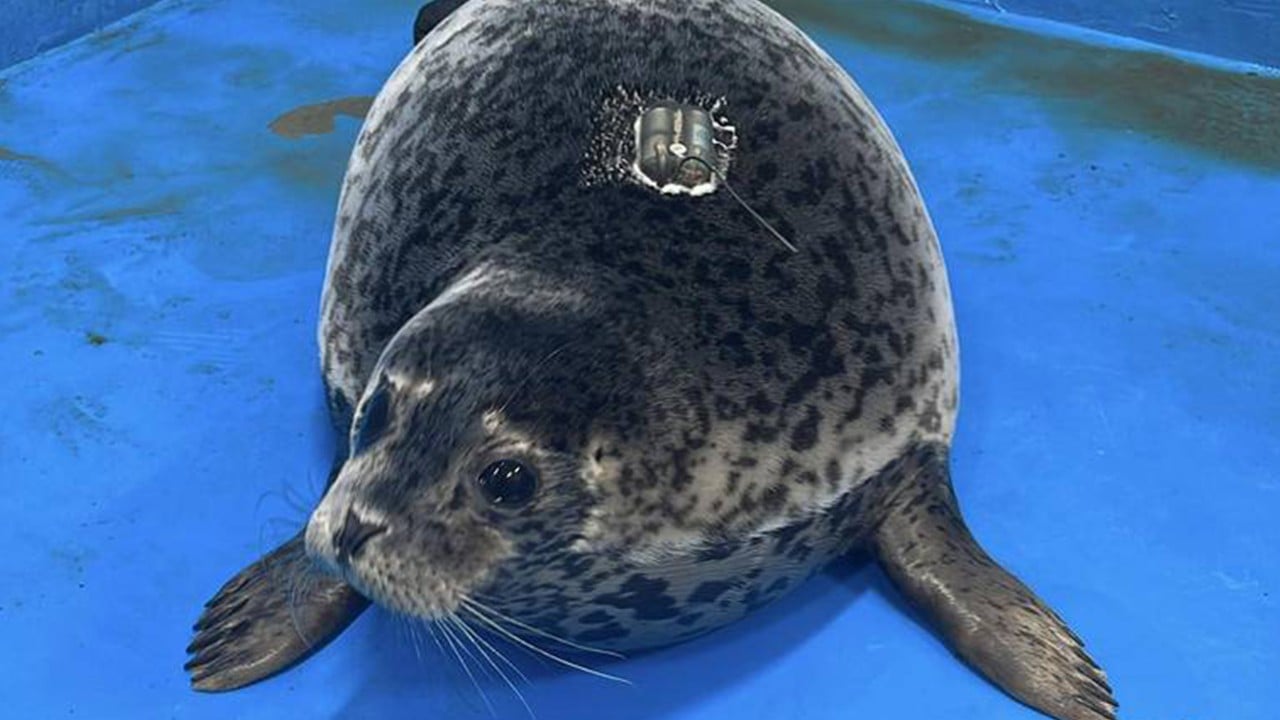
Meet Nana. Nana is a spotted seal—a young, expressive marine mammal whose recent stunt captured the collective imagination of millions across China. After being rehabilitated for over a year, transported hundreds of kilometers away, and released into remote waters intended to force a return to wild herds, Nana did something extraordinary. She swam two hundred kilometers back to the crowded tourist island she had previously called home.
Her journey exposes the uncomfortable truths of wildlife conservation, human imprinting, and the surprising emotional resilience of marine life. Most people assume wild animals yearn only for isolation and open nature. Nana proved that safety, familiarity, and human connection can sometimes outweigh instinct.
The Rescue That Started It All
To understand why Nana refused to stay in the wild, you have to look back at how her life with humans began. In October 2024, Beihai's ocean bureau launched an emergency rescue operation after a severe typhoon slammed the coast of the Guangxi Zhuang autonomous region. Among the casualties of the storm was a tiny, spotted seal pup with five visible wounds scattered across her fragile body.
She was barely several months old. Without human intervention, she would have died within hours, either succumbing to her injuries or falling prey to coastal predators. Marine experts stepped in, providing round-the-clock medical treatment, shelter, and steady meals.
Over more than a year of intensive care, Nana transformed physically. Her initial weight of thirty-five kilograms climbed to a healthy fifty kilograms. But physical healing is only half the battle. While her wounds closed, her psychological dependence on her caretakers deepened. She learned to associate humans not with fear or danger, but with food, protection, and warmth.
In late November 2025, conservationists transferred her via airplane to Dalian in Liaoning Province to begin specialized rewilding training. The goal was clear: strip away her domestic habits, reintroduce her to open waters, and blend her into the natural population. Officials even tried an initial release near Sanshan Island in April, which yielded warning signs about her reluctance to sever ties with civilization.
Anatomy of an Epic Swim
The definitive test came on September 7. Local officials in Changhai county transported the now two-year-old seal far out into isolated waters off Haiyang Island, intentionally picking a spot far removed from human settlements, tourist boats, and piers. Biologists hoped that distance and peer pressure from surrounding wild herds would spark her natural migratory instincts.
They miscalculated.
Instead of heading out to sea or integrating with wild spotted seal pods, Nana turned her whiskers toward home. She embarked on a grueling, two-hundred-kilometer solo navigation through open coastal waters. Her documented route took her past the waters off Pikou on the Dalian mainland, slicing past Guanglu Island and Guapi Island before closing in on her target.
She did not take the scenic route. She powered through maritime traffic, unpredictable currents, and open stretches of ocean with a singular, stubborn objective.
On September 13 at precisely 9:35 p.m., six days after her offshore release, Nana hauled her exhausted body back onto the floating pontoon at Dachangshan Island's Golden Beach. Local homestay owners and witnesses reported that she was panting heavily. She had lost noticeable weight during the grueling transit, her sleek coat dusted with the exhaustion of an epic maritime commute. She was back where she felt safe.
The Ecological Context of Liaodong Bay
To appreciate the weight of Nana's choice, you have to understand the fragile status of her species. Spotted seals are a Class I protected species in China and stand out as the only pinnipeds that breed within Chinese waters. Approximately two thousand of these animals inhabit Liaodong Bay, representing the southernmost of the species' eight distinct breeding grounds across the globe.
During January and February, mothers give birth to white-coated pups directly on the shifting sea ice of Liaodong Bay. It is a harsh, demanding environment where survival requires sharp instincts honed by wild parents. When a seal pup is pulled out of this ecosystem prematurely due to injury or natural disaster, it misses the crucial window of maternal education.
Rehabilitation centers do their best to simulate natural feeding and survival tactics, but they cannot replicate a mother seal's rigorous behavioral training. When Nana was hand-fed and sheltered for over twelve months, her brain wired itself to view human infrastructure as a reliable home base. When dropped into the open ocean, she didn't see an ecosystem of opportunity; she saw an eviction notice.
The Social Media Phenomenon and Policy Dilemma
Nana's return triggered an immediate viral wave across Chinese social media platforms. Short videos of her exhausted arrival on the Dachangshan pontoon drew millions of views, turning the rebellious mammal into an unexpected internet celebrity.
Public sentiment immediately split from rigid bureaucratic protocol. While wildlife officials initially worried about the risks of habituation, ordinary citizens rallied fiercely behind the seal's right to choose her home. One viral comment on a local news thread captured the public mood entirely: "Since it enjoys this location, I urge you not to relocate it again. We should respect its choice, right?" That single comment pulled thousands of enthusiastic likes within hours.
Faced with overwhelming public affection and Nana's stubborn refusal to stay away, China's Marine Development Bureau adapted. Instead of initiating a third stressful relocation attempt, authorities took an unprecedented administrative step. In late September, the bureau launched an official social media account dedicated entirely to Nana.
The stated goal of the official channel is twofold: protect her physical safety and manage her growing fame among tourists. Authorities issued firm, public guidelines for anyone visiting Dachangshan Island. Nana is still technically a wild animal adjusting to her environment. While she isn't naturally afraid of humans, crowding, chasing, flash photography, or unauthorized feeding can trigger severe stress responses and derail her health.
What Nana Teaches Us About Human Wildlife Interference
Stories like Nana's force a hard conversation about the limits of wildlife rehabilitation. We love rescue stories. We cheer when an injured animal opens its eyes, takes its first steps, or accepts a fish from a rescuer. But we rarely talk about the psychological footprint left behind.
When you feed a wild creature, you alter its worldview permanently. You trade its raw, instinctual survival capability for a comfortable, domesticated dependency. For a spotted seal, independence is not just about catching fish; it is about trusting the vast, empty ocean over the familiar shadow of a human dock.
Nana chose the dock. She swam two hundred kilometers of dangerous coastal water because the alternative terrified her more than the effort of returning.
If you happen to visit Dachangshan Island and catch a glimpse of Nana resting on her favorite floating pontoon, admire her from a distance. Do not crowd her, do not attempt to feed her, and definitely do not disturb her peace. She swam two hundred kilometers to find her humans; the least we can do is give her the quiet space she earned.