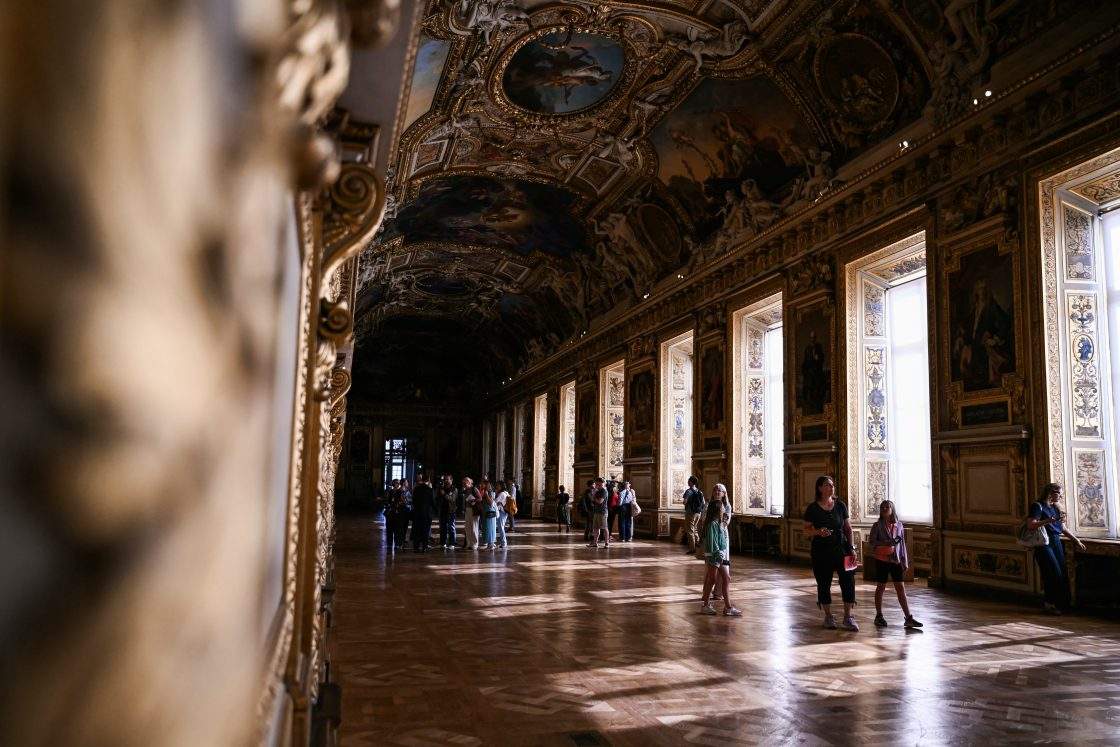
When the doors to the Galerie d'Apollon swung open on Wednesday morning, tourists flooded into the sunlit hall, craning their necks to admire the gilded ceilings and Greek frescoes. They were treading the exact path toward the Mona Lisa that millions take every year. Yet, something fundamental had changed.
The glittering display cases that once held France's most storied crown jewels were completely gone. No sapphires, no emeralds, not even empty glass boxes left to taunt the public.
Nine months after a brazen $102 million daytime heist shook the art world, the Louvre reopened its famed Apollo Gallery. But instead of rushing to put remaining treasures back under glass, museum leadership made a radical choice: they stripped the room back to its 17th-century ceremonial roots.
Honestly, it's the smartest operational decision the Louvre has made in years.
An eight minute disaster that exposed systemic flaws
To understand why the jewels aren't coming back to the Apollo Gallery, you have to look at what went down on October 19, 2025.
It took just under eight minutes. Four thieves rolled up along the Seine in broad daylight disguised in neon construction vests. Using a motorized furniture lift—a everyday sight on Paris streets—two masked men scaled the facade to a first-story balcony. They sliced through a glass window with a power disc cutter, stepped into the Apollo Gallery, threatened guards, smashed the display cases, and cleared out eight priceless pieces.
They fled on Yamaha motor scooters, dropping the Crown of Empress Eugénie on the pavement outside during their chaotic escape.
The physical loss was staggering: Queen Marie-Amélie’s sapphire set, Empress Marie-Louise’s emeralds, and Empress Eugénie's reliquary brooch. The financial estimate sits at 88 million euros ($102 million), but the cultural hit was immeasurable.
Stolen Treasures at a Glance
├── Queen Marie-Amélie & Queen Hortense: Sapphire tiara, necklace, single earring
├── Empress Marie-Louise: Emerald necklace, pair of emerald earrings
└── Empress Eugénie: Reliquary brooch, large corsage bow brooch, tiara
While police arrested several suspects, the majority of the jewels remain unrecovered. The lingering question wasn't just who did it, but how the world's most famous museum allowed a lift truck to park beneath its windows and cut through glass without an instant tactical shutdown.
The fallout was immediate. Former director Laurence des Cars resigned under mounting pressure after Senate hearings exposed blind spots in external video surveillance. Enter Christophe Leribault, who took the reins in February with a mandate to rebuild trust and overhaul a security apparatus that clearly wasn't cutting it.
Why returning to 17th century architecture makes practical sense
When Leribault took over, the museum faced a massive PR and security dilemma. Putting high-value gems back into a room with sweeping exterior windows right off the riverfront was a non-starter. Leave empty display cases, and the gallery becomes a morbid monument to a crime scene.
Instead, the Louvre chose pivot and re-contextualization.
The Galerie d'Apollon was originally designed under Louis XIV as a prototype for the Hall of Mirrors at Versailles. It was meant to showcase architectural grandiosity, celestial vault paintings, and royal authority—not serve as a vault for loose diamonds.
By removing the cases entirely, the Louvre shifted visitor focus back to the room's grand decor.
- Zero visual distraction: Visitors now view the painted ceilings by Eugène Delacroix and Charles Le Brun without bumping into crowds surrounding jewel cases.
- Security risk reduction: Moving remaining royal artifacts to a dedicated, windowless interior space drastically lowers perimeter risk.
- Decoupling entry points: The gallery resumes its function as a ceremonial thoroughfare, easing foot traffic bottlenecks toward the Mona Lisa.
Culture Minister Catherine Pegard didn't try to sugarcoat the reopening. She publicly acknowledged the "trauma" of discovering that an institution thought unshakeable was utterly vulnerable. The move doesn't erase the heist, but it stops the Apollo Gallery from remaining a crime scene photo.
The security makeover behind the scenes
Reopening the space required far more than sweeping up shattered glass and moving furniture. The Louvre is in the middle of a massive infrastructure overhaul.
Security upgrades installed ahead of the reopening include:
- New perimeter anti-intrusion systems: Upgraded sensors that trigger exterior lockdowns long before glass is touched.
- Expanded CCTV coverage: Eliminating the exact camera blind spots along the Seine facade that the thieves exploited.
- Modernized rapid-response protocols: Tightening communication links between private museum guards and Paris police units.
These changes tie into the broader "Louvre New Renaissance" project, an 800-million-euro modernization plan designed to fix chronic overcrowding and overhaul aging security networks. That larger plan includes creating a dedicated basement gallery for the Mona Lisa by 2031 to stop everyday gallery chaos.
What happens to the remaining crown jewels now
If you're visiting Paris this year, don't expect to see the surviving pieces of the royal collection in their old spot.
The museum is building a new, heavily fortified exhibition space located in a windowless core area of the building. This specialized room will feature state-of-the-art vault technology, vibration sensors, and isolated surveillance feeds.
If you're planning a visit to the Louvre in the coming weeks, here's how to approach the Apollo Gallery:
- Look up, not around: Focus on the central ceiling panel, Apollo Slaying the Serpent Python, painted by Delacroix. It's the real masterpiece of the room anyway.
- Adjust your expectations: Don't search for the crown jewels here. Look for official signage directing you to temporary displays for other decorative arts until the new high-security vault opens.
- Patience with entry: Security checks at the Pyramid and river entrances are significantly tighter than they were last year. Give yourself an extra 30 minutes just to clear the front line.
The stolen gems might be gone, but the room itself was always the real treasure. Stripping away the display cases brought back the light, the proportions, and the raw history of the space. It's a rare example of a cultural institution taking a disastrous loss and using it to fix a design flaw that should have been addressed decades ago.


