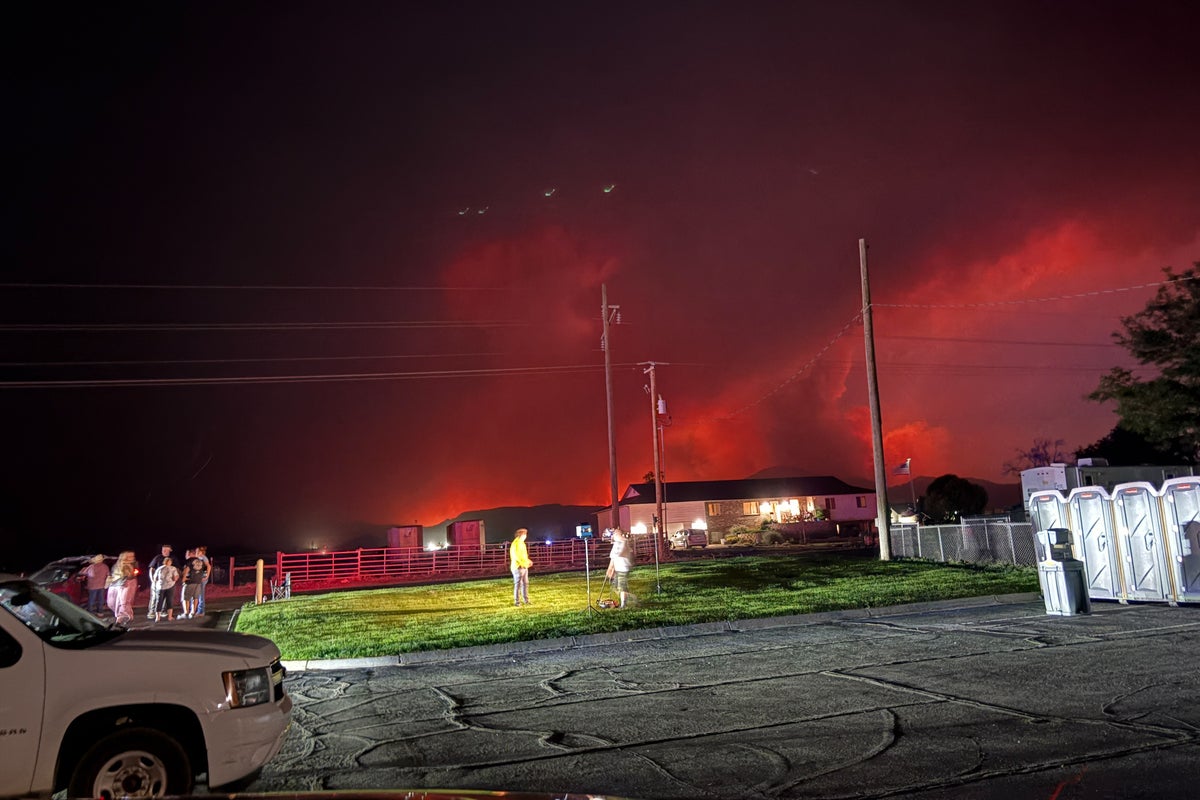
The air didn’t smell like summer. It smelled like an old campfire that someone had tried, and failed, to put out with dirt.
Sarah had already packed the cooler with marinated chicken, corn on the cob, and three different kinds of soda for the kids. The sparklers were sitting on the kitchen counter next to a half-empty bag of marshmallows. It was July 3. Tomorrow was supposed to be about bad tan lines, cold watermelon, and watching the local high school marching band out of tune.
Then came the text.
It wasn't a text from a friend. It was that sharp, synthetic shriek from the cell phone that bypasses your normal ringtone—the Wireless Emergency Alert. Evacuation Order. Leave immediately. An hour later, Sarah was in the driver’s seat of her SUV, watching a line of red taillights stretch into the darkness. In the rearview mirror, the horizon behind her house wasn’t black. It was a bruised, pulsating orange.
This is the reality for hundreds of thousands of Americans across five states this Fourth of July weekend. While the rest of the country argues over who gets the last burger or where to set up the lawn chairs for the fireworks, a massive swath of the nation is packing their lives into duffel bags. The dry facts on a news ticker tell you that record-breaking heatwaves and shifting wind patterns have triggered historic blazes. They tell you that emergency shelters are opening from the Pacific Northwest down through the mountain West.
But a news ticker can't tell you what it feels like to choose between saving your grandmother’s photo albums or your kid’s favorite stuffed bear when you have exactly nine minutes to clear out.
The Dry Tinder of the American West
Wildfires are not new. Anyone living west of the Mississippi knows that summer always carries a hint of smoke. But something has shifted. The rhythm of the seasons is broken.
To understand why five states are burning simultaneously right now, imagine a sponge. A normal forest floor is like a damp sponge, soaking up winter snowpack and spring rain. It stays resilient well into July. But over the last decade, consecutive years of intense heat have acted like a hair dryer on max speed, baking that sponge until it turns into dry, crumbly dust.
When a spark hits that dust—whether it’s from a stray firework, a dragging trailer chain, or a bolt of lightning—the result isn't a slow crawl. It’s an explosion.
Meteorologists point to a massive high-pressure system, a "heat dome," that has parked itself over the western half of the country. It traps hot air, chokes out moisture, and creates a vacuum that sucks winds down through canyon walls at terrifying speeds. When those winds hit a fire, they don't just blow it; they weaponize it. They turn embers into airborne embers that can fly a mile ahead of the main blaze, starting entirely new fires behind the people trying to escape.
Consider what happens next when these conditions collide with a national holiday.
The Collision of Tradition and Danger
The Fourth of July is deeply tied to fire. We celebrate our independence by lighting up the sky. It is a tradition baked into our cultural DNA.
Yet, this weekend, governors and fire chiefs across the affected states are begging people to put the matches away. In many counties, the possession of even sparklers—which burn at a staggering 1,200 degrees Fahrenheit, hot enough to melt glass—carries heavy fines or jail time.
It creates a strange, jarring contrast. In one town, families are being told to leave their homes with nothing but the clothes on their backs. Two towns over, just outside the evacuation zone, people are still trying to host their annual block parties, walking the fine line between celebration and catastrophe.
The economic toll of these holiday evacuations is an invisible weight that many families will carry long after the smoke clears. July Fourth is the busiest travel weekend of the summer. Hotels are fully booked, restaurants have ordered double their usual inventory, and local shops rely on this forty-eight-hour window to make enough money to survive the winter.
When an entire region goes under an evacuation order, that economic engine grinds to a sudden, violent halt.
Tourists flee, leaving empty hotel rooms and unpaid reservations behind. Small business owners face a double nightmare: the terrifying prospect of losing their physical shops to the flames, and the immediate financial ruin of a lost holiday weekend. For a mom-and-pop cabin rental business in Oregon or a guide service in Montana, a cancelled July Fourth weekend isn't just a bump in the road. It can be the difference between staying open or filing for bankruptcy by autumn.
What It Means to Walk Away
There is a specific kind of silence that happens inside a car when a family is evacuating.
The kids aren't fighting in the backseat. They are watching their parents' faces, looking for clues about how scared they should be. The dog is panting too hard in the cargo area, picking up on the ambient adrenaline in the air.
You think about the things you left behind. The cast-iron skillet your mother gave you. The garden you spent all May planting. The stack of tax documents in the file cabinet that you forgot to grab because you were too busy looking for the cat medication.
The human brain is not built to process the sudden erasure of safety. We build our lives on the assumption that the walls of our homes are permanent, that the roof will always be there when we look up. A wildfire shatters that illusion in seconds. It forces you to realize that everything you own, everything you’ve worked for, can be reduced to grey ash by a shift in the wind.
The firefighters on the front lines feel this weight acutely. Many of them are seasonal workers, young men and women who spend their summers sleeping in tents and breathing in toxic smoke for hourly wages that barely cover rent. They aren't just fighting trees; they are defending neighborhoods. They are standing between the fire and Sarah’s kitchen counter where the marshmallows are still sitting.
As the night deepens, the traffic on the highway moves at a crawl. No one is honking. There is a collective, unspoken understanding among the drivers. Everyone is in the same boat, drifting away from the shore of their normal lives, waiting to see what is left when the tide goes out.
On the horizon, a firework goes off. Someone, miles away from the danger zone, has lit a mortar. It bursts into a beautiful, fleeting cloud of blue and silver sparkles.
In the evacuation line, no one cheers. They just look at the light, then look back at the orange glow in the rearview mirror, wondering if they will have a home to return to when the holiday is over.