The air in the Oval Office doesn’t just sit; it presses. It is a room designed to make every occupant feel the crushing weight of history, a space where the floorboards seem to hum with the vibrations of a thousand world-altering decisions. But in the late 2010s, the most consequential vibrations weren’t coming from the floor. They were coming from a personal cell phone, buzzing with the persistence of a desert hornet.
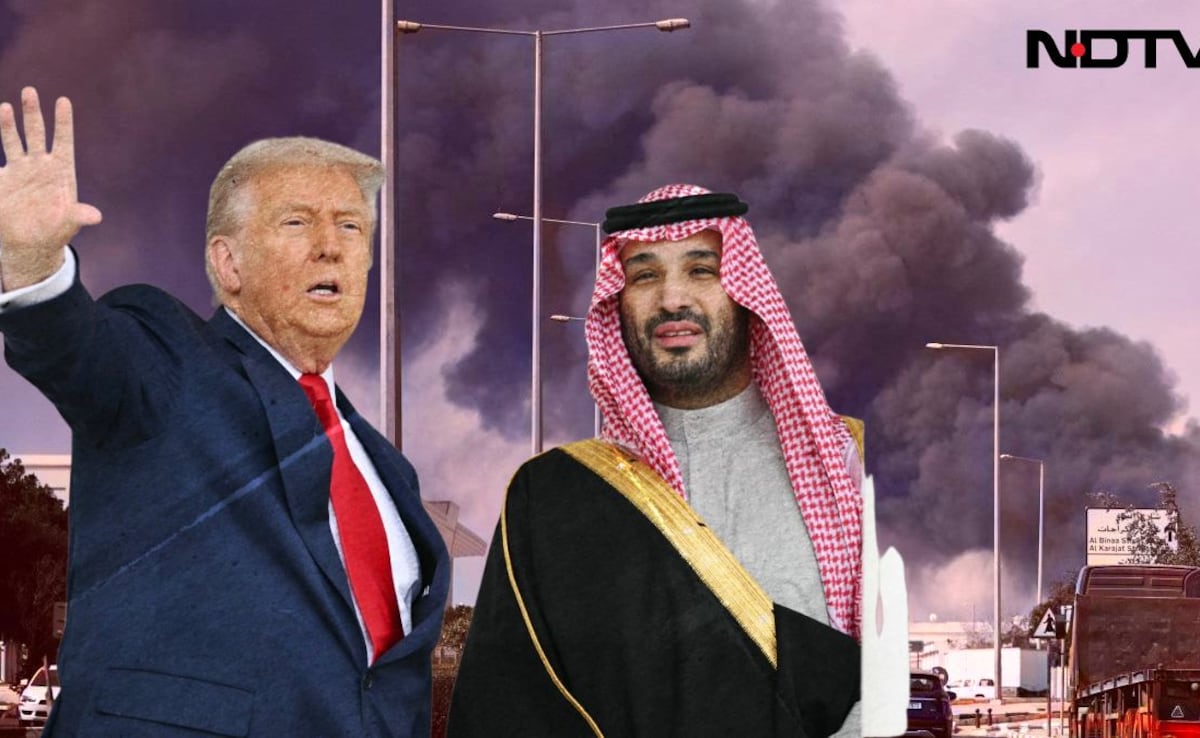
On the other end of that signal, thousands of miles away in a kingdom defined by sand and silver, a young prince was dialing. He wasn't calling the State Department. He wasn't going through the National Security Council. He was bypassing the massive, grinding gears of American bureaucracy to reach the one man who could change the map of the Middle East with a single tweet.
Mohammed bin Salman, the Crown Prince of Saudi Arabia, known globally as MBS, understood a fundamental truth about the new Washington: the old rules of diplomacy were dead. Formal white papers were for bureaucrats. If you wanted to move a mountain, you called the man at the top. And MBS called often.
The Architect of a Private War
Imagine a chessboard where the pieces are not made of plastic, but of oil barrels, ballistic missiles, and the lives of millions. To understand why a Saudi royal would spend his nights lobbying an American president to drop bombs on Iran, you have to understand the existential dread that haunts Riyadh. For the House of Saud, Iran isn't just a neighbor; it is a shadow that grows longer every year.
The prince saw a window. In Donald Trump, he found a leader who shared his visceral disdain for the 2015 Nuclear Deal—a piece of paper MBS viewed as a stay of execution rather than a peace treaty. The prince's strategy was simple: personal proximity. He didn't want a "strategic partnership" documented in a binder. He wanted a brotherhood of hawks.
Sources close to the administration at the time described the frequency of these communications as unprecedented. It wasn't just about official state visits or gilded dinners in Riyadh. It was the "off-the-books" nature of the relationship that sent shivers down the spines of the career diplomats at the Foggy Bottom headquarters. They were being ghosted by their own Commander-in-Chief in favor of a millennial royal with a vision for a scorched-earth regional reset.
A Whisper in the Ear
The lobbying wasn't subtle. It was a relentless drumbeat. In these private conversations, the Prince painted a picture of an Iran that was not just a rogue state, but an imminent parasite. He argued that the "maximum pressure" campaign was a good start, but it lacked a finishing move. He pushed for kinetic action—the kind of military strikes that would level the playing field and cement Saudi hegemony for a generation.
Consider the psychological leverage at play. You have a president who prides himself on being a "dealmaker" and a prince who controls the world’s most lucrative energy spigot. It was a symbiotic loop. MBS offered the promise of massive arms deals and a bulwark against "radical Islamic terrorism," and in exchange, he asked for the one thing every king desires: the removal of his greatest rival.
The risk, however, was invisible to the men on the phones. While they discussed "surgical strikes" as if they were ordering from a menu, the reality on the ground was far more jagged. War with Iran wouldn't be a tidy affair. It would be a regional wildfire that would skip across borders, igniting Lebanon, Iraq, and Yemen until the entire map turned red.
The Bureaucracy Strikes Back
Inside the West Wing, a quiet civil war was brewing. Men like H.R. McMaster and later John Bolton found themselves in a strange position. While they were often hawkish on Iran themselves, the "backchannel" nature of the MBS-Trump relationship bypassed the safeguards meant to prevent impulsive escalations.
Imagine being a high-ranking intelligence officer, responsible for monitoring Iranian troop movements, only to find out through a leaked report or a casual comment that the President had already discussed strike coordinates with a foreign head of state over a secure line the previous night. It was a nightmare of procedure.
The Prince’s persistence was a masterclass in modern influence. He knew that Trump valued loyalty and personal rapport over institutional expertise. By positioning himself as the only leader in the region who "truly understood" the threat, MBS made himself indispensable. He wasn't just an ally; he was an advisor.
The Cost of a Phone Call
What does it cost to have the ear of the most powerful person on Earth? For Saudi Arabia, it cost billions in redirected investments and a public relations nightmare following the death of Jamal Khashoggi. But for the rest of the world, the cost was a precarious instability. Every time the phone rang in the White House residence, the global oil markets held their breath.
There is a specific kind of tension that exists when the fate of nations is decided in the dark. It is different from the tension of a boardroom or a battlefield. It is the tension of the "what if." What if one of those calls had gone differently? What if the President had said "yes" to the most aggressive requests?
We often think of history as a series of grand, inevitable movements—the rise and fall of empires dictated by economics and geography. But more often than we care to admit, history is shaped by a vibration on a nightstand. It is shaped by a voice in the ear of a man who has the power to say "launch."
The Shadow of the Unspoken
The strikes MBS lobbied for never fully materialized in the way he envisioned. There was no full-scale invasion, no total decapitation of the Iranian regime. But the lobbying left a permanent mark. It shifted the "Overton Window" of what was considered acceptable discourse regarding Iran. Suddenly, the idea of an unprovoked strike wasn't a fringe theory; it was a topic of casual conversation between a prince and a president.
The invisible stakes of these calls weren't just about missiles and borders. They were about the integrity of the office itself. When a foreign power can bypass the entire American security apparatus to pitch a war directly to the President, the very definition of "national interest" begins to blur. Whose interest was being served? Was it the American taxpayer, or the House of Saud?
The Prince continues to lead. The former President continues to loom over the American political landscape. The phones are still there, charged and ready.
The desert wind still blows through Riyadh, and the air in the Oval Office remains heavy. The hornet is still buzzing. The only thing that changes is who is holding the phone, and how much they are willing to gamble on the voice on the other end.
Night falls over the Potomac, and somewhere, a screen lights up with a caller ID that doesn't go through the switchboard.