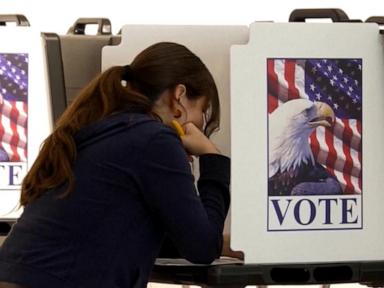
Cable news anchors love a big number. Put sixty-four million early ballots on a glowing chyron, cut to footage of Donald Trump in a swing state and Barack Obama working a crowd, and you have an instant, breathless narrative: historic enthusiasm is sweeping the nation, and the party with the biggest early tally is cruising toward victory.
It is lazy television. Worse, it is terrible data analysis.
Every two years, political media treats early voting totals like a live scoreboard. They count ballots returned by party registration in North Carolina, obsess over mail-in drops in Pennsylvania, and treat every surging line at a county clerk’s office as proof that a political movement is expanding the electorate.
They are confusing timing with volume.
When a campaign celebrates record early voting, they are usually just celebrating the fact that their most reliable, hyper-engaged partisans decided to vote on a Tuesday in October instead of a Tuesday in November. You cannot win an election by getting the exact same person to vote three weeks sooner. Yet political reporters and campaign press secretaries continue to sell early-vote surges as proof of an unstoppable wave.
The Cannibalization Trap
In campaign data shops, we do not view an early ballot as a guaranteed "plus one" to the final tally. We view it as a potential cannibalization of Election Day turnout.
Think of a voter pool as a fixed bucket of water. Early voting does not magically create new water; in most cycles, it simply gives people a bigger ladle to scoop out the water earlier.
Political science has been screaming this into the void for twenty years. Adam Berinsky, a political scientist at MIT, demonstrated as early as 2005 that convenience voting reforms rarely bring disconnected, low-propensity citizens into the process. Instead, early voting overwhelmingly attracts people who were already guaranteed to cast a ballot. They are older, wealthier, more educated, and deeply locked into partisan media.
I have sat in war rooms where regional field directors popped champagne over record first-week numbers, only to watch their Election Day turnout collapse like a wet cardboard box. They spent millions of dollars on paid canvassers, mailers, and digital ads chasing people who already had their minds made up and a stamp on their envelope. When you spend your budget harvesting votes you already owned, you starve the persuasion and low-propensity mobilization programs that actually decide close races.
Even more counter-intuitively, a famous 2014 study published in the American Journal of Political Science by Barry Burden and his colleagues found that standalone early voting can actually depress overall turnout. Why? Because stretching an election out over forty-five days kills the civic spectacle. When everyone votes on a single day, media coverage peaks, neighbors talk to neighbors at the precinct, and social pressure drags reluctant voters to the polls. When voting becomes a quiet, solitary administrative task stretched across a month and a half, that collective momentum evaporates.
Why Heavyweights Like Trump and Obama Are Really on the Trail
When mainstream coverage shows Trump and Obama stumping during the early-vote window, the standard commentary frames it as a last-ditch battle to "drive up the vote" among undecideds. That misunderstands what former and sitting presidents actually do in modern campaign mechanics.
Neither Donald Trump nor Barack Obama is out there winning over swing voters in October. By the time early voting opens, the number of genuinely undecided voters who are also reachable by a partisan rally is functionally zero.
Instead, these rallies serve two cold, logistical purposes:
- Ballot Banking (The Cash-Flow Play): A vote in the bank cannot be lost to a flat tire, a sudden rainstorm, a sick kid, or a late-breaking October scandal. By getting high-propensity loyalists to vote early, campaigns remove them from the "chase universe." Every person who votes early gets crossed off the database, freeing up field staff to focus exclusively on harder-to-reach targets in the final seventy-two hours.
- Earned Media Saturation for Low-Information Voters: A Trump rally in a red-leaning district or an Obama speech in a battleground metro generates local television clips. Low-propensity voters do not watch cable news panels, and they do not read campaign white papers. They catch thirty seconds of the six o'clock local news while making dinner. Seeing a massive crowd signals social proof—it tells the casual observer that everyone else is participating, which remains the single strongest psychological trigger for getting an apathetic citizen to care.
Notice the difference. The media thinks the crowd is the story. Strategists know the crowd is just the studio backdrop for a thirty-second local broadcast aimed at people who would never attend a rally in their lives.
Stop Asking "Who Is Winning the Early Vote?"
If you want to understand an election while ballots are still being cast, you have to stop asking the questions cable news pundits ask. Their questions are built on flawed premises designed to fill airtime.
"Does a massive early-vote lead mean a party is going to win?"
No. Party registration numbers in the early vote tell you who is voting, not how they voted, and certainly not who is left on the bench. Look at the structural shifts over the last several cycles. In states like North Carolina and Pennsylvania, early voting used to be an overwhelming Democratic firewall because Republicans culturally preferred showing up on Election Day. As GOP leadership aggressively pushed early and mail voting to match Democratic infrastructure, the partisan gap in early ballots narrowed dramatically. Seeing Republicans post stronger early numbers than they did four years ago does not automatically mean they gained new voters; it often just means traditional Tuesday Republicans decided to vote on a Thursday.
"Are record numbers proof of high voter enthusiasm?"
Not necessarily. High early numbers frequently measure anxiety and polarization, not enthusiasm. Voters terrified of the opposition winning—or paranoid about election administration and long lines—rush to cast their ballots early just to get it over with. Fear is a phenomenal motivator for early turnout, and it looks identical on a spreadsheet to joyful excitement.
"Why do campaigns spend so much money chasing early ballots if it just cannibalizes Election Day?"
Because financial efficiency matters more than raw turnout optics. In modern campaign management, contacting a voter costs money. Every door knock, text message, and mail piece carries a price tag. If you have a universe of 500,000 target voters and you get 300,000 of them to vote in the first two weeks, you just cut your remaining operational workload by sixty percent. You can reallocate your remaining cash into micro-targeted digital ads or late-stage ground operations aimed at the toughest 50,000 intermittent voters. Early voting is a resource management tool, not a magic wand.
How to Actually Read Early Voting Data
If you are watching the returns roll in and want to know what is actually happening beneath the surface, ignore the raw totals. Ignore the breathless headlines about "shattered records". Look at three specific metrics instead:
- Share of Low-Propensity Voters (The "0-of-4" and "1-of-4" Cohort): Campaigns score every registered voter based on how many of the last four general elections they participated in. A "4-of-4" voter is a political junkie; seeing them vote early means nothing. Watch the "0-of-4" (new registrants) and "1-of-4" (sporadic voters) cohorts. If early totals are breaking records and those sporadic cohorts make up a significantly higher percentage of the early pool than they did in the previous comparable cycle, that is a genuine wave. If the surge is entirely "4-of-4" voters, it is just an early stampede of the usual suspects.
- The Unaffiliated Split in Open-Primary States: Party registration tells you very little in states where independents hold the balance of power. Track the age and geographic distribution of unaffiliated early ballots. Are unaffiliated ballots surging in high-growth suburban counties or rural manufacturing hubs? Geography and age brackets reveal ideological leanings far better than party labels ever will.
- Drop-Off Rates by Precinct: Compare a precinct’s early vote total against its historical total turnout. When a precinct hits eighty percent of its previous total vote before Election Day even arrives, you are not looking at a massive expansion—you are looking at a community that has simply migrated its voting habit entirely to the pre-Election Day window.
The Honest Downside of The "Bank the Vote" Obsession
There is a real risk to treating early voting as purely a logistical banking exercise, and smart operatives admit it behind closed doors: you lock in your electorate before the campaign is actually over.
Politics is volatile. Events happen in the final ten days of an election cycle—economic reports drop, foreign crises erupt, candidates make catastrophic unforced errors on a debate stage. When sixty million people have already sealed their envelopes or pressed the button on a touch screen, a massive chunk of the electorate is frozen in amber.
If your candidate delivers a knockout blow in the final week, you cannot cash in on that momentum among voters who already cast their ballots three weeks earlier. Conversely, if your opponent implodes in late October, millions of their supporters are safely locked into the ballot box before they ever get a chance to experience buyer's remorse. Early voting reduces variance, which favors incumbents and frontrunners, while stripping underdogs of the late-breaking shockwaves they desperately need to flip a race.
Stop Watching the Scoreboard Before the Game Starts
The next time a news anchor points to a chart showing record early turnout and declares that one side has "momentum", change the channel.
Momentum is a sports cliché invented by television producers who need a storyline to fill twenty-four hours of dead air. Elections are not won by who shows up first to the stadium; they are won by who has the most points when the clock hits zero.
Early voting is simply an administrative convenience that lets committed partisans clear their calendars. Until you look at the voter history scores of the people standing in those lines, a record-breaking October tells you nothing about who is going to win in November.
For a deeper look at how early ballot numbers actually break down across battleground states, check out Record early voting in key states as Trump, Obama appeal to voters, which highlights the on-the-ground campaign pushes driving these early turnout headlines.