Cold rain taps against the double-glazed glass of a café near Kossuth Lajos Square. Inside, the air smells of roasted chestnuts, wet wool, and a quiet, exhausted kind of waiting.
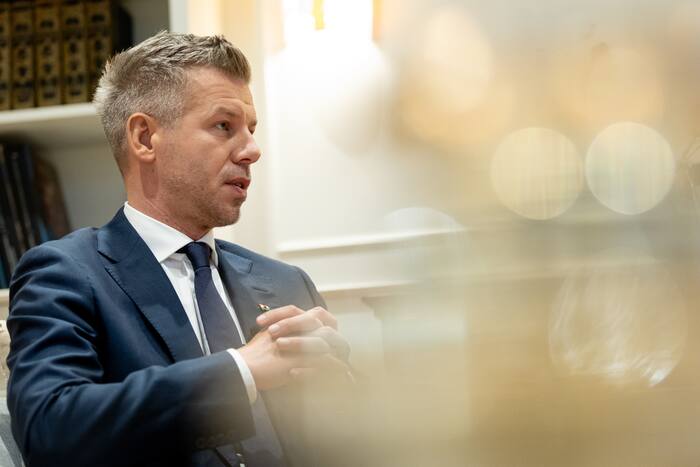
For more than a decade and a half, Hungary has lived inside a political weather system that rarely changed direction. Viktor Orbán built a fortress of state influence, media consolidation, and national sovereignty that seemed permanent to anyone watching from the outside—and heavy, almost immovable, to people trying to build an ordinary life inside it. Then Péter Magyar arrived, tearing through the complacency of Budapest’s squares with promises of accountability for the Orbán era while refusing to budge on migration. You might also find this similar article insightful: Why Buying Czech Skyfox Jets Is a Dangerous Distraction for Armenia.
To a reader skimming wire copy, that pairing sounds like a contradiction. How can a challenger demand a reckoning with entrenched power and still stand firm on border walls and strict migration controls?
Hungarians are not asking for a fairy tale. They are asking for two things that feel, to them, like survival. As reported in detailed coverage by NBC News, the results are notable.
A House With Two Locked Doors
To understand the pull of Magyar’s message, picture a family living in a house where the locks on the front door have been changed by the landlord, and every receipt from the last sixteen years has mysteriously vanished. (This is a hypothetical scenario created to illustrate how voters experience institutional capture alongside security anxiety.)
Inside that house, the children have watched friends move to Vienna, Berlin, or London because local hospitals felt under-resourced and public procurement seemed to reward the same familiar names time and again. The parents have felt the steady hum of state messaging telling them what to fear and whom to trust. Accountability, in this context, is not an abstract political science term. It is the wish to open the ledger, see where public money went, and restore rules that apply to everyone equally, even the people who wrote them.
Yet while the family wants the landlord’s books audited, they still hear the wind howling through the orchard at night. They remember the migrant surges of 2015, the chaotic scenes at train stations, and the feeling that Brussels was lecturing them from afar while asking Hungary to shoulder burdens without a clear plan.
So when Magyar promises accountability for the Orbán era while holding firm on migration, he is speaking to both locks on the door. One lock keeps out corruption and unaccountable power. The other keeps out what many ordinary Hungarians perceive as uncontrolled border pressure and cultural disruption.
Politicians love neat boxes. Voters live in messy rooms.
The Weight of Sixteen Years
I have spent enough time walking Central European streets during election seasons to recognize the particular fatigue that settles over a country after a long stretch of single-party dominance. It shows up in small moments. A taxi driver lowers his voice when talking about local contracts. A schoolteacher shrugs with a bitter laugh over a pay slip that barely covers winter heating. A young engineer packs two suitcases and calls it a "trial year" abroad that quietly stretches into five.
You do not need a think-tank report to feel that fatigue. You hear it in the sigh before a sentence begins.
For years, Orbán’s system thrived on a simple bargain: loyalty and stability in exchange for protective nationalism, family subsidies, and a combative stance against Western institutions. For many voters, that bargain worked well enough—until inflation bit hard, EU funds were frozen or contested over rule-of-law disputes, and whispers of personal enrichment among the politically connected grew too loud to ignore.
Accountability became the rallying cry because the sense of unfairness had become personal. When a nurse earns a fraction of what a connected businessman makes from a state-backed project, anger stops being ideological. It becomes arithmetic.
Magyar stepped into that gap not as a polite opposition bureaucrat, but as someone who knew the inner rooms of the system and chose to walk out. That insider knowledge gave his vow of accountability a sharp edge. Critics from the ruling party called him a traitor; critics from the traditional opposition eyed him with suspicion. Voters, hungry for someone who could actually shake the foundations, packed rallies in numbers that stunned observers.
Why Migration Refuses to Go Away
If accountability is the engine of Magyar’s challenge, migration is the ballast.
Anyone who thinks Hungary’s stance on migration is merely a talking point borrowed from Orbán is missing the deeper current underneath. In Central Europe, border security is often treated like a seawall. Even after a storm passes, coastal residents do not tear down the wall just because the tide looks calm today.
Consider how migration debates play out across Europe. In Western capitals, the conversation often centers on labor shortages, humanitarian obligations, and integration models. In Hungary, even voters who despise every aspect of the Orbán government frequently view migration through a lens of sovereignty and control. They worry about strain on public services, social cohesion, and being told by distant institutions how to police their own borders.
If Magyar abandoned a firm line on migration, he would hand the ruling party an immediate weapon: the accusation that he is a Brussels puppet ready to open the gates. Holding firm on migration strips away that attack before it can even land.
It is a calculated political posture. It is also a reflection of genuine public sentiment that spans well beyond Orbán’s core base.
Hypothetical Voices at the Kitchen Table
Imagine three neighbors sitting around a kitchen table in Szeged on a Sunday afternoon. (These characters are hypothetical composites meant to capture real cross-currents in Hungarian society.)
Ádám runs a small carpentry workshop. He is tired of watching bigger firms win municipal tenders through connections rather than craft. He wants courts that cannot be leaned on, prosecutors who answer to the law rather than a party hierarchy, and real transparency around public spending. He votes for accountability.
Ilona is a retired pharmacist who remembers the chaos of mid-2010s migration routes and watches news clips of border tensions across Europe with unease. She does not trust politicians who promise open doors without clear rules. She wants firm border protection and national control over who enters and stays.
Bence is twenty-four, speaks fluent English, and is debating whether to take a job offer in Munich. He cares about EU relations, clean institutions, and a future where merit matters more than party membership. He is skeptical of grand speeches and wants proof that promises of change will survive contact with power.
A candidate who ignores Ádám loses the desire for reform. A candidate who ignores Ilona triggers deep anxiety about security and sovereignty. A candidate who ignores Bence loses the next generation.
Magyar’s pitch tries to hold all three threads at once: clean up the system from the inside out, mend broken trust where possible, and keep the border line firm.
The Trap of Promises and Purity
Of course, promising accountability is much easier than delivering it.
History is unforgiving to movements that run on anti-corruption and institutional renewal. Once the cheering fades and the difficult legal work begins, every compromise looks like betrayal to the most ardent supporters, while every prosecution looks like political payback to the defeated camp.
Rebuilding trust in courts, media, and public administration takes years of patient, unglamorous work. You cannot fix sixteen years of concentrated influence with a single speech or a handful of decrees. And holding a hard line on migration brings its own friction—especially when Hungary’s economic recovery, EU funding negotiations, and diplomatic standing depend heavily on navigating complex relationships with neighbors and European partners.
There is a real tension there, even if voters want both outcomes at once. Can a leader demand strict accountability at home, push for healthier European ties, and still stand immovable on migration without colliding with political reality?
That is the test waiting behind the slogans.
What People Actually Fear
Beneath the headlines about coalitions, rallies, and policy platforms sits a quieter emotion: fear of being left behind.
Hungarians have watched their country swing between empires, ideologies, and economic experiments for over a century. When people cling to sovereignty and firm borders, they are often trying to hold onto a sense of agency in a world that feels increasingly out of their control. When they demand accountability, they are trying to reclaim agency inside their own backyard.
Both impulses come from the same root. People want to feel that their choices matter, that rules are fair, and that their home is secure.
The rain outside Kossuth Lajos Square has eased to a mist. Streetlamps flicker awake, turning wet cobblestones into ribbons of amber light. Somewhere nearby, someone locks a heavy wooden door, turns the deadbolt twice, and steps into the quiet of the evening—hoping tomorrow brings cleaner air, fairer rules, and a border that holds.