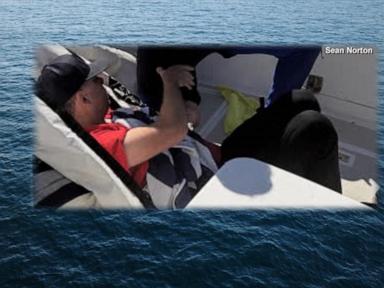
Falling off a cruise ship in the middle of the Pacific Ocean is supposed to be a death sentence. Yet every now and then, a story breaks where a local fisherman spots a lone figure treading water miles from land and pulls them aboard.
It sounds like a movie script. Honestly, when you look at the sheer scale of the Pacific, the odds of a random fishing skiff crossing paths with a single human head bobbing in open swells are astronomically low. Most viral news clips show the dramatic final thirty seconds—a soaked crew member grabbing a gunwale, exhausted and shivering—without explaining the brutal reality of how they got there or why survival is so rare.
If you've spent any time working maritime routes or studying ocean search-and-rescue protocols, you know that surviving a fall from a modern mega-ship isn't just about luck. It's a collision of physics, cold-water physiology, maritime law, and sheer human grit.
The Brutal Physics of Going Overboard
People assume falling off a cruise ship is like jumping off a high dive into a swimming pool. It's not.
Modern cruise liners tower anywhere from 100 to over 200 feet above the waterline. Hitting the ocean from deck 12 isn't a splash; it's like slamming into concrete at roughly 50 to 70 miles per hour. Even if you survive the initial impact without breaking bones or losing consciousness, you face an immediate, invisible threat: the ship's wake.
A vessel displacing 150,000 tons churns water violently. The suction from massive propellers and thrusters can drag a swimmer under before they even orient themselves. And the ship doesn't stop on a dime. A large cruise liner traveling at 20 knots needs well over a mile—and several minutes—just to come to a halt, let alone execute a Williamson turn to retrace its path.
By the time the bridge knows someone is missing, the ship is already miles away.
Why Cruise Ship Workers Face Unique Risks
When headlines mention a cruise ship worker rescued by a fisherman in the Pacific Ocean, people immediately jump to wild theories. Was it foul play? Did they jump? Did they slip?
The reality of life below deck is grueling. Crew members routinely work 10-to-14-hour shifts, seven days a week, for contracts lasting six to nine months straight. Fatigue is constant. While passengers are lounging by the lido deck with a drink, crew members are hauling heavy cargo, scrubbing outer decks in slick conditions, or grabbing a few minutes of air on narrow, isolated crew walkways near the stern.
The Mental and Physical Toll
Mental health struggles among maritime workers are an open secret in the industry. Isolation from family, cramped windowless cabins below the waterline, and relentless schedules take a heavy toll. According to maritime safety analysts and industry reports compiled by organizations like the Cruise Lines International Association (CLIA), man-overboard incidents involve both passengers and crew, though crew incidents often happen during off-peak hours when fewer eyes are on the water.
When a crew member goes overboard at 2 a.m. in the Pacific, nobody hears a splash over the roar of the engines and wind. Unless an automated detection system triggers an alarm, hours can pass before a supervisor notices someone missed their morning shift.
How a Fisherman Actually Finds Someone in Open Water
Think about how hard it is to spot a coconut floating in a choppy lake. Now scale that up to the Pacific Ocean, where swells routinely reach six to ten feet even on a decent day.
A human head takes up almost zero visual space on the horizon. Commercial ships with towering bridges sit way too high above the water to spot a single swimmer unless they pass within a few hundred yards. Their radar systems are tuned to detect massive metal hulls, reefs, and weather fronts—not a person in a t-shirt.
Small-scale fishermen operate differently.
- Low freeboard: A local fishing boat sits just a few feet above the surface, putting the captain's eye level right in line with the swells.
- Constant visual scanning: Unlike automated bridge crews relying on GPS and radar, artisanal fishermen watch the water nonstop for floating debris, bird activity, kelp lines, and subtle color changes that signal fish schools.
- Unpredictable routes: Fishermen don't stick to rigid commercial shipping lanes. They drift along current lines and upwelling zones—the exact same ocean currents that trap and carry a drifting human body.
When a fisherman spots a person miles offshore, it's almost always because they were scanning the water for floating driftwood or seabirds, noticed an unnatural movement or color, and decided to steer closer to investigate.
Surviving the Hours Before Rescue
If a cruise ship worker survives the fall and avoids the propellers, the clock starts ticking on two enemies: hypothermia and dehydration.
Even in the tropical or subtropical Pacific, water temperatures sit well below normal human body temperature (98.6°F). Water conducts heat away from the body roughly 25 times faster than air. In 75°F water, exhaustion and hypothermia can set in within three to six hours. In cooler Pacific currents off California, Japan, or South America, you have less than two hours before your muscles lock up and swimming becomes impossible.
What Keeps Survivors Alive
Those who make it long enough for a fishing boat to find them almost always do a few specific things right, either by training or pure instinct.
- They stop swimming. Trying to swim toward a disappearing cruise ship burns massive amounts of energy and accelerates heat loss. Survivors float on their backs or tread water slowly to conserve core warmth.
- They use clothing as flotation. Maritime safety training teaches crew members how to trap air inside wet trousers or shirts to create makeshift buoys. Even a waterlogged uniform provides slight insulation if you stay still.
- They stay calm during panic waves. Swallowing saltwater triggers vomiting, which rapidly accelerates dehydration and disorientation. Controlling breathing between swells is the difference between passing out and staying conscious until daylight.
The Gap in Cruise Ship Detection Technology
You'd think a billion-dollar floating resort in 2026 would instantly know the second anything larger than a seagull goes over the railing. You'd be wrong.
While organizations like the International Maritime Organization (IMO) and the U.S. Coast Guard have pushed for stricter safety standards, automated Man Overboard (MOB) detection systems aren't universally installed or foolproof across every vessel operating globally. Infrared cameras, radar motion sensors, and laser tripwires exist, and newer ships increasingly carry them. Yet rough seas, heavy rain, and sea spray trigger frequent false alarms, leading some crews to dial back sensitivity or rely heavily on manual CCTV reviews after someone is reported missing.
When a worker goes overboard without triggering an instant alert, the cruise line's search grid becomes massive within hours. Ocean currents like the North Equatorial Current or the California Current can push a swimmer miles away from the ship's last known coordinates.
That's why local fishermen end up being the accidental heroes. They're already out in the drift zones where official search planes haven't even looked yet.
What Happens After the Boat Pulls Them Aboard
The viral video usually cuts off right after the worker collapses onto the deck of the fishing boat. The aftermath is far less cinematic and involves immediate medical and legal hurdles.
First comes rewarming. Pulling a hypothermic person out of the ocean and immediately blasting them with heat or rubbing their limbs can actually trigger cardiac arrest—a phenomenon doctors call "afterdrop," where cold blood from the extremities rushes back to the core. Smart captains wrap the survivor in dry blankets, shield them from the wind, give them small sips of fresh water if they're alert, and radio the nearest coast guard or port authority immediately.
Once back on land, the worker faces weeks of physical recovery from severe sunburn, saltwater sores, muscle breakdown (rhabdomyolysis), and dehydration. Under international maritime law—specifically the Maritime Labour Convention (MLC)—the cruise operator is legally responsible for covering emergency medical care, hospitalization, and repatriation back to the worker's home country, regardless of how they ended up in the water.
Practical Takeaways If You Work or Travel at Sea
Whether you're boarding a ship as a paying guest or signing a crew contract, don't treat ocean safety briefings like background noise.
- Never climb or sit on exterior railings. Nearly every overboard incident starts with someone leaning over a barrier, sitting on a rail for a photo, or bypassing a safety chain on an outer deck.
- Know the shout protocol. If you ever see someone fall overboard, scream "Man overboard!" immediately, point continuously at the person in the water without taking your eyes off them, and throw the nearest bright orange life ring—not to hit them, but to mark their GPS spot for the bridge.
- Report missing companions fast. On a ship carrying 5,000 people, waiting six hours to report that a friend or cabinmate never showed up for dinner cuts their survival odds to near zero.
The Pacific Ocean doesn't forgive mistakes. Whenever a fisherman beats the odds and pulls a survivor out of open water, celebrate the miracle—then remember that staying behind the railing is the only reliable way to survive a fall at sea.


