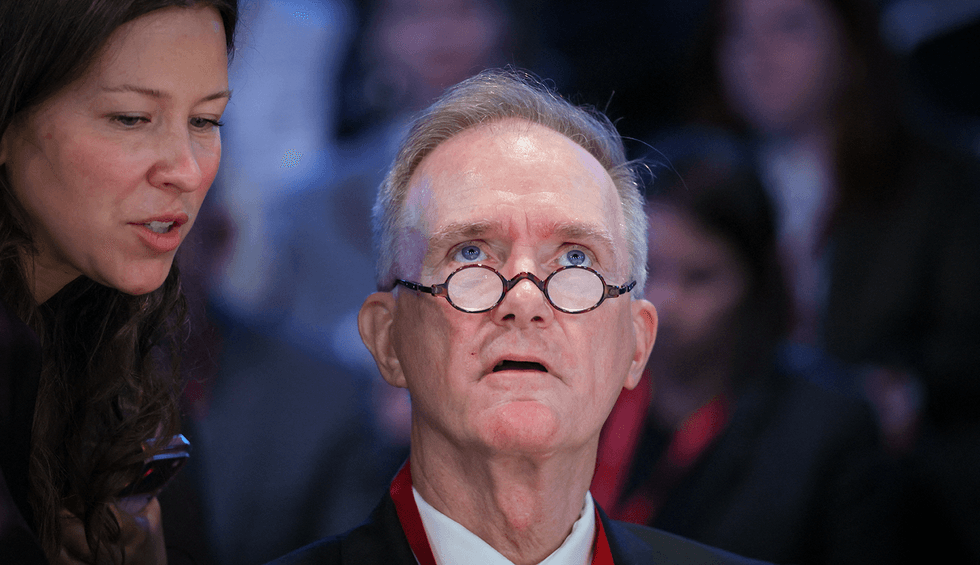
Washington just shattered a nearly ten-year diplomatic boycott, and hardly anyone noticed. As the St. Petersburg International Economic Forum kicked off in Russia, the most surprising face in the crowd wasn't a rogue tech billionaire or an exiled European politician. It was Rodney Mims Cook Jr., a man currently tasked by Donald Trump with overseeing a massive, $200 million construction project right on the White House grounds.
Cook is the chairman of the U.S. Commission of Fine Arts. More importantly to the current administration, he's the guy greenlighting Trump’s highly controversial White House ballroom extension, which is being built where the old East Wing used to stand. His presence in St. Petersburg marks the first time an official U.S. delegation leader has attended Vladimir Putin's flagship economic event since 2018.
Why does this matter? For years, the U.S. and its Western allies have strictly avoided this event, turning it into a ghost town for American diplomacy after the 2022 invasion of Ukraine. Cook's sudden appearance completely flips the script on Washington’s official stance toward Moscow.
What is Trump’s Ballroom Chief Doing in Russia
You don't send the head of the Commission of Fine Arts to Russia's equivalent of Davos just to talk about drywall and molding. Cook claims his trip was cleared by both the forum’s organizing committee and the U.S. State Department. He is there to sit in the front row for Putin’s plenary address.
Cook told Russian state media that he isn't playing politician. He claims he's representing the U.S. as a "minister of culture" and as a Christian. He even brought a gift: a religious icon presented to a male monastery in St. Petersburg. He is also scheduled to lead a panel on U.S.-Russian cultural dialogue alongside Russian Culture Minister Olga Lyubimova.
But let’s be real. You can't separate culture from politics when you are running a federal agency and managing the president's favorite vanity project back home. Trump recently defended the new ballroom, calling it a personal "gift" to the nation and dismissing complaints about its ballooning costs. By sending the man in charge of that project to St. Petersburg, Trump is signaling a massive shift in how the White House views its relationship with the Kremlin.
The Eclectic New American Delegation
The crowd at the forum looks very different than it did a decade ago. Back then, the halls were packed with Fortune 500 CEOs and Wall Street bankers. Today, those executives are nowhere to be found, terrified of violating Western sanctions or wrecking their corporate reputations.
Instead, Russia is courting a new kind of American visitor. Cook is sharing the spotlight with right-wing influencers and cultural figures who are openly attracted to Moscow’s anti-woke rhetoric and defense of traditional values.
- Steven Seagal: The former Hollywood action star is a long-time Putin admirer who received a Russian passport back in 2016. He serves as a special representative for the Russian Foreign Ministry and is speaking on cultural panels.
- Candace Owens: The conservative commentator is scheduled to speak at a session focusing on balancing large families with successful careers. She openly stated her excitement about visiting St. Petersburg's historic Christian cathedrals.
- Andrew and Tristan Tate: The controversial internet personalities posted videos of themselves receiving a musical welcome at a Moscow airport just before the forum started, though their official participation remained unconfirmed.
This isn't a corporate deal-making crowd. It's a political statement. Putin is using these figures to prove that despite intense Western sanctions, Russia isn't isolated.
The White House Ballroom Connection
To understand why Cook has the leverage to pull this off, you have to look at what he’s doing back in Washington. In January, Trump appointed Cook to lead the Commission of Fine Arts. His primary, immediate task was pushing through the approvals for the massive White House ballroom expansion.
The project has been a lightning rod for criticism. The $200 million price tag raised eyebrows, and the Senate recently dropped plans for a $1 billion security funding package tied to the project. Trump has aggressively fired back at critics, claiming the project expanded purely because of increased space requirements from the military and the Secret Service.
Cook’s deep ties to Russia didn't start with the ballroom, though. He is a recognized Russia specialist who previously worked with the World Monuments Fund. He spent years working as an independent expert on the restoration of the Resurrection Cathedral at the New Jerusalem Monastery outside Moscow. He has given lectures at the Kremlin Armory and spoken at the Russian Embassy in Washington.
What This Signals for U.S. Foreign Policy
This isn't a rogue trip. Cook explicitly stated his travel was cleared by the State Department. That means the current administration is actively using cultural diplomacy to test the waters for a broader diplomatic thaw with Russia.
While European allies are still maintaining a strict firewall against Moscow, Washington is quietly opening the back door. The last U.S. official to attend this forum was Ambassador John Tefft back in 2017, during Trump's first term. History is repeating itself, but with a bizarre cultural twist.
If you want to track where U.S.-Russia relations are heading, keep your eyes on the upcoming panel discussions in St. Petersburg. Watch how closely Cook interacts with Russian officials like Lyubimova. The official corporate boycotts might still be in place, but the political freeze is officially melting. If you want to understand the true trajectory of Washington's foreign policy, look past the official press releases and watch who they send across the border.


