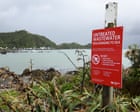
Wellington is flushing its credibility directly into the Pacific Ocean. More than one hundred days after a catastrophic failure at the Moa Point Wastewater Treatment Plant, a toxic cocktail of raw and partially screened human effluent continues to pour into the waters off the South Coast. City officials recently broke the news that a temporary fix will take until November, with full restoration dragged out until early 2027. Local businesses are facing financial ruin, and residents are being told to stay out of the surf.
This is not a story about an unpredictable natural disaster. It is a chronicle of systemic infrastructure neglect, regulatory paralysis, and bureaucratic buck-passing that has turned New Zealand’s capital into a cautionary tale of first-world decay.
While local politicians spin timelines and offer minor financial band-aids to drowning local businesses, the underlying mechanisms of the Moa Point crisis reveal a far uglier truth. The crisis exposes an infrastructure model designed to fail when subjected to the compounding pressures of climate change and municipal underfunding.
The Illusion of the Unprecedented Accident
On February 4, heavy rainfall triggered what Wellington Mayor Andrew Little termed a "catastrophic failure." A blockage in the plant’s 1.8-kilometer long outfall pipe caused wastewater to back up into the facility, flooding the lower floors, destroying electrical systems, and forcing an immediate evacuation. With the main treatment system knocked out, tens of millions of liters of untreated sewage began discharging daily through a short, five-meter emergency pipe right at the shoreline.
The official narrative quickly framed this as a freak occurrence. Wellington Water executives claimed to be at a loss to explain how an outfall pipe designed to handle maximum capacity could fail so spectacularly.
A subsequent hydraulic assessment pointed toward a trapped air bubble within the pipeline. This structural anomaly effectively throttled the system, causing the back-flow that drowned the plant's vital infrastructure.
To anyone who has watched municipal asset management over the last thirty years, this explanation is entirely hollow. Moa Point did not fail because of an elusive air bubble. It failed because it was running on borrowed time.
The plant, which services roughly 180,000 residents, has been operating since 1998. An independent review of Wellington’s wastewater facilities conducted years prior to the blowout painted a damning picture of the site's operational reality. The report highlighted obsolete equipment, severe understaffing, and a chronic failure to execute basic asset management.
Data shows the Moa Point facility was consistently non-compliant with its resource consents, failing compliance checks in nearly every single month leading up to the February disaster.
The refurbishment work being carried out right before the failure actually reduced the plant's processing capacity. It created a bottleneck that made a catastrophic overflow inevitable the moment a significant storm hit the capital.
The Economics of a Manufactured Apocalypse
The human cost of this operational failure is distributed unequally across Wellington’s South Coast. For the local ecology, the damage is severe. Pathogens from human waste can survive for weeks or months in marine sediments, meaning that even when the water looks clear, wave action can kick up viruses and bacteria, posing ongoing risks of gastrointestinal and respiratory illnesses.
For the local business community, the financial outlook is grim.
+------------------------------------+-----------------------------------+
| Metric                             | Impact Details                    |
+------------------------------------+-----------------------------------+
| Initial Disaster Date              | February 4                        |
| Expected Phase 1 Treatment Restart  | November                          |
| Full Plant Restoration Target      | Early 2027                        |
| Projected Local Business Losses    | NZ$3M - NZ$4M                     |
| Population Serviced by Moa Point   | 180,000 residents                 |
+------------------------------------+-----------------------------------+
| Data Source: Wellington Water & Destination Kilbirnie               |
+------------------------------------+-----------------------------------+
Dive shops, charter boats, and coastal hospitality venues are projecting millions in collective losses. Many of these operators were holding out hope for a September resolution.
The announcement of a November timeline means walking through a bleak winter with zero revenue from water-based recreation. The council’s newly opened targeted support fund features qualification thresholds that frustrated business owners describe as completely unrealistic.
"This is a council failure, and we still have to pay rates, electricity, and staff costs," says Steve Walters, general manager of Destination Kilbirnie. "We feel let down, frustrated, and in a state of 'how are we going to survive this?'"
The Double Standard of Public Asset Regulation
The slow-motion disaster at Moa Point highlights a structural hypocrisy within New Zealand's environmental enforcement. If a commercial dairy farmer accidentally discharged a fraction of this volume of effluent into a local stream, the regulatory response would be swift, punitive, and criminal. Resource consent breaches would be prosecuted, and heavy fines would be levied.
Yet, when a publicly managed utility discharges seventy million liters of raw sewage a day into a marine reserve, the response is a series of press conferences and the establishment of a "Crown Review Team."
This regulatory toothlessness stems from an uncomfortable conflict of interest. The Primary regulator for wastewater consent compliance is the Greater Wellington Regional Council.
This same regional council is a major shareholder in Wellington Water, the very entity responsible for the discharge. The setup amounts to institutional self-regulation, a framework that routinely prioritizes political face-saving over environmental accountability.
The national water services regulator, Taumata Arowai, has remained noticeably detached, deferring responsibility back to local authorities. This silence leaves a gaping hole where systemic enforcement ought to be. It sends a clear message to the public that the rules governing environmental stewardship are fiercely enforced for private individuals, but entirely negotiable for the state.
The Infrastructure Chasm
Wellington’s sewage crisis is a localized eruption of a national disease. A mayoral taskforce previously warned that a massive portion of the city's drinking water and wastewater network had already exceeded its useful life. Across New Zealand, more than three thousand wastewater overflows are recorded annually, with a significant percentage of the country’s treatment plants operating on expired consents.
The political class has spent years debating how to fund the multi-billion-dollar deficit required to modernize these hidden networks. The previous government’s centralized Three Waters reform model was dismantled amid intense regional political fighting.
The current approach dumps the financial burden back onto local councils that are already bumping up against their debt limits. Councils are trapped between raising property rates to unpalatable levels or leaving the pipes to rot.
Wellington chose to leave the pipes to rot, and now the bill has come due.
Fixing Moa Point by November requires a complex sequence of nearly thirty separate engineering projects, from rebuilding completely submerged electrical grids to redesigning the flawed outfall hydraulics. Even when the secondary biological treatment processes are turned back on, the capital will remain exactly one major storm away from another system failure.
A city cannot build a modern economy on a decaying foundation. No amount of mayoral swims or public relations roadmaps can obscure the reality that Wellington's core infrastructure is fundamentally broken. Until the structural governance model is overhauled and public entities are held to the same strict environmental standards as the rest of the country, the capital will continue to choke on its own neglect.