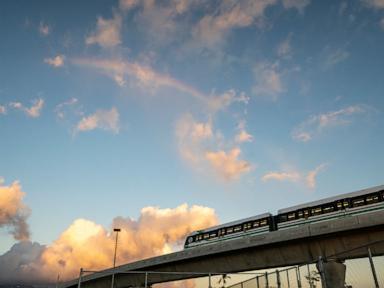
American transit agencies are increasingly considering driverless trains not because they want to embrace futuristic automation, but because their operating budgets are collapsing under the weight of legacy labor costs, chronic operator shortages, and post-pandemic ridership shifts. While cities like Paris, Tokyo, and Vancouver have run automated subways for decades, legacy US systems in New York, Chicago, and San Francisco are only now seriously weighing Unattended Train Operation (UTO) as a survival mechanism. Converting aging infrastructure to run without a human at the controls requires billions in upfront signaling upgrades, fierce negotiations with powerful transit unions, and a total overhaul of emergency response protocols.
The math behind American public transit no longer works. For decades, major US rail networks relied on farebox recovery and local tax subsidies to cover ballooning operational expenses, where labor routinely consumes 70 to 80 percent of an agency's annual operating budget. When ridership plummeted in 2020 and failed to fully rebound due to permanent remote work trends, agencies faced a fiscal cliff. Federal relief funds merely delayed the reckoning. Now, with emergency grants exhausted, transit boards are staring at structural deficits that cannot be solved by raising fares or cutting service—both of which trigger a death spiral of declining ridership. For a different view, see: this related article.
The Economics of Empty Cabs
Automating a train line does not eliminate transit workers, despite what both tech evangelists and union leaders often claim. Instead, it shifts labor from repetitive, fixed-schedule driving to higher-skilled maintenance, systems monitoring, and roving customer service. The financial appeal for a cash-strapped transit authority lies in service elasticity.
In a traditional subway system, running more trains during off-peak hours requires paying overtime or hiring additional operators for split shifts. A human driver costs roughly the same whether the train carries five hundred commuters at rush hour or twelve shift workers at two in the morning. Because labor is expensive, agencies run trains every fifteen or twenty minutes on nights and weekends. Long wait times drive riders back into private cars. Similar analysis regarding this has been published by CNET.
An automated system changes the cost structure entirely. Once the capital investment in signaling and platform infrastructure is paid off, the marginal cost of running an extra train is mostly electricity and minor mechanical wear. Agencies can run shorter trains every three minutes all day and night. Frequent service attracts riders, boosts fare revenue, and maximizes the utility of existing tunnels and tracks without adding a single dollar to driver payroll.
Consider a hypothetical legacy subway line running twenty miles through a major metropolitan core. Under manual operation, scheduling twenty-four-hour service requires three distinct shifts of operators, plus reserve crews to cover sick leave, vacations, and training delays. If an operator calls out sick ten minutes before a shift, the agency must cancel the run, creating cascading delays across the entire network. Under full automation, central control simply dispatches another train from the yard with a keystroke.
How Automation Actually Works
Public debate around driverless trains often confuses modern rail automation with self-driving cars. The two technologies have almost nothing in common. Autonomous automobiles must interpret an unpredictable, chaotic environment filled with pedestrians, erratic drivers, faded lane markings, and construction cones using cameras and artificial intelligence. Trains run on fixed steel rails inside a closed, controlled right-of-way.
Rail automation relies on Communications-Based Train Control (CBTC), a mature, deterministic signaling technology that uses continuous two-way radio communication between trains and trackside computers. Traditional rail systems divide tracks into fixed physical blocks, using electrical circuits to detect whether a train occupies a specific segment. Because the system only knows a train is somewhere inside a thousand-foot block, operators must maintain massive safety buffers between trains, limiting how frequently they can run.
CBTC replaces fixed blocks with moving blocks. Each train constantly calculates its exact position, speed, and braking distance, transmitting that data multiple times per second to a central computer. The system knows the precise location of every vehicle down to the centimeter. This precision allows trains to safely travel much closer together at higher speeds, increasing line capacity by 20 to 30 percent without digging a single foot of new tunnel.
The Four Grades of Automation
Transit engineers categorize rail automation using an international standard known as Grades of Automation (GoA), ranging from zero to four:
- GoA 1 (Manual Operation): A human driver controls acceleration, braking, door operation, and emergency response, protected only by basic trackside signals that trigger emergency brakes if a red light is passed.
- GoA 2 (Semi-Automated Train Operation): The computer handles acceleration and braking between stations, while a human driver sits in the cab to close the doors, monitor the tracks for obstructions, and take over during failures. Most modern US systems, including San Francisco's BART and Washington's Metro, operate at this level.
- GoA 3 (Driverless Train Operation): The train accelerates, brakes, and stops automatically without anyone in a cab, though a roving attendant remains onboard to operate the doors and manage emergencies. London's Docklands Light Railway operates this way.
- GoA 4 (Unattended Train Operation): Full automation with zero staff required onboard. Computers manage everything from waking the trains up in the morning depot to parking them at night. Honolulu's Skyline, which opened in 2023, is the first full-scale GoA 4 heavy rail metro in the United States.
Moving from GoA 2 to GoA 4 sounds like an incremental step. In practice, it is a massive engineering and regulatory leap.
The Infrastructure Trap of Legacy Networks
Building a driverless metro from scratch, as Honolulu did or as Montreal did with its REM network, is relatively straightforward. Retrofitting a century-old system like the New York City Subway or the Chicago "L" is an engineering nightmare.
The primary obstacle is the track environment. Legacy US subways are open systems where anyone standing on a platform can drop a backpack, fall onto the tracks, or walk into a tunnel. When a human sits at the front of a train, their eyes serve as the primary intrusion detection system. If you remove the human, the infrastructure itself must prevent people and debris from reaching the rails.
This requires installing Platform Screen Doors (PSDs)—floor-to-ceiling glass barriers along the edge of every station platform that only open when a train stops directly behind them. PSDs prevent suicides, track fires caused by litter, and accidental falls, while also improving station climate control.
Installing PSDs on old stations is brutally expensive and structurally complex. Many stations built in the early twentieth century have curved platforms, leaving wide, irregular gaps between the train doors and the platform edge. Others have concrete slabs too weak to support the weight of heavy glass and steel doors, or low ceilings crowded with asbestos-wrapped pipes and electrical conduits. Furthermore, a single subway line often runs multiple generations of rolling stock with different car lengths and door placements. For screen doors to align, every train on the line must have identical door geometry.
In New York, the Metropolitan Transportation Authority (MTA) estimated that installing platform doors across just a fraction of its 472 stations would cost upwards of $7 billion. For agencies struggling to afford basic elevator installations for accessibility compliance, retrofitting every platform for full automation remains financially out of reach.
The Union Battleground
Even where the engineering is feasible, the political reality is unforgiving. Transit unions, such as the Transport Workers Union (TWU) and the Amalgamated Transit Union (ATU), represent some of the most politically influential labor blocs in American cities. Mayors and governors rely on their endorsements, and transit boards rarely approve capital plans that invite a crippling system-wide strike.
Unions frame driverless trains as an existential threat to middle-class jobs and public safety. Their argument centers on what happens when things go wrong. A computer can run a train flawlessly on a clear Tuesday morning, they argue, but a computer cannot evacuate five hundred panicked passengers through a dark, smoke-filled tunnel during an electrical fire, nor can it intervene when a violent passenger assaults someone in the third car.
This safety argument resonates deeply with American riders, particularly as urban transit systems grapple with heightened concerns over crime, homelessness, and mental health crises onboard. In a survey of transit riders, the presence of uniformed staff consistently ranks among the top factors determining whether people feel safe riding at night.
Transit agencies counter that GoA 4 does not mean abandoning passengers. In international systems like Copenhagen and Paris, savings from automated driving are reinvested into station staff and mobile customer service teams who walk through trains, check fares, assist disabled riders, and provide a visible security presence. Yet American unions remain deeply skeptical, pointing to a long history of transit management cutting frontline staff to balance budgets whenever tax revenues dip.
The Regulatory Void
Unlike commercial aviation, where the Federal Aviation Administration enforces uniform national standards for autopilot and cockpit automation, American rail transit suffers from fragmented oversight. The Federal Transit Administration (FTA) sets broad safety frameworks, but day-to-day safety certification falls to State Safety Oversight (SSO) agencies.
Many SSO offices are understaffed, bureaucratic, and deeply risk-averse. Approving a fully unattended train system requires exhaustive hazard analyses covering thousands of edge cases: what happens if a tree falls on an elevated track during a blizzard, if a cyberattack disrupts the central radio network, or if a wheelchair wheel gets jammed in a closing door while the platform sensors malfunction.
Without clear federal benchmarks for GoA 4 safety validation, local regulators often demand redundant layers of sensors and fail-safes that drive project costs through the roof. Equipment manufacturers, facing a fragmented US market where every city demands custom specifications rather than off-the-shelf international designs, pad their bids to cover regulatory delays and litigation risks. Consequently, signal upgrades in the United States cost three to four times more per mile than comparable projects in Europe or Asia.
The Halfway Compromise
Because full GoA 4 conversion is prohibitively expensive for older networks, most US transit agencies are quietly pursuing a middle path: installing CBTC to achieve GoA 2 automation while keeping one operator in the cab.
New York has already converted the L and 7 lines to CBTC, dramatically improving reliability and increasing train frequency, though both lines still run with a train operator and a conductor. San Francisco's BART is spending over a billion dollars on a new CBTC system that will allow automated driving between stations while retaining cab operators.
The next logical step for these agencies is One-Person Train Operation (OPTO)—eliminating the second crew member (the conductor who opens and closes doors) and leaving a single operator to manage both the cab and the doors via platform cameras. Even this modest step triggers fierce resistance. In New York, attempts to expand OPTO on lower-ridership lines have repeatedly stalled due to union opposition and state legislation mandating two-person crews on certain routes.
Yet the economic pressure is relentless. As autonomous ride-hailing services expand in major cities—offering on-demand, driverless point-to-point transport—public transit cannot afford to remain trapped in a twentieth-century labor model. If buses and trains remain slow, infrequent, and burdened by high operating costs, they risk losing the very commuters they exist to serve.
The transition to driverless trains in America will not arrive as a sweeping technological revolution. It will happen piecemeal, buried inside multi-billion-dollar signal modernization budgets, fought over in closed-door labor negotiations, and tested first on airport people-movers and newly built suburban extensions. By the time the cab doors finally close for good on legacy American subways, the decision will have been made not by Silicon Valley engineers, but by municipal accountants looking at a spreadsheet that simply refused to balance any other way.