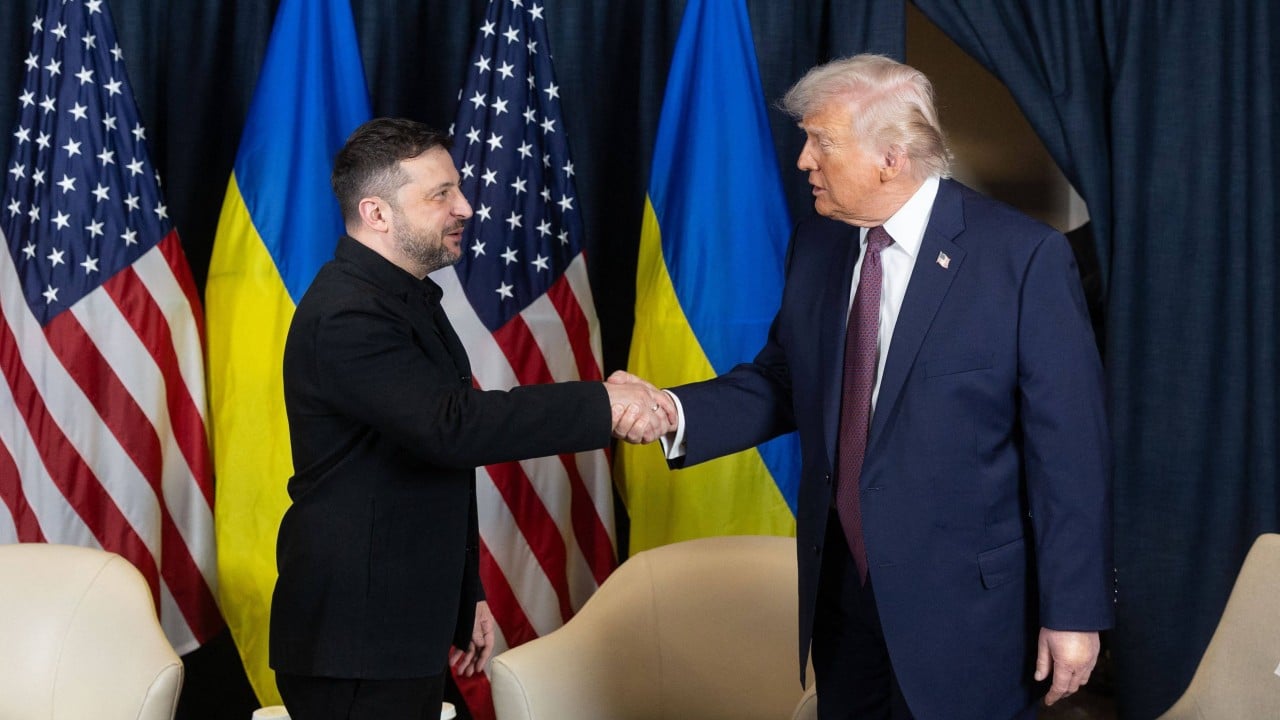
The White House confirmed that Donald Trump will hold separate bilateral meetings with Ukrainian President Volodymyr Zelensky and Syrian President Ahmad al-Sharaa on the sidelines of the upcoming alliance summit in Turkey. On the surface, the administration frames these meetings as an urgent push to resolve two of the most volatile conflicts on the planet. The reality is far more transactional. Trump enters the Ankara summit facing a fractured alliance, an ongoing conflict involving Iran, and deep European anxiety over the future of American security commitments. By bringing the leaders of Ukraine and post-Assad Syria into the NATO orbit in Turkey, Trump is trying to rewrite the rules of global leverage.
The battlefield in Ukraine has frozen. Neither side has made substantial progress over the last few months, turning the four-and-a-half-year invasion into a grueling war of attrition. Trump wants out of the funding cycle, and he wants it immediately. Meanwhile, the Middle East remains a powder keg. Trump has repeatedly pressured the new Syrian government to enter the fray against Hezbollah, a demand that Damascus has quietly but firmly resisted. By forcing both Zelensky and al-Sharaa into face-to-face negotiations in Ankara, the American president is trying to construct a grand geopolitical trade-off. For a more detailed analysis into similar topics, we recommend: this related article.
The Ukrainian Standoff and the Shadow of Moscow
Kyiv knows the clock is ticking. For months, Ukrainian officials have watched Washington with growing apprehension as the White House signals an eagerness to halt military aid if a diplomatic settlement cannot be reached. The scheduled meeting on Wednesday afternoon represents a critical juncture for Zelensky. He must convince a deeply skeptical American president that Ukraine still has the capacity to hold its lines, even as Trump openly questions the long-term viability of the conflict.
The internal dynamics of the administration reveal a profound impatience. Bureaucrats in Washington admit privately that Trump sees the conflict as a financial drain that distracts from his primary objectives. Over the weekend, Trump held a lengthy ninety-minute phone call with Russian President Vladimir Putin. Kremlin officials immediately went public, declaring that Putin remains ready to discuss peaceful solutions, provided Moscow retains full control over the Donbas region. This is a condition that Ukraine has repeatedly declared a non-starter. To get more information on this development, comprehensive coverage is available at NPR.
Zelensky is arriving in Turkey with a very different pitch. He will point to recent long-range drone strikes deep inside Russian territory as proof that Ukraine can still inflict severe damage on Moscow. He intends to argue that cutting off American assistance now would not bring peace, but would instead invite a total collapse of the eastern European security architecture. It is a high-stakes gamble. Trump has previously demonstrated a volatile temper regarding Ukrainian funding, notably during an oval office confrontation where he bluntly told Zelensky that Kyiv lacked the necessary cards to win the war.
The administration plans to follow up the Ankara talks with another direct communication to Putin. This sequential diplomacy suggests that Washington is positioning itself as the ultimate arbiter of the conflict, bypassing traditional European channels. European diplomats are understandably terrified. They fear that Trump will present Zelensky with an ultimatum, forcing Ukraine to accept permanent territorial losses in exchange for a fragile ceasefire that Russia could break at any moment.
The Syrian Puzzle and the Hezbollah Pressure Campaign
The inclusion of Ahmad al-Sharaa in the Ankara talks highlights a radical shift in American foreign policy. Following the ouster of Bashar al-Assad, the new leadership in Damascus has struggled to stabilize a broken nation. Washington sees an opportunity. The Trump administration has spent weeks attempting to recruit the new Syrian government into the regional coalition against Iran and its proxies.
Trump is highly frustrated with the current state of regional affairs. The conflict involving Israel and Iran has complicated American strategic calculations, particularly due to the resilience of Hezbollah forces in Lebanon. The White House has repeatedly suggested that the new Syrian government should deploy its military assets to clear Hezbollah forces from its borders. Trump believes that Syria owes its current geopolitical breathing room to Western acquiescence and regional shifts, and he expects a return on that investment.
Al-Sharaa has no intention of becoming Washington's proxy. The Syrian leader, who rose from the ranks of an Islamic insurgent group to seize power in Damascus, understands the fragile nature of his domestic authority. Engaging in a direct military conflict with Hezbollah would risk reigniting a civil war within Syria, drawing Iranian-backed militias back into the country. Publicly, Syrian officials have claimed that Trump's statements were misconstrued. Privately, they are scrambling to avoid being dragged into a wider regional war.
Turkey plays a crucial role in this dynamic. President Recep Tayyip Erdogan has spent years cultivating ties with various Syrian factions while maintaining a complicated partnership with Russia and Iran. By hosting these talks, Ankara positions itself as the central hub for the new Middle Eastern order. Trump enjoys a strong personal rapport with Erdogan, a factor that reportedly convinced the American president to attend the summit in person after threatening to skip it entirely.
A Fractured Alliance and the Burden Sharing Ultimatum
Beyond the bilateral meetings, the core NATO summit promises to be one of the most contentious in decades. Washington is arriving with a clear demand. European allies must demonstrate immediate, measurable upward trajectories in their domestic defense spending. The American delegation intends to make it clear that the era of relying on the United States to underwrite European security without financial reciprocity is over.
The friction extends well beyond standard defense spending metrics. The Trump administration is angry about the lack of European support for maritime security operations, particularly regarding the protection of commercial shipping lanes. Washington wants allies to commit naval assets to safeguard transit through vital waterways. Several European nations have expressed verbal interest, but American officials are dismissive of mere rhetoric. Many allies simply do not possess the necessary naval vessels or logistical capabilities to contribute meaningfully to a high-intensity maritime deployment.
The White House plans to leverage defense industrial co-production deals to force compliance. The administration expects to announce billions of dollars in joint industrial projects and factory-building initiatives during the summit. These deals are designed to tie European defense manufacturing directly to American supply chains, ensuring that any increase in European defense spending directly benefits the American economy. It is a heavy-handed approach that has alienated traditional allies in Paris and Berlin.
The Greenland Contradiction and Sovereign Ambitions
As if the security agendas were not complex enough, the administration has revived its highly controversial push to acquire Greenland. Senior American officials confirmed ahead of the summit that Washington still views the acquisition of the vast island as the optimal long-term solution for Arctic security. The administration believes that the changing climate and expanding Russian capabilities in the polar region require a permanent American military presence that only outright sovereignty can guarantee.
Governments in Nuuk and Copenhagen have repeatedly rejected the premise of a sale. Yet, the White House insists that alternative arrangements remain under active discussion. The persistence of this issue demonstrates the highly unconventional nature of current American diplomacy. Trump views international relations through the lens of real estate and asset acquisition, treating sovereign territory as a negotiable commodity. This approach completely disrupts the traditional, value-based language of the North Atlantic alliance.
European officials are left trying to balance their shock over these territorial ambitions with the pragmatic need to keep the United States engaged in continental defense. The deployment of tens of thousands of Turkish security personnel and the activation of high-alert air defense systems across Ankara underscore the immense tension surrounding the event. The host nation has even constructed a brand-new VIP airport from a former military airfield just to accommodate the arrival of the allied delegations.
The Peril of the Ankara Strategy
The danger of Trump's approach lies in its unpredictability. By bypassing the collective decision-making structures of the alliance to hold direct, transactional talks with the leaders of Ukraine and Syria, the American president risks undermining the very institution he is attending. If Zelensky is forced into an unfavorable peace deal, the Baltic states and Poland will lose all faith in American security guarantees. If al-Sharaa is pushed too hard on the Iranian issue, the fragile stability of post-Assad Syria could disintegrate entirely.
Ankara is set to become the stage for a dramatic realigning of global power. Trump believes his personal negotiating style can break decades of diplomatic inertia. The allies can only watch and wait, hoping that the cost of a deal is not higher than they can afford to pay.