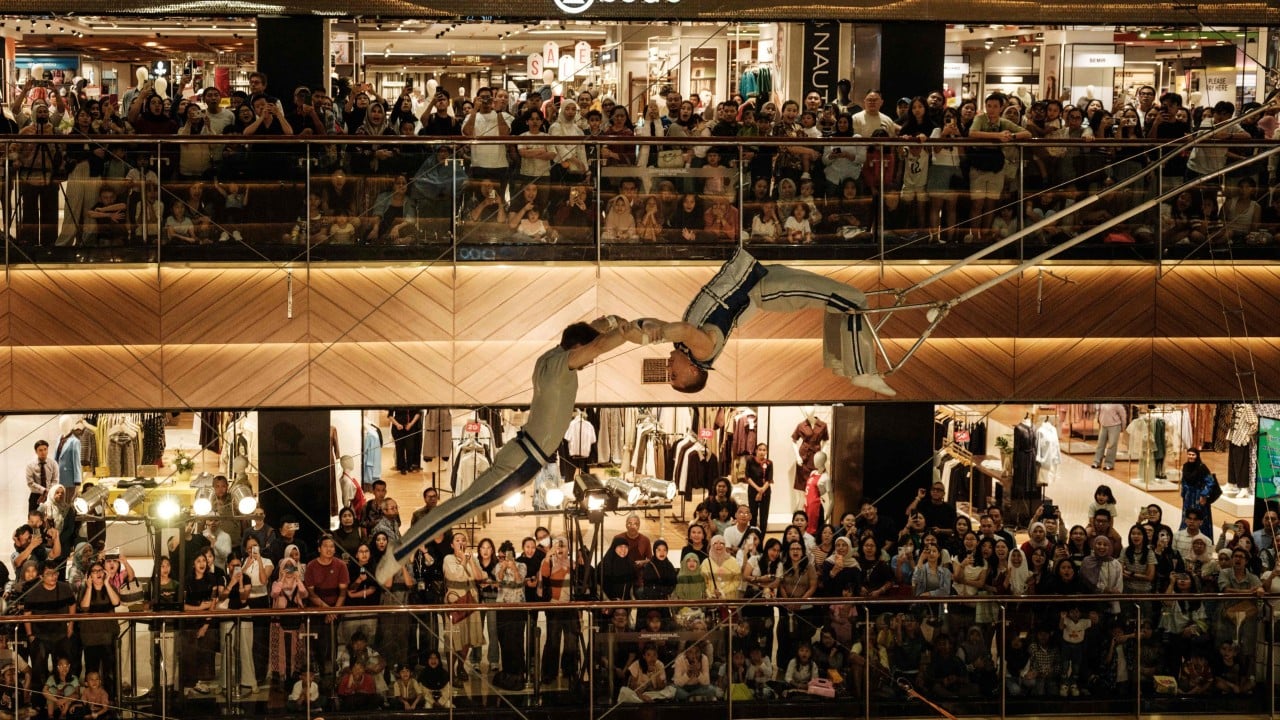
Western retail executives looking at Southeast Asia are misdiagnosing the symptoms. For over a decade, the narrative across North America and Europe has been a funeral march for the physical shopping center, a trend lazily labeled the retail apocalypse. Department stores boarded up their windows, suburban malls became ghost towns, and e-commerce was crowned the undisputed killer. Yet, step into any major retail hub in Jakarta, Bangkok, or Manila, and you will find multi-story complexes packed to capacity, humming with economic activity.
This is not a temporary anomaly or a case of a region lagging behind Western digital adoption. Southeast Asia has embraced digital commerce with staggering speed, bypassing traditional desktop internet straight into mobile-first consumer habits. By all standard Western metrics, these malls should be dead. Instead, they are expanding.
The survival of the Southeast Asian mall hinges on a fundamental truth that Western developers missed. These properties were never built just to distribute merchandise. They operate as critical civil infrastructure disguised as commercial real estate.
The Climate Factor and the Great Indoors
Geography dictates destiny in retail real estate. In cities like Bangkok or Manila, the outdoor environment presents a daily challenge of extreme heat, torrential monsoon seasons, and severe urban pollution. Public parks are scarce, and walkable sidewalks are practically non-existent due to decades of car-centric urban planning.
The air-conditioned shopping center provides the only reliable, clean, temperature-controlled public square available to the average citizen. It is a utility.
Consider how urban populations use these spaces. A family in Jakarta does not visit a mall merely to buy a pair of jeans. They go because their apartment is cramped, the humidity outside is oppressive, and the local shopping center offers free air conditioning, clean restrooms, and vast, open walkways.
This creates a guaranteed, high-volume foot traffic baseline that has nothing to do with consumer spending habits. Western malls were built on the assumption that people would drive out of their way solely to acquire goods. When Amazon made acquisition easier, the trip became obsolete. Southeast Asian malls do not require the incentive of transaction to pull people through the doors; the environment itself is the draw.
The Conglomerate Advantage and Total Urban Integration
In the West, real estate developers and retail brands operate as distinct, often adversarial entities. A mall owner rents space to a clothing brand, and their relationship ends at the lease agreement. If the brand fails, the landlord looks for a new tenant.
Southeast Asia operates on a model of massive, family-controlled conglomerates that own every single layer of the economic ecosystem.
Take a company like SM Prime in the Philippines or Central Group in Thailand. These corporate entities do not just build the physical structure of the mall. They own the supermarket inside it. They own the department store that acts as the anchor tenant. They own the movie theaters, the banks operating the ATMs in the lobby, the casual dining restaurant chains on the upper floors, and frequently, the residential high-rises and office towers physically connected to the property.
[Conglomerate Parent Company]
   │
   ├── Real Estate Division (Owns the physical mall & land)
   ├── Retail Division (Owns the anchor department store & supermarket)
   ├── Hospitality Division (Owns connected hotels & residential towers)
   └── Financial Services (Owns the banks and ATMs inside the property)
This structural integration changes the entire financial math of the business. If a clothing boutique inside a Central Group mall struggles to pay rent due to e-commerce competition, the parent company does not face immediate disaster. The loss is absorbed because that same boutique's customers bought their groceries at the Central-owned supermarket downstairs, deposited money at the Central-linked bank, and live in a condo tower built right above the food court.
The mall is the physical anchor for an entire corporate portfolio. Western developers, bound by pure real estate investment trust metrics that demand high per-square-foot rental yields from independent tenants, lack this financial buffer. They cannot subsidize a failing retail sector with grocery or banking profits because they do not own those businesses.
Re-Engineering the Floor Plan Around the Human Stomach
When e-commerce began eating into apparel and electronics sales, Western malls attempted to adapt by adding a few upscale restaurants or upgrading their food courts. It was too little, too late. Department stores and clothing boutiques still swallowed up 70% of the gross leasable area.
Southeast Asian property managers flipped the script entirely, aggressively reducing apparel footprints to hand over prime real estate to food, beverage, and experiential services.
Walk through a modern shopping center in Kuala Lumpur or Singapore, and you will find that dining establishments occupy up to 40% or 50% of the total floor space. Entire floors are dedicated to regional food streets, high-end micro-restaurants, and themed dessert hubs. You cannot download a hot bowl of ramen or replica night-market street food.
By turning the mall into a culinary destination first and a product showroom second, developers capitalized on the one consumer behavior that cannot be replicated by a delivery app. A courier can bring food to a home, but they cannot deliver the social status, the atmosphere, or the community experience of dining out in a bustling, high-design environment.
The Shift in Asset Allocation
| Category | Traditional Western Mall Lease Share | Modern Southeast Asian Mall Lease Share |
|---|---|---|
| Apparel & Soft Goods | 60% - 75% | 25% - 35% |
| Food & Beverage | 5% - 10% | 35% - 50% |
| Services & Entertainment | 5% | 15% - 20% |
| Civic & Government | 0% | 5% |
Turning Bureaucracy into Foot Traffic
The ultimate masterstroke of Southeast Asian mall survival is the institutionalization of essential services. In Western countries, renewing a driver's license, paying a utility bill, or getting a passport involves traveling to a sterile government building in an isolated part of town.
In Southeast Asia, government agencies are tenants inside the mall.
The Philippine Social Security System, Thailand’s passport offices, and various municipal tax collection centers regularly lease space on the upper levels of major shopping complexes. This creates an administrative ecosystem where citizens are forced to visit the mall to conduct basic life tasks.
While waiting two hours for a passport renewal number to be called, that citizen is buying coffee, eating lunch, renting a workspace, or browsing a bookstore. The state bureaucracy becomes a highly efficient engine for retail foot traffic.
Medical clinics, dental offices, fitness centers, and even full-scale churches or religious prayer halls occupy massive zones within these structures. By embedding the necessities of daily civic life directly into the commercial space, the mall stops being an optional luxury shopping destination. It becomes an inevitable stop in a citizen’s weekly routine.
Logistics Centers in Disguise
Instead of fighting the rise of digital delivery services, Southeast Asian mall operators chose to co-opt them. The explosion of apps like Grab, Foodpanda, and Gojek presented an immediate logistical challenge: how to efficiently pick up millions of orders from thousands of disparate restaurants and stores scattered across congested mega-cities.
The malls solved this by turning their basements and parking structures into hyper-local fulfillment hubs.
During peak hours, the lower levels of a major Bangkok mall resemble a high-tech logistics depot. Hundreds of delivery drivers clad in green and pink jackets line up at designated, centralized pickup zones managed by the mall staff. Restaurants upstairs prepare the food, mall couriers bring it down to the basement via service elevators, and the delivery drivers whisk it away into the city traffic.
[Upper Floors: Restaurants & Retail]
       │  (Internal Mall Couriers via Service Elevators)
       ▼
[Basement / Parking Structure: Centralized Pickup Depot]
       │  (Sorted and Distributed by App Brand)
       ▼
[Delivery Drivers: Grab / Gojek / Foodpanda]
This setup transforms the physical store from a pure retail liability into a critical micro-distribution center. The brand maintains its high-visibility showroom upstairs to capture foot traffic, while using the exact same inventory and kitchen staff to service the massive digital market downstairs. The landlord remains vital because they control the physical real estate required to orchestrate this complex logistical dance.
The Flaw in the Matrix
This model is remarkably resilient, but it is not completely invincible. The intense reliance on massive corporate conglomerates creates an economic monoculture. When a single family company owns the mall, the supermarket, the bank, and the housing, the local economy becomes deeply vulnerable to the financial health of that specific corporate dynasty. Small, independent retailers find it nearly impossible to compete with the conglomerate’s in-house brands, leading to a homogenization of retail where every mall across a nation features the exact same stores and dining options.
Urban congestion also cuts both ways. While traffic gridlock discourages people from traveling to distant destinations—making the neighborhood mega-mall an attractive all-in-one sanctuary—severe infrastructure failures can completely paralyze access to these centers. If a city’s mass transit line fails or road flooding worsens due to climate pressures, even the most spectacular indoor environment faces sudden isolation.
The Western retail apocalypse occurred because developers viewed the mall as a giant box to sell physical products that could ultimately be sold cheaper online. Southeast Asian operators understood that their real product was space, comfort, and community infrastructure.
As long as cities remain dense, summers remain hot, and humans require physical places to gather, eat, and conduct their lives, these air-conditioned giants will continue to dominate the landscape. Western operators looking to save their properties must stop looking at websites for inspiration and start looking at the civic design of the global South.