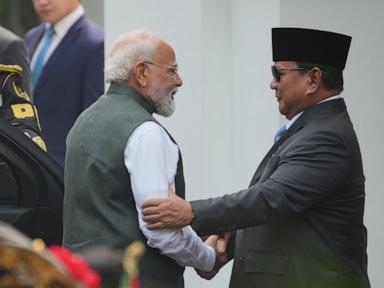
The diplomatic choreography at Jakarta’s Merdeka Palace on July 7, 2026, looked familiar. Handshakes, honor guards, and sweeping statements about a new era of cooperation filled the press releases as Indian Prime Minister Narendra Modi and Indonesian President Prabowo Subianto concluded their high-level talks. Yet beneath the official rhetoric of cultural affinity and economic cooperation lies a stark, unvarnished reality. New Delhi and Jakarta are quietly constructing a formidable maritime barrier at the mouth of the world’s most critical shipping chokepoint, rewriting the security dynamics of Southeast Asia to counter an increasingly assertive China.
The headline agreements signed during Modi’s state visit seem diverse, spanning critical mineral supply chains, digital payments, and educational initiatives like a new Indian Institute of Management campus in Indonesia. But the true core of this meeting is hardware and geography. The finalization of a long-negotiated deal to supply Indonesia with India's BrahMos supersonic cruise missiles and Astra air-to-air missile systems signals a major shift. For decades, Jakarta maintained a strict, non-aligned posture, carefully balancing its economic dependence on Beijing against its security anxieties. That era of cautious neutrality is rapidly drawing to a close.
By arming the Indonesian military with highly effective anti-ship and aerial weapon systems, New Delhi is not just executing a commercial defense sale. It is extending its strategic reach directly into the Western Pacific. The move mirrors India’s previous missile agreements with the Philippines and Vietnam, effectively creating a continuous network of coastal missile batteries operated by nations that ring the South China Sea.
The Silent Fortress at Sabang
Geography dictates destiny in naval warfare. To understand the true depth of the Modi-Prabowo agreement, one must look far away from the capital cities to a small, mountainous island at the northern tip of Sumatra. Sabang Port sits directly atop the entry point of the Strait of Malacca, a narrow waterway through which more than a quarter of all global sea-borne trade passes. More importantly for military planners, it is the primary route for Chinese oil imports from the Middle East.
Under the newly reinforced strategic framework, India and Indonesia have committed to the joint development of Sabang Port. This is not a standard commercial logistics project. Sabang sits barely 100 miles away from India’s own massive, ongoing military and infrastructure buildup at Great Nicobar Island. Together, Great Nicobar and Sabang form a natural pincers across the western mouth of the strait.
In a conflict scenario, the nation that controls these two positions controls the economic lifeblood of East Asia. For years, Beijing has worried about the "Malacca Dilemma"—the vulnerability of its energy supply lines to a hostile naval blockade. The joint development of Sabang, coupled with Indonesia's acquisition of long-range strike weapons, turns that theoretical vulnerability into a concrete operational reality.
The choice of Prabowo Subianto as India’s primary partner in this endeavor is highly significant. A former special forces general and defense minister, Prabowo views international relations through a lens of hard power and deterrence. Unlike his predecessor, Joko Widodo, who focused almost exclusively on domestic infrastructure and economic development, Prabowo has spent his first two years in office rapidly modernizing Indonesia’s military. He understands that economic sovereignty cannot exist without the military teeth to defend it.
Shifting the Missile Balance in Southeast Asia
The introduction of the BrahMos missile into Indonesia's arsenal fundamentally alters the tactical calculus for any navy operating in the region. Developed through a joint venture between India and Russia, the BrahMos is a supersonic cruise missile capable of traveling at nearly three times the speed of sound. Its low-altitude, sea-skimming flight profile makes it exceptionally difficult for modern shipborne air defense systems to intercept.
Jakarta’s decision to buy the BrahMos, alongside the Astra air-to-air missile system produced by India’s Bharat Dynamics, is a direct response to repeated maritime incursions. For years, Chinese coast guard vessels and fishing fleets have encroached upon Indonesia’s Exclusive Economic Zone around the Natuna Islands. These waters sit at the southern edge of Beijing’s expansive, unrecognized territorial claims in the South China Sea.
Previously, Jakarta responded with diplomatic protests and occasional naval patrols. Now, it is building a credible deterrent. Armed with supersonic anti-ship missiles stationed along its outer islands, Indonesia can hold hostile warships at risk hundreds of miles from its coastline.
This missile sale serves a dual purpose for New Delhi. It boosts India's domestic defense manufacturing sector, an industry the Modi administration has tried to transform from a major importer into a global exporter. More broadly, it shifts the burden of regional security. By providing Southeast Asian states with the means to defend their own waters, India complicates China’s naval planning. Beijing can no longer focus its attention solely on the US Navy or the Indian Navy in the Indian Ocean. It must now account for highly capable, heavily armed middle powers along its southern periphery.
The Raw Material Cold War
While defense hardware dominates the immediate strategic conversation, the economic agreements signed in Jakarta point toward a longer-term, structural battle for industrial dominance. The two leaders witnessed the signing of critical agreements targeted directly at the critical minerals and steel supply chains. This is where the geopolitical competition moves from the ocean floor to the factory floor.
Indonesia possesses the world's largest reserves of nickel, a material vital for the production of stainless steel and electric vehicle batteries. Under Prabowo’s continued policy of resource nationalism, the country has banned the export of raw nickel ore, forcing foreign companies to build domestic smelting and processing facilities if they want access to the mineral.
China moved quickly to dominate this space, investing billions of dollars in massive nickel processing complexes across Indonesian islands like Sulawesi and Halmahera. This investment gave Beijing a near-monopoly over the Indonesian nickel sector. It also created deep domestic anxieties within Jakarta regarding economic over-dependence.
India's sudden entry into this sector, with pledged investments in the manufacturing of steel, nickel, and rare-earth permanent magnets, offers Indonesia a much-needed alternative. New Delhi needs these minerals to power its own massive industrial expansion and green energy transition. By building processing facilities in Indonesia, Indian firms are attempting to carve out a secure, independent supply chain that bypasses Chinese-dominated choke points.
The challenge will be execution. Bureaucratic inertia in both New Delhi and Jakarta has derailed ambitious economic plans in the past. Indian capital will have to compete with heavily subsidized Chinese state-owned enterprises that have already established deep roots in the Indonesian archipelago.
Digital Rails and the Pitfalls of Integration
Beyond missiles and minerals, the third pillar of the Modi-Prabowo summit involves financial and digital infrastructure. The announcement that India’s Unified Payments Interface will integrate with Indonesia’s domestic payment networks represents a significant technical expansion. The two leaders also welcomed the launch of the Indonesia Open Network, built upon India's Open Network for Digital Commerce architecture.
This digital expansion is often framed as a convenience for tourists and small businesses. In reality, it is a defensive play against digital financial dominance. For the past decade, Chinese tech giants have aggressively expanded their payment ecosystems across Southeast Asia. By offering an alternative, state-backed, open-source digital infrastructure, India is attempting to export its digital public infrastructure model as a geopolitical tool.
Yet, this rapid integration comes with vulnerabilities. Connecting the financial wiring of two massive, developing democracies exposes both to heightened cybersecurity risks. Indonesia’s digital infrastructure has suffered a series of high-profile data breaches in recent years, revealing systemic weaknesses in its data protection and regulatory oversight. Integrating these systems requires a level of bilateral technical trust and regulatory harmonization that neither country has ever attempted before.
Furthermore, economic protectionism remains a powerful force in both societies. While the integration of payment systems makes cross-border transactions simpler, it does not solve the underlying trade imbalances. Negotiations for a comprehensive Indonesia-India Preferential Trade Agreement have dragged on for years, frequently stalling over agricultural tariffs and market access for manufactured goods.
A Pragmatic Realignment
The outcome of the Jakarta summit shows that the strategic convergence between India and Indonesia is driven by shared anxieties rather than shared values. Both nations are intensely jealous of their strategic autonomy. Neither wishes to join a formal, Western-led military alliance like NATO, nor do they want to see the region dominated by a single, overbearing neighbor.
The deals signed on July 7 demonstrate a hard-nosed, transactional approach to diplomacy. Indonesia gains access to advanced military hardware and diversified industrial investment without having to sign away its non-aligned status. India secures a strategic foothold at the eastern edge of its maritime theater, anchoring its vision for a free and open Indo-Pacific in concrete capabilities rather than empty diplomatic communiqués.
This relationship will not be without friction. As Indonesia modernizes its navy and India expands its maritime presence through its Great Nicobar project, the two forces will find themselves operating in closer proximity than ever before. Managing that overlap will require constant, careful communication to avoid misunderstandings in the crowded waters of the Andaman Sea.
The era of treating the eastern Indian Ocean as a quiet backwater is over. The militarization of the Malacca Strait is accelerating, driven not by outside superpowers, but by the regional giants who sit on either side of the gate. Nations across the Indo-Pacific must now adjust their long-term strategies to account for this newly fortified maritime axis.