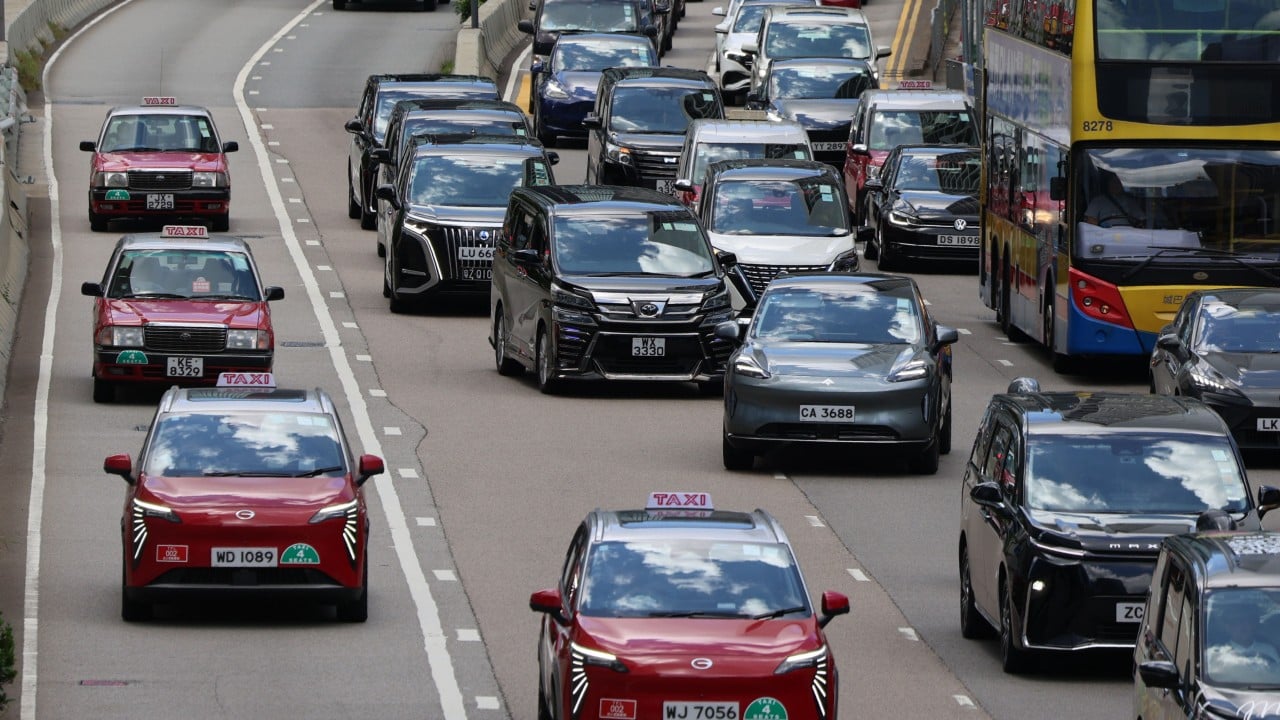
Hong Kong is preparing to impose a hard regulatory cap on the number of ride-hailing vehicles permitted to operate on its streets. This policy, embedded in follow-up legislation to the recently passed Road Traffic (Amendment) Bill, is framed by officials as a necessary step to prevent urban congestion and stabilize the city’s complex public transportation network. The real motivation, however, is a protectionist effort to insulate a politically influential taxi industry that has long resisted market modernization. By restricting the supply of app-based drivers, the government will inadvertently trigger severe supply shortages, a projected 70 percent surge in peak fares, and an estimated 40 percent failure rate for passenger bookings.
For over a decade, platforms like Uber have operated in a regulatory gray area in Hong Kong. While immensely popular among residents and tourists weary of sub-par taxi services, private vehicles carrying passengers for hire without a hire car permit remained strictly illegal. The passage of the core regulatory bill late last year finally created a formal licensing path for platforms, vehicles, and drivers, scheduled to take full effect. Yet, the upcoming subsidiary legislation introduces a mechanism designed to choke the service before it can fully mature: a strict quota system.
The Math Behind the Shortage
The Transport Department faces an intricate balancing act, but the numbers currently under discussion reveal a stark disconnect from market reality. Lawmakers have floated an initial cap of 7,000 to 8,000 permits for the entire territory. To put that into perspective, Hong Kong currently has 18,163 licensed taxis on the road, generating approximately one million passenger trips daily.
Ride-hailing platforms handle roughly 190,000 passenger trips each day, a volume that requires a highly flexible pool of vehicles. Data from transport authorities indicates that between 60 and 70 percent of current ride-hailing drivers operate strictly part-time, working only a few hours during peak periods or weekends.
When a regulatory framework applies a rigid, low cap to a pool dominated by part-time labor, effective transport capacity plummets. A fleet of 8,000 part-time app drivers does not equal the output of 8,000 full-time traditional taxis. The math simply does not work. If a driver only logs on for ten hours a week, their permit is effectively dark for the remaining 158 hours.
Unless the licensing framework demands full-time exclusivity—which would decimate the gig-economy model entirely—an artificial cap will slash the actual availability of vehicles during the exact windows when the public needs them most. Rainy Friday evenings in Central or late-night rushes in Tsim Sha Tsui will transform into transit black holes.
Preventing a New Speculative Bubble
The government's proposed rules contain a highly specific, strict clause: permits must be tied directly to a single vehicle and an individual driver, explicitly banning the subletting or transferring of ride-hailing licenses.
This restriction is a direct response to one of Hong Kong's greatest economic cautionary tales: the taxi license cartel. Decades ago, the government capped the number of taxi licenses at 18,163. It stopped issuing new ones entirely.
Because those licenses could be freely bought and sold on an open market, they transformed from transport permits into speculative financial assets. At the peak of the market, a single red urban taxi license traded for over 7 million Hong Kong dollars.
Wealthy syndicates and investment groups cornered the market, purchasing hundreds of licenses and renting them out to drivers on grueling 12-hour shifts. The actual drivers became marginalized, paying steep daily vehicle rental fees before earning a single dollar of profit. To cover these overhead costs, drivers were forced to cherry-pick long-distance fares, refuse short trips, and ignore service quality.
+--------------------------------------------------------------+
|             THE HONG KONG TAXI MEDALLION CRISIS              |
+--------------------------------------------------------------+
|  1. Rigid supply cap set decades ago at 18,163 licenses.     |
|  2. Licenses became tradable financial commodities.          |
|  3. Speculative value peaked over 7 million HKD per permit.   |
|  4. Ownership concentrated into wealthy corporate cartels.   |
|  5. Drivers face high rent, leading to poor consumer service. |
+--------------------------------------------------------------+
By mandating that ride-hailing permits cannot be shared, traded, or rented, the Transport Department hopes to prevent a parallel speculative bubble from forming around tech platforms. Uber has lobbied against this, arguing that allowing permits to be shared among family members would maximize vehicle utilization. The government, burned by the taxi medallion crisis, remains unyielding.
However, by preventing an open market for permits while simultaneously keeping the overall quota low, the administration is creating a different systemic failure. It is swapping a speculative crisis for a permanent supply deficit.
Data Sharing and the Surveillance Friction
The upcoming subsidiary legislation also introduces heavy operational compliance requirements that alter the frictionless nature of ride-hailing. Licensed platforms will be legally required to link their databases directly to the Transport Department, sharing real-time data on driver identities, vehicle routes, fares, passenger waiting times, and cancellation rates.
More controversial is the planned integration of identity verification technology. The government intends to mandate facial recognition checks within the app before a driver can accept trips, ensuring that the person behind the wheel matches the specific permit holder.
While defensible from a security standpoint, these layers of technological and administrative friction will inevitably deter part-time drivers. The informal, casual nature of the platform economy will vanish under the weight of bureaucratic oversight, driving asset utilization down even further.
The Illusion of Taxi Reform
Defenders of the supply cap argue that the restrictions are fair because the government is simultaneously forcing the traditional taxi sector to upgrade.
Starting in mid-2026, all taxi drivers will be legally required to offer at least two forms of electronic payment, breaking the industry’s decades-long, tax-evading obsession with cash-only transactions. Furthermore, the government has launched a "taxi fleet" initiative, granting special licenses to five consolidated operator groups to manage high-quality, modern fleets with mandatory dashcam installations and structured customer service channels.
These reforms, while commendable, are decades overdue. They do not justify the artificial suppression of alternative transport options.
The new taxi fleets represent only a fraction of the total taxi population. The remaining thousands of independent operators will still rely on the old, broken model. Forcing digital platforms to match the structural limitations of the traditional taxi industry does not elevate public transit; it merely drags innovation down to protect legacy investments.
The Cost of Compliance
Operating a licensed ride-hailing vehicle under the new regime will be an expensive endeavor. Vehicles must be under 12 years old, pass rigorous annual commercial inspections, and carry comprehensive commercial passenger insurance—a financial product that is notoriously expensive in Hong Kong due to high underwriting risks.
For a part-time driver using their personal vehicle for a few hours a week, these fixed compliance costs will quickly become mathematically unviable. When you combine high insurance premiums with a highly restrictive permit quota, the pool of casual drivers will dry up entirely.
The industry will inevitably consolidate into professional, fleet-managed operations. This shifts the entire ecosystem away from true ridesharing and turns it into a secondary, premium taxi service.
When a tech company is forced to operate exactly like a traditional rental car company, the efficiency gains of its algorithmic dispatch system are largely neutralized. The consumer loses the variety of price points and availability that an open, flexible market provides.
A City Stalled by Compromise
Hong Kong’s transport policy has long been praised for its efficiency, anchored by an exceptional subway system. Yet, point-to-point personalized transport remains a vital component of the city’s economic mobility.
By prioritizing the financial stability of legacy taxi license holders over open market competition, the government is capping more than just vehicle numbers. It is capping convenience.
A vibrant international financial hub requires agile infrastructure. Restricting transport options via arbitrary quotas to appease a vocal interest group damages the city's broader appeal to global talent and businesses. When the new regulatory regime goes live, the reality of long wait times and skyrocketing surge prices will quickly expose the true cost of protectionism.