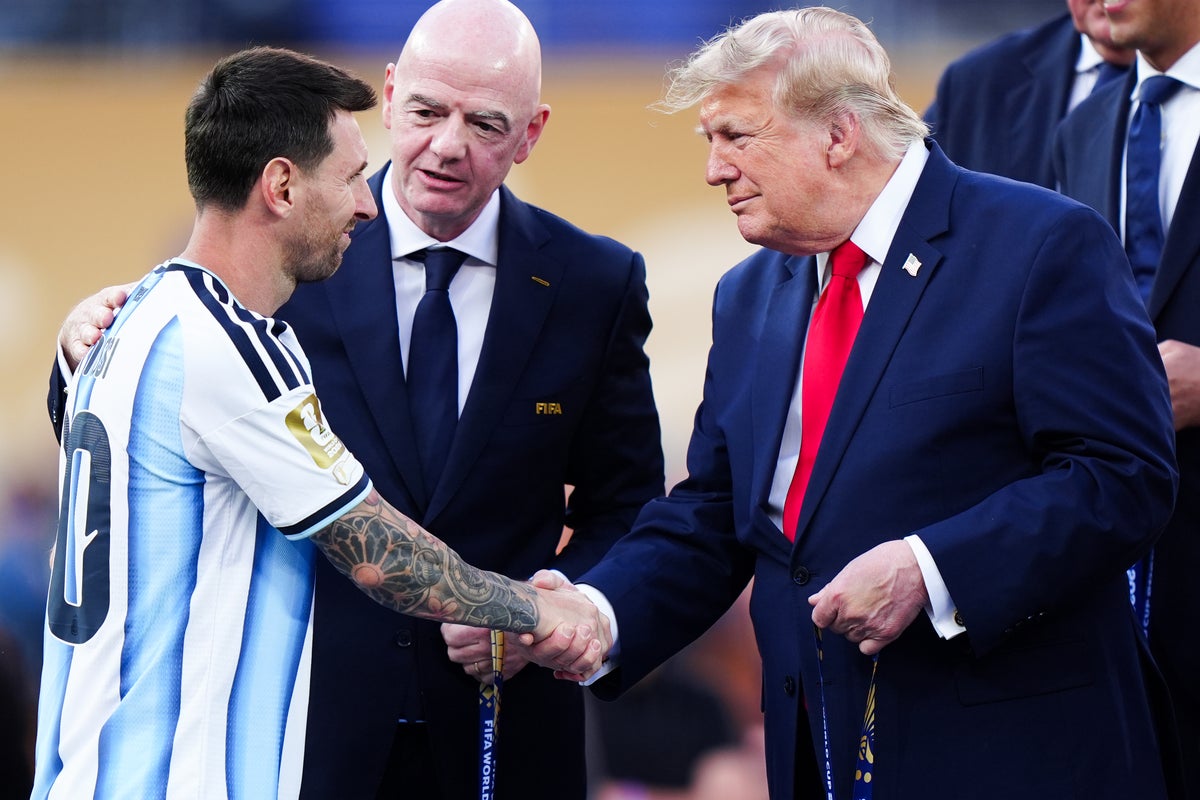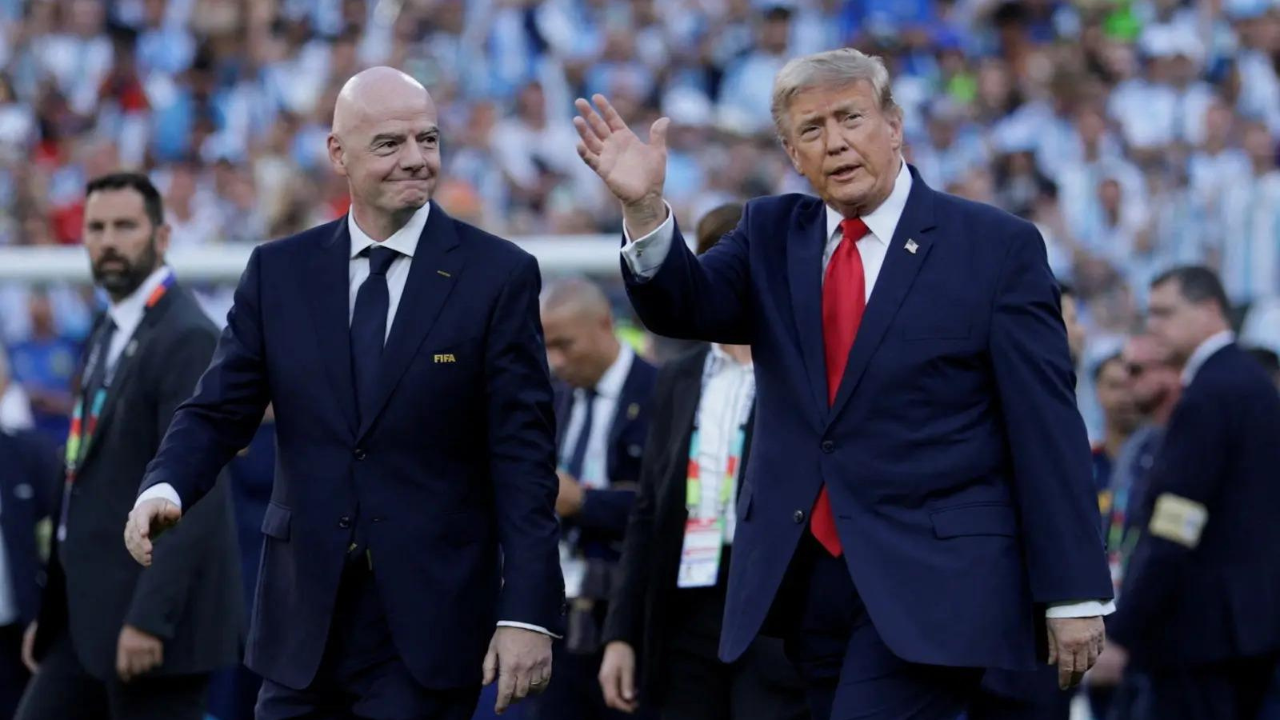
The shadow of American politics completely overtook global soccer long before the referee blew the opening whistle at MetLife Stadium. When the green military fuselage of Marine One hovered over the canopy of the New York New Jersey Stadium forty-five minutes before kickoff, it was clear this afternoon would not just be about Lionel Messi or Spain’s relentless possession game. Donald Trump arrives for the World Cup final not as a casual enthusiast of a sport he once ignored, but as a political operative executing a calculated display of national ownership over the world's most watched sporting event. The spectacle that followed—complete with backroom lobbying, a chorus of boos, and an awkward stage-crashing incident during the trophy presentation—revealed a deeper, uncomfortable reality about the intersection of global sports governance and raw executive power.
For FIFA President Gianni Infantino, the presence of the American president was both a shield and a transactional necessity. The two men sat shoulder-to-shoulder in a fortified luxury box, flanked by world leaders including Mexico’s President Claudia Sheinbaum and Spain’s King Felipe VI. Yet the true narrative was unfolding on the grass below and in the corridors of power where the tournament’s competitive integrity had already been tested by political pressure.
The Flight of Marine One and the Illusion of Unity
The optics were orchestrated for maximum gravity. Video captured from inside the presidential aircraft showed the sweeping expanse of the stadium jammed with eighty-two thousand spectators, a sea of white-and-sky-blue Argentine shirts clashing with the vibrant red of the Spanish contingent. The administration viewed this match as the crown jewel of a summer dedicated to America’s 250th anniversary celebrations, turning a global tournament into a national birthday party.
It was an aggressive assertion of host-country dominance. While Bill Clinton skipped the 1994 final at the Rose Bowl, leaving the trophy presentation to Al Gore, the current administration left no doubt about who intended to command the stage. Holding the iconic golden trophy alongside Infantino before the players even emerged from the tunnel, the executive branch effectively claimed the event before a single ball was kicked.
The stadium screens flashed the president's image immediately following the star-spangled banner. The initial reaction was a fractured mix of cheers and scattered, localized disapproval—a mild prelude to the intense friction that would develop hours later when the sporting drama concluded and the political circus took center stage.
The Secret Phone Calls and the Balogun Affair
Behind the performative smiles in the VIP suite lies a history of direct intervention that purists find deeply troubling. Investigative tracking of the weeks leading up to the final confirms that the relationship between the White House and FIFA extended far beyond standard diplomatic hospitality.
Sources familiar with the matter confirm that the president personally called Infantino to intervene in a purely sporting disciplinary issue. The target of the call was the controversial red-card suspension of American star Folarin Balogun before the United States’ critical round-of-16 match against Belgium.
FIFA shockingly reversed the ban after the executive lobbying effort. This unprecedented meddling shattered the long-held myth that the governing body maintains an iron wall between state politics and tournament administration. The intervention ultimately yielded nothing on the pitch; the United States squad, weighed down by the ensuing media circus and internal distractions, fell to Belgium anyway, crashing out of their home tournament while the governing body was left to answer for its compromised standards.
Chaos on the Presentation Podium
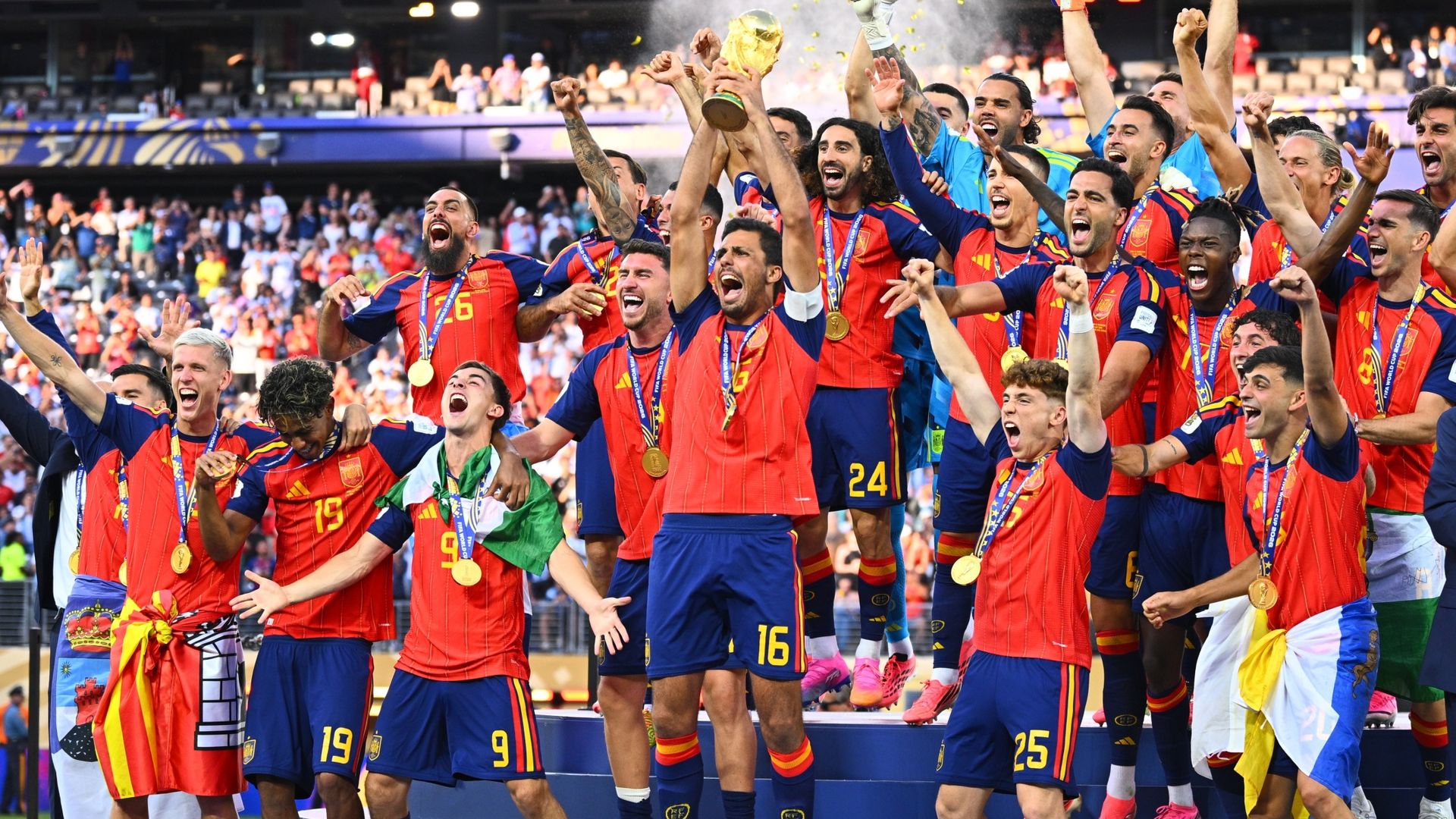
The sporting contest itself was an exhausting, technical war of attrition that stretched past the ninety-minute mark without a single breakthrough. Spain controlled the tempo, starving Argentina of the ball with sixty-four percent possession, while Argentine goalkeeper Emiliano Martínez performed minor miracles, racking up twelve saves to keep a tiring Lionel Messi within striking distance of a historic defense of the crown. The deadlock finally broke in the 106th minute of extra time when substitute Ferran Torres latched onto a loose ball in the box, driving it home to secure Spain’s 1-0 victory.
Then the political machinery moved in.
| Event Element | Baseline Decibels | Peak Decibels | Crowd Reaction Type |
| :--- | :--- | :--- | :--- |
| Pre-Introduction Ambient | 78 dB | 78 dB | Neutral Murmur |
| Executive Entrance | 78 dB | 84 dB | Sustained Booing |
| Trophy Delivery | 82 dB | 86 dB | Mixed Whistling |
When Infantino and the president stepped onto the pitch for the formal medal ceremony, the stadium’s audio dynamics shifted violently. White House pool reports noted that the ambient noise level spiked from seventy-eight decibels to a piercing eighty-four decibels as a massive wave of booing rolled down from the rafters. The international crowd, exhausted by the match and fiercely protective of the sport's autonomy, rejected the political intrusion.
The situation deteriorated into outright farce during the gold medal handoff. After handing the trophy to the Spanish champions, the president refused to leave the stage, attempting to anchor himself to the side of the podium to share the frame with the celebrating players.
Golden confetti rained down while Spanish players looked on with visible confusion. It required a subtle, urgent physical intervention from Infantino, who quietly took the president by the arm and guided him away from the team's private moment of triumph. This was a precise rerun of the behavior observed at the Club World Cup, confirming a pattern of using global athletic victory as a backdrop for personal branding.
The Immediate Push for 2038
The true motivation for this high-visibility appearance became clear during an impromptu interview with broadcast rightsholders just before the medal ceremony began. The current tournament was not even over, yet the administration was already using its leverage to demand more.
The president explicitly stated that he had already begun pressuring Infantino to return the tournament to American soil in the next available cycle. The argument is built entirely on the massive financial returns generated by the expanded forty-eight-team format across North America.
This transactional view reduces the World Cup to a recurring revenue engine for American infrastructure while ignoring the traditional global rotation that spreads the sport to developing regions. The administration’s position is clear: the United States provides the stadiums, the security, and the corporate money, and in return, FIFA must yield to its scheduling demands.
The Broken Border Between State and Sport
The events in New Jersey prove that the era of separating international sport from geopolitical posturing is dead. FIFA’s vulnerability to American executive influence has been laid bare, setting a dangerous precedent for future tournaments where authoritarian states or wealthy hosts might demand similar exceptions to disciplinary rules or automatic hosting considerations.
As the cleaning crews sweep the golden foil from the MetLife Stadium grass, the defining memory for millions of viewers worldwide will not be the tactical brilliance of Spain or the tearful farewell of Lionel Messi. It will be the sight of a global sporting body subverting its own protocols to accommodate a political figure who viewed their entire four-year cycle as a mere backdrop for domestic stagecraft.
FIFA now faces a crisis of authority that it invited upon itself through years of financial compromise and backroom dealmaking. The governing body must either find a way to re-establish the boundary between the pitch and the presidency, or accept its new role as a permanent tool of global political theater.