The headlines are predictable. They read like a template from a 1990s peace summit: "Pakistan and Afghanistan Announce Ramadan Truce." The mainstream media, desperate for a sliver of stability in a region that has defied every geopolitical logic for a century, is selling you a fantasy. They want you to believe that a temporary cessation of fire is a step toward a diplomatic breakthrough.
It isn't. It’s a strategic reload.
I’ve watched these "humanitarian pauses" play out from the inside of policy rooms to the dusty border crossings of the Khyber Pass. A truce in this context isn't an olive branch; it’s a logistics window. When the guns go silent for a religious holiday, it isn’t because the warring parties have found their conscience. It’s because their supply lines are frayed, their fighters are exhausted, and both sides need to reposition their assets without the annoyance of a drone overhead or an IED under the wheels.
If you think this leads to a lasting settlement, you’re reading the wrong map.
The Lazy Consensus of "Religious Diplomacy"
The prevailing narrative suggests that shared Islamic values during the holy month of Ramadan act as a natural bridge for peace. This is a patronizing, Western-centric simplification that ignores the brutal pragmatism of the Durand Line.
In reality, the Tehrik-i-Taliban Pakistan (TTP) and the Afghan Taliban aren't looking for a "peaceful resolution." They are looking for legitimacy. By agreeing to a truce, the TTP gains the one thing a high-intensity insurgency needs most: recognition as a peer competitor to the Pakistani state. Every day the Pakistani military doesn't fire, it implicitly admits that it cannot win by force alone.
We see the same pattern every time. A ceasefire is signed. The international community exhales. Then, forty-eight hours after the Eid festivities end, the violence returns with a higher level of sophistication. Why? Because the truce allowed for the movement of munitions that were previously pinned down by active combat.
The Sovereignty Paradox
The core of the problem isn't a lack of "dialogue." It’s a fundamental disagreement on what a border actually is.
Islamabad views the Durand Line as an international border. Kabul—whether under a republic or the Taliban—views it as a colonial relic. No amount of Ramadan dates and tea will fix the fact that the Afghan Taliban will never fully restrain the TTP. To do so would be to betray their own ideological kin and undermine their claim to Pashtun leadership.
When a competitor's article tells you this truce "opens the door for talks," they are ignoring the fact that the door is currently unhinged. The TTP’s demands include the reversal of the FATA (Federally Administered Tribal Areas) merger and the imposition of their specific brand of Sharia in Pakistan’s border regions. These aren't "negotiable" points for a sovereign state; they are demands for a slow-motion surrender.
The High Cost of Artificial Pauses
Let's talk about the data that the "peace-at-all-costs" crowd ignores.
Historical analysis of ceasefires in the Af-Pak region shows a direct correlation between "peace intervals" and a subsequent spike in "spectacular" attacks—suicide bombings in urban centers like Peshawar or Quetta. These aren't coincidences.
- Intelligence Blackouts: During a truce, human intelligence (HUMINT) networks on the ground go dark. Informants are terrified that the state has abandoned them to the insurgents.
- Terrorist Mobility: Fighters move from the mountains into the "settled" districts under the guise of visiting family for the holidays.
- Political Paralysis: The Pakistani government uses these truces to deflect domestic criticism, buying a few weeks of quiet at the cost of long-term security.
If I were advising the Pakistani GHQ today, I’d tell them the truth: this truce is a tactical defeat disguised as a moral victory. You are giving the TTP a chance to bury their dead, treat their wounded, and plan their next spring offensive.
The Myth of the "Unified" Taliban
One of the biggest fallacies in current reporting is the idea that the "Afghan Taliban" is a monolithic entity that can simply flip a switch and stop the TTP.
The relationship is more like a franchise. The Afghan Taliban provides the "brand" and the sanctuary, but the TTP operates with its own local commanders and grievances. By pushing for a truce, Pakistan is asking a group that barely controls its own radical fringes to police a group that is defined by its radicalism.
Imagine a scenario where a CEO asks a subsidiary to stop competing with a rival, but the subsidiary's staff only gets paid if they keep the competition alive. That is the TTP-Taliban-Pakistan triangle. Conflict is the currency of the borderlands. Without it, these groups lose their raison d'être and, more importantly, their funding.
Stop Asking "When Will Peace Come?"
The question itself is flawed. Peace, in the Westphalian sense, isn't coming to the borderlands anytime soon.
Instead of celebrating a temporary ceasefire that will inevitably be broken, we should be asking: How does Pakistan decouple its security policy from the outdated hope that Kabul will ever be a "friendly" neighbor?
The obsession with "strategic depth" has turned into a strategic nightmare. Pakistan spent decades trying to influence Afghan internal politics, only to find that the fire they stoked across the border has now jumped the fence. A truce doesn't put out that fire; it just hides the smoke for a few weeks.
The Brutal Reality of Border Management
If you want actual stability, stop looking at "peace deals" and start looking at infrastructure and economic leverage.
- Hard Borders: Forget the soft-pedaled rhetoric. Stability requires the physical and digital sealing of the Durand Line, regardless of Kabul’s protests.
- Economic Coercion: Kabul relies on Pakistani ports. If the TTP continues to use Afghan soil as a launchpad, the price of transit should become unbearable.
- De-radicalization vs. Negotiation: You cannot negotiate with an entity that views your very existence as an apostasy. You can only contain them.
The Hidden Danger of Hope
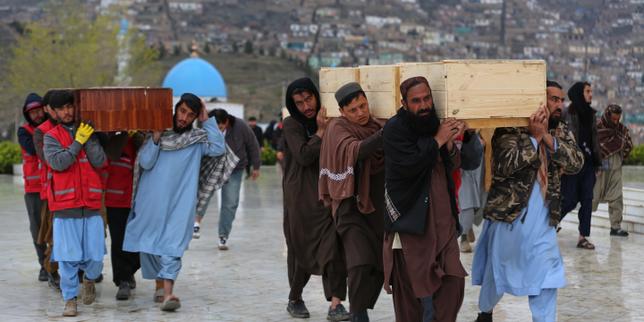
The most dangerous thing about this Ramadan truce isn't the likelihood of it failing—it’s the hope it generates among the Pakistani public. When the inevitable attack happens in three weeks, the psychological blow to a weary population is far worse than if the state had remained on a war footing.
It fosters a cycle of "Hope-Betrayal-Anger" that prevents a coherent, long-term national security strategy from ever taking root. It allows politicians to kick the can down the road while the military buys time for a "pivot" that never actually happens.
I’ve seen this movie before. It always ends with a funeral.
The next time you see a headline about a "breakthrough" or a "truss," remember that in the world of high-stakes asymmetric warfare, silence isn't peace. It’s the sound of the enemy checking their sights.
Stop falling for the optics of the pause and start looking at the mechanics of the conflict. The war isn't over; it's just taking a lunch break.
Prepare for the afternoon.