Geopolitical conflicts rarely stay neatly contained within distant borders. When British counter-terrorism police arrested several individuals following a late-September security scare near RAF Fairford in Gloucestershire, it became crystal clear that foreign state-backed operations have shifted directly onto British soil.
Prime Minister Andy Burnham didn't mince words when addressing Parliament, pointing the finger squarely at Iran's Islamic Revolutionary Guard Corps (IRGC) for orchestrating the thwarted plot against the strategically vital airbase. For months, security analysts warned that Western support for US military actions in the Middle East would draw retaliatory grey-zone tactics from Tehran. The events at Fairford turned those theoretical warnings into a stark reality.
Understanding the Threat at RAF Fairford
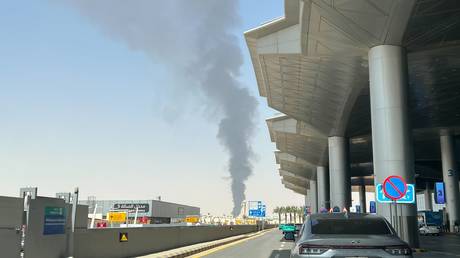
RAF Fairford isn't just any military installation. As a key European hub for United States Air Force strategic bombers like the B-1B Lancer, the Gloucestershire base serves as an essential logistics and operational anchor for transatlantic defense. When suspicious vehicles approached the base perimeter in late September, local authorities evacuated roughly 85 households, deployed bomb disposal teams, and launched a massive counter-terrorism investigation.
The operation quickly moved beyond local policing. Investigators uncovered digital trails, coded phone communications, and handlers operating from afar, drawing sharp parallels to similar proxy-led sabotage attempts across Europe. US and British prosecutors subsequently charged multiple suspects under the National Security Act, laying bare a transnational network designed to probe, disrupt, or attack Western military infrastructure.
The British Response and New Sanctions
In response to the mounting evidence linking the plot to Iranian state actors, the Foreign Office moved swiftly to impose targeted economic and travel restrictions. Downing Street announced fresh sanctions against key Iranian nationals accused of facilitating hostile intelligence activities within the United Kingdom.
These measures are part of a broader Western pushback. Alongside allies in the G7, London is drawing a hard line against state-sponsored sabotage, cyber attacks, and intimidation campaigns targeting dissidents or military sites. Tehran has predictably denied involvement, dismissing the allegations as baseless speculation, but intelligence sharing between Washington and London has left little doubt among Western officials regarding the source of the directives.
Why This Changes the Security Calculus
Britain has spent decades dealing with traditional domestic terrorism and lone-actor threats. State-backed hybrid warfare operates on an entirely different playing field. When foreign intelligence services recruit proxies locally to conduct surveillance, arson, or reconnaissance against military bases, the traditional boundaries between domestic law enforcement and international defense completely blur.
You're looking at a new normal where infrastructure vulnerability extends far beyond cyberspace. Power plants, water grids, and joint-use airbases are all potential targets for grey-zone aggression. The UK government's willingness to openly attribute these plots and issue rapid sanctions shows that denial and plausible denibility no longer protect hostile actors from public exposure.
Expect tighter perimeter security around sensitive defense assets and increased scrutiny on foreign networks operating inside Western Europe. The shadows are shrinking, and governments are learning that proactive attribution is the best defense against creeping hybrid conflict.