Cold.
In November, the wind off Cook Inlet does not merely blow; it interrogates you, slipping beneath the collar of a heavy parka to test whether you truly belong in a place where daylight shrinks to a pale, stubborn sliver by mid-afternoon. Inside a cramped wooden precinct house in Anchorage—or down a gravel road outside Wasilla, or along a wind-scoured boardwalk in Ketchikan—the fluorescent lights hum against the encroaching dark while neighbors stamp snow from their boots and reach for a paper ballot.
That paper looks simple enough. Just a grid of ovals waiting for black ink. Yet in the final days before Alaskans cast their votes in the United States Senate race, that modest sheet of cardstock has become the epicenter of a ferocious legal and political storm—one thick with emergency court filings, accusations of backroom sabotage, and the kind of bare-knuckle maneuvering that leaves ordinary citizens wondering whether their voices are being counted or quietly neutralized before the polls even close.
To understand why a Senate race at the northern edge of the map feels like a high-stakes thriller, you first have to picture the kitchen table where it actually lands. Consider a hypothetical voter—let us call her Maren—a fourth-generation commercial gillnetter in Cordova whose seasons are dictated by salmon runs, fuel prices, and federal fisheries regulations written four thousand miles away in Washington, D.C. Maren does not live on cable news panels. She lives by tide tables and diesel receipts. When she sits down with her absentee ballot envelope, her local radio station is buzzing not with policy debates over Arctic infrastructure or subsistence rights, but with breaking news about lawsuits over ballot disqualifications, fights over candidate withdrawals, and whisper campaigns designed to fracture the vote.
Maren pauses, pen hovering over the paper. Doubt creeps in.
That hesitation is the real target of every eleventh-hour legal brief and political dirty trick.
The Architecture of a Modern Electoral Ambush
Standard political coverage treats late-stage litigation like a box score: Motion filed on Tuesday, injunction denied on Thursday, appeals court hears arguments on Friday. That dry bookkeeping misses the visceral reality of how modern campaigns weaponize the clock. When election day is measured in hours rather than months, confusion becomes currency.
Alaska’s electoral system is uniquely vulnerable to—and uniquely designed to resist—this kind of chaos. Following the passage of Ballot Measure 2 in 2020, the state abandoned traditional partisan primaries in favor of an open top-four primary paired with ranked-choice voting in the general election. Think of ranked-choice voting like ordering dinner at a table where everyone has strong opinions: if your first choice sells out before the waiter reaches your seat, your backup choice automatically takes its place so you do not go hungry. In theory, the system rewards consensus, forces candidates to appeal beyond their narrowest base, and eliminates the dreaded "spoiler" effect that has historically haunted independent-minded Alaskan politics.
In practice, however, any system built on intricate rules invites lawyers to test every joint and hinge under maximum pressure.
When a race tightens in the final stretch, the battlefield shifts abruptly from town halls to courtrooms. Allegations erupt over whether a trailing candidate stayed in—or dropped out—under dubious circumstances to manipulate the second-choice math. Opposing camps accuse each other of ghost-funding spoiler campaigns, flooding mailboxes with deceptive flyers designed to look like official election notices, or challenging the technical validity of thousands of mail-in ballots over minor signature discrepancies and witness requirements.
You do not need a law degree to feel the chill of what happens next. Even if a judge ultimately tosses out a frivolous lawsuit or blocks a misleading mailer, the damage has already been done in the public bloodstream. Voters hear that the rules are in flux. They hear that certain votes might not count. They hear that someone, somewhere, is gaming the system. And in a state separated by mountain ranges, vast roadless stretches of tundra, and weather delays that can ground mail planes for days, even a sliver of procedural uncertainty carries immense weight.
Ghosts of Elections Past on the Tundra
I have spent enough chilly autumn nights watching returns trickle in from remote Alaskan precincts—waiting on satellite transmissions from villages along the Kuskokwim River while snow piles against the windowpane—to know that trust in the count is fragile here. Alaska has a long, colorful, and occasionally bruised political memory. Residents still talk in coffee shops from Fairbanks to Juneau about the razor-thin margins and courtroom marathons that have defined the state’s history.
They remember 2008, when longtime Senator Ted Stevens fought for his political life amid a federal corruption trial that collapsed months after he lost his seat by fewer than four thousand votes due to prosecutorial misconduct. They remember 2010, when Lisa Murkowski pulled off a historic write-in victory after losing her primary, triggering weeks of painstaking hand-inspections where lawyers argued over whether a voter’s slight misspelling of "Murkowski" still showed clear intent.
History teaches a sobering lesson about political dirty tricks: they rarely look like cinematic heists. They look like friction.
Consider what happens when a voter in Bethel or Nome receives a text message from an unknown number claiming that ranked-choice voting will "cancel out" their first-choice vote unless they leave the rest of the ballot blank. That claim is demonstrably false—under Alaska’s tabulation rules, ranking backup choices never hurts your favorite candidate; your second choice is only consulted if your first choice finishes last and is eliminated. Yet in the frantic noise of the final weekend before an election, a lie travels twice as fast as a clarification from the Division of Elections.
Or consider the sudden flurry of litigation over candidate eligibility and ballot access in the closing days of a campaign. When a political operative files an eleventh-hour challenge questioning whether a rival met residency requirements or complied with campaign finance disclosure rules, the legal merits almost become secondary to the headline. The headline plants a seed of illegitimacy. To a weary voter juggling two jobs and rising heating costs, nuanced legal distinctions blur into a single, corrosive takeaway: They are all crooked, and the fix is in.
That cynicism is not an accident. It is a strategy.
Why One Seat in Washington Carries the Weight of a State
To outsiders in the Lower 48, an Alaska Senate race can sometimes look like a quirky regional spectacle—a clash of rugged personalities playing out against a backdrop of glaciers and moose. That perspective gets the stakes entirely backward.
Because Alaska has only one seat in the U.S. House of Representatives, its two U.S. Senators carry an outsized burden. Every federal dollar for rural water and sanitation systems, every decision on oil and gas leasing in the National Petroleum Reserve, every Coast Guard icebreaker deployment in the warming Arctic, and every judicial appointment passes through that narrow bottleneck of representation. Unlike densely populated states where economic power rests largely in private corporate corridors, Alaska’s economy remains deeply intertwined with federal land management, military installations, and resource policy.
When a Senate race descends into a mudslide of litigation and dirty tricks, the people paying the price are not the political consultants billing by the hour in Anchorage or Washington. It is the commercial fisherman watching salmon runs fluctuate. It is the Native village elder watching permafrost thaw beneath coastal runways. It is the young family in Palmer trying to figure out whether they can afford to stay in the state they love.
Let us return to Maren at her kitchen table in Cordova.
When she looks at the accusations flying across her phone screen—claims of dark-money front groups hiding behind benign-sounding committee names, counter-claims of partisan overreach in the courts—she feels a familiar, heavy fatigue. It is the sensation of being talked about rather than talked to. Political operatives treat voters like chess pieces to be nudged, suppressed, or redirected through psychological sleight of hand, forgetting that behind every statistical demographic model is a human being trying to make an honest judgment about their community’s future.
There is an unmistakable vulnerability in admitting how disorienting this feels. Even seasoned election observers can find themselves squinting at emergency docket filings at midnight, trying to separate genuine constitutional questions from cynical theater designed to run out the clock. If people who follow politics for a living feel whiplash during the final days of a contested Senate race, it is entirely understandable why an ordinary citizen might feel tempted to toss their ballot onto the counter and walk away.
The Quiet Defiance of the Paper Ballot
And yet, walking away is the one thing Alaskans have historically refused to do.
There is an old metaphor used by bush pilots flying across the Brooks Range in uncertain weather: when the horizon disappears into flat white light, you stop trusting your inner ear, which will lie to you about whether you are banking or climbing, and you lock your eyes onto the instruments on the dashboard. In the final days of a bruising campaign, the noise of litigation and smear tactics is that whiteout. It is engineered to induce vertigo.
The antidote is stubbornly analog. It is verifying information directly through nonpartisan sources, understanding how the ballot actually works before stepping into the booth, and recognizing that the sheer volume of legal warfare is often proof not of a broken system, but of how desperately entrenched interests fear an electorate they cannot easily control.
Notice the pattern. Dirty tricks proliferate precisely when campaigns realize they cannot win cleanly on persuasion alone. If a candidate holds an insurmountable lead built on trust and clear ideas, their team does not need to confuse voters about how to fill out ovals or launch Hail Mary lawsuits forty-eight hours before polls open. Desperation breeds theatrics.
In the end, all the emergency motions, all the late-night press releases, and all the dark-money mailers hit a hard, immovable wall at 8:00 p.m. on Election Night. Lawyers cannot cast ballots. Super PACs cannot step behind the privacy curtain. Courts can referee the boundaries of the field, but they cannot play the game.
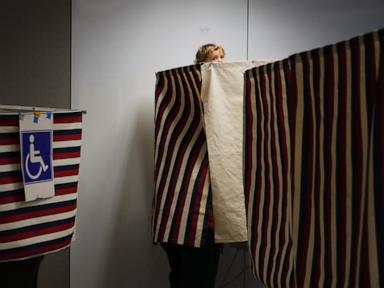
Somewhere along the coast, the wind rattles the shutters of a community hall where volunteer poll workers have been brewing burnt coffee since dawn. Inside, neighbors who disagree fiercely about pipelines, taxes, and salmon allocations stand quietly in the same line, waiting their turn at a folding table. One by one, they pick up a black pen, ignore the roar from the courtroom down the road, and press the tip firmly into the paper.