You know the exact sound it makes.
It is two in the morning in a hotel room that smells faintly of industrial bleach and someone else’s cologne. Your throat feels like sandpaper from six hours of recycled cabin air. You reach blindly across the dark nightstand, knock over a laminated card begging you to reuse your towels for the sake of the earth, and wrap your fingers around a cold, ribbed cylinder of polyethylene terephthalate.
Crack.
That tiny, crisp snap of the plastic security ring breaking is the universal sound of modern travel. You drink half of it. You leave the other half on the desk next to a half-eaten croissant when you check out at dawn. By noon, a housekeeper in orthopedic shoes sweeps it into a heavy-duty black trash bag, and it begins a four-hundred-year journey toward a landfill, a storm drain, or the stomach of a sea turtle.
Multiply that midnight thirst by the billions of hotel stays logged every single year.
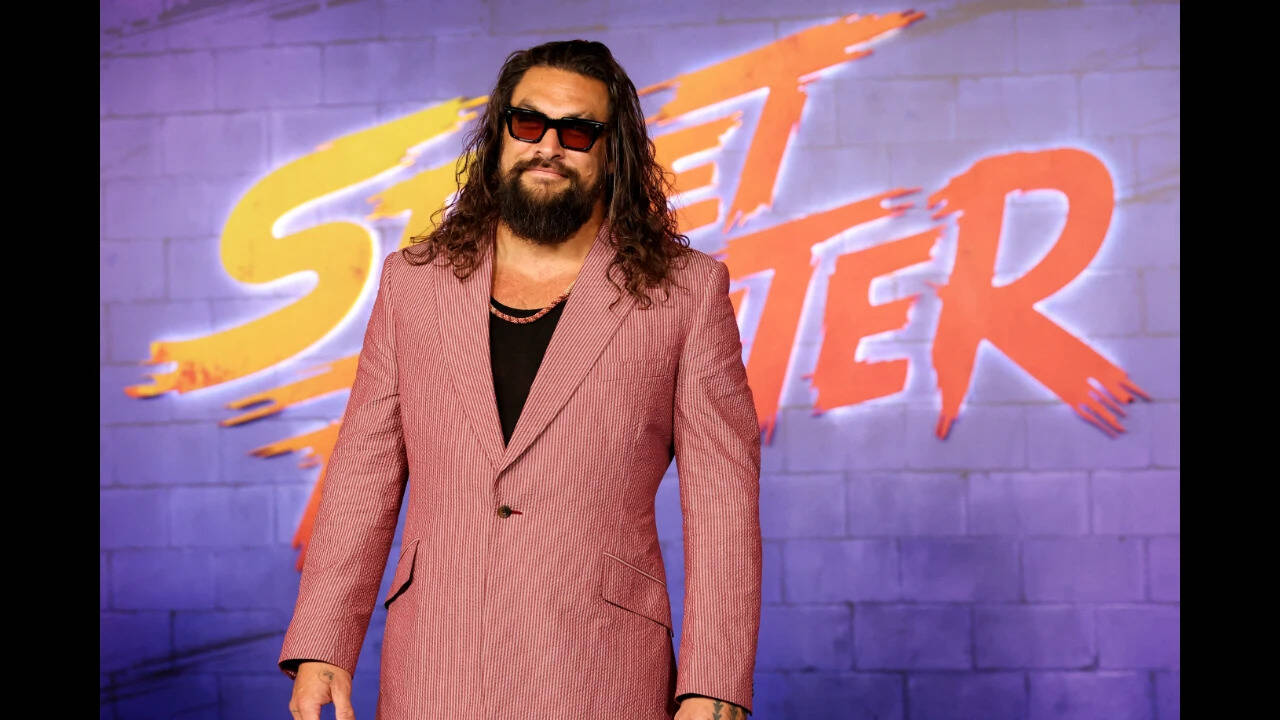
We have been conditioned to view that little complimentary bottle of water as an act of hospitality. A tiny liquid welcome mat. In truth, it is the visible tip of a massive, quiet logistics failure—one that the hospitality industry has spent decades pretending it cannot fix. Until a six-foot-four actor best known for swimming with CGI sharks decided that the real villain wasn't on a movie screen, but sitting right next to the hotel ice bucket.
The Illusion of Convenience
To understand why Jason Momoa’s water company, Mananalu, is suddenly installing sleek, touchless water refill stations in major hotel lobbies across the country, you first have to understand how deeply broken our relationship with hydration has become.
Consider a hypothetical traveler. Let’s call her Elena. Elena is a regional sales director who spends forty weeks a year living out of a carry-on suitcase. She is not a villain. She brings her own bamboo cutlery on flights and dutifully separates her paper from her glass at home. Yet, between Monday morning and Thursday night, Elena will easily go through ten single-use plastic water bottles.
Why? Because travel strips away your autonomy. Airport security forces you to dump your water before you reach the gate. Once you land, the tap water in an unfamiliar city tastes faintly of chlorine or rusted pipes, triggering a primal, evolutionary suspicion that makes you reach for something sealed. When Elena checks into her hotel, exhausted and dehydrated, those two complimentary bottles waiting by the television feel like a lifeline.
She drinks them. She grabs two more from the gym. She buys a third at the lobby sundry shop for six dollars because she has a presentation in ten minutes and nowhere else to turn.
Multiply Elena by every business traveler, every family on a Disney pilgrimage, and every wedding guest in America. The hospitality industry alone generates tens of millions of pounds of plastic waste annually, much of it driven by the simple, biological need for clean drinking water. For years, the industry’s answer to this crisis was purely theatrical. Hotels swapped out tiny shampoo bottles for wall-mounted dispensers—a smart move that saved money—while leaving the single-use water bottle completely untouched.
Why did the water bottle survive when the miniature conditioner died? Because guests complained when you took away their water. Tap water felt cheap. A sealed bottle felt safe, curated, and premium. Breaking that psychological spell required someone who understood both the mechanics of mass branding and the visceral reality of a dying ocean.
A Different Kind of Hollywood Vanity Project
Celebrity beverage brands are usually exercises in cynical alchemy. A famous face licenses their name to a conglomerate, shoots a commercial in a rented mansion, and cashes a check while factories pump out millions of new plastic vessels into an already suffocating ecosystem.
When Jason Momoa shaved off his trademark beard on camera in 2019, it wasn't for a movie role. It was a loud, slightly theatrical alarm bell meant to draw attention to single-use plastics. Shortly after, he founded Mananalu—a name combining mana (the sacred life force in Polynesian culture) and nalu (a powerful ocean wave).
Initially, the company attacked the problem with a straightforward substitution: putting water in infinitely recyclable aluminum cans instead of plastic. Aluminum is a vastly superior material in the recycling economy; roughly seventy-five percent of all aluminum ever produced is still in use today, compared to less than nine percent of all plastic. By partnering with organizations like rePurpose Global, Mananalu committed to removing one plastic bottle from nature for every can sold.
That effort recently crossed a staggering threshold: six million plastic bottles diverted and removed from ocean-bound waste streams.
Six million is a number so large the human brain struggles to render it. To visualize it, imagine taking every single plastic bottle removed by that initiative and laying them end-to-end. You would build a shimmering, translucent highway stretching over seven hundred miles—roughly the distance from Los Angeles to Salt Lake City.
Yet, if you talk to anyone who has spent real time studying waste systems, they will tell you an uncomfortable truth. Substitution is good, and cleanup is noble, but neither actually stops the faucet from running. Even an aluminum can requires mining, smelting, shipping, and crushing. The true endgame of sustainability isn't a better container. It is eliminating the container altogether.
The Architecture of the Refill Revolution
This brings us to the quiet revolution happening right now in hotel corridors, resorts, and transit hubs.
When Mananalu announced the expansion of its hotel hydration stations, the headlines treated it like a standard corporate press release. A celebrity brand expanding its B2B footprint. Next story.
Look closer, though, and you see a profound shift in how businesses think about infrastructure. A water refill station is not a glamorous piece of technology. You cannot wear it on a red carpet. You cannot hold it up for a paparazzi shot outside a nightclub in West Hollywood. It is a stainless-steel box plumbed directly into a building’s existing water line, fitted with advanced multi-stage filtration that strips away microplastics, heavy metals, chlorine, and the weird metallic aftertaste that makes hotel tap water so unappealing.
Think of it like the transition from physical DVDs to streaming, only for physical matter.
For decades, the beverage industry operated on a simple, absurd premise: take water from a municipal source in one state, filter it, trap it inside a petroleum-based shell, load thousands of pounds of it onto diesel-burning eighteen-wheelers, drive it across mountain ranges, and sell it to a hotel so a guest can drink it in three minutes and throw the shell away. We were shipping heavy liquids across continents just to move an ounce of plastic.
By placing commercial-grade refill machines directly inside hotels, that entire bloated supply chain collapses into a few feet of copper piping.
Consider what happens next when a hotel makes this switch. First, the economics flip completely in the property’s favor. Purchasing, storing, and disposing of hundreds of thousands of plastic bottles every year is a massive hidden expense for hospitality groups. Labor hours are burned just unloading pallets of water, stocking rooms, and hauling bags of empties to dumpsters. A plumbed-in filtration system requires a fraction of that labor and slashes procurement costs almost immediately.
Second, and far more importantly, it solves the guest’s trust deficit.
When you walk up to a dedicated hydration station in a hotel lobby—especially one branded with the kind of rugged, ocean-minded ethos Momoa has built—the psychology changes. You aren't filling your reusable bottle from a questionable bathroom sink next to a toilet. You are drawing crisp, chilled, heavily filtered water from a machine engineered specifically for purity. The friction disappears. The excuses evaporate.
What Nobody Tells You About "Recycling"
I used to believe, with the naive certainty of someone who grew up in the nineties, that the little chasing-arrows triangle stamped on the bottom of a bottle was a promise. If I put the bottle in the blue bin, a machine somewhere would melt it down and turn it into a new bottle, or maybe a fleece jacket, and the cycle of life would continue harmoniously.
Standing on a beach in the Pacific Northwest a few winters ago cured me of that delusion.
After a heavy storm, the high-tide line wasn't made of kelp and driftwood. It was a dense, knee-deep confetti of shredded microplastics, bottle caps, and sun-bleached fragments of containers that had likely been tossed into "recycling" bins thousands of miles away. When you learn how global waste actually moves—how contaminated bales of plastic are rejected by sorting facilities, shipped overseas to countries without the infrastructure to process them, and dumped into open pits near rivers—you realize that recycling plastic is largely a fairy tale invented to keep us buying without guilt.
Plastic degrades every single time it is melted down. Unlike glass or aluminum, which can be reborn endlessly without losing their structural integrity, plastic is on a strict downward spiral. A clear water bottle becomes a carpet fiber, which becomes a park bench, which eventually crumbles into microscopic dust that ends up in our rainwater, our soil, and—as recent medical studies have grimly confirmed—our own bloodstreams and arterial plaque.
This is the invisible stake sitting on that hotel nightstand. We aren't just talking about litter on a highway or a sad photograph of a seabird tangled in a six-pack ring. We are talking about a material that never truly goes away, breaking down into smaller and smaller pieces until it becomes part of our own biology.
That is why the removal of six million bottles matters, and why the expansion of physical refill infrastructure matters infinitely more. Every time a hotel guest fills a reusable flask at a lobby station instead of cracking open a complimentary single-use bottle, a tiny chain reaction of extraction, pollution, and biological contamination is stopped before it can even begin.
The Friction of Changing Habits
Of course, infrastructure alone does not guarantee victory. Human beings are creatures of stubborn, deeply ingrained habits, and the travel industry is notoriously slow to abandon what feels safe.
Ask any hotel general manager about removing complimentary bottled water, and you will hear the same anxious refrain: What if the guests hate it?
Hospitality is a business built on avoiding friction at all costs. If a loyalty-program member who stays a hundred nights a year expects two cold bottles of water waiting in their suite, taking them away feels like a gamble. Some guests will forget to pack a reusable bottle. Others will balk at walking down the hall to a refill station in their slippers at midnight. There is a genuine, messy transition period where convenience collides with necessity.
Yet, history shows us how quickly our definition of "normal" can shift once the right alternative is placed in front of us.
Twenty years ago, walking through an airport terminal carrying an empty metal canteen would have made you look like an eccentric survivalist preparing for a trek across the Sahara. Today, hydration stations near airport restrooms are so standard that travelers instinctively form lines to use them before boarding. Nobody misses paying five dollars for a warm bottle of water at a newsstand when cold, filtered water is available for free ten feet away.
Hotels are simply the next frontier in that exact same behavioral evolution. By providing guests with high-end reusable aluminum bottles upon check-in—or encouraging them to bring their own—and pairing those vessels with accessible, impeccably maintained refill machines on every floor, the industry can rewrite the rules of hospitality without sacrificing luxury. In fact, it elevates it. True luxury in the twenty-first century isn't wasteful excess; it is effortless, thoughtful design that respects the world outside the hotel walls.
The Ripple Effect
There is a certain irony in watching a Hollywood action hero become one of the most effective disruptors in commercial plumbing and beverage logistics. We expect our celebrities to sell us perfume, tequila, or athleisure. We do not expect them to obsess over municipal filtration systems and hotel procurement contracts.
Yet, perhaps that is precisely why it works. Climate anxiety has a way of paralyzing ordinary people. When the problem is framed as an abstract, planetary catastrophe—rising sea levels, melting ice caps, billions of tons of carbon—the human mind shuts down. The scale is too vast. Our individual actions feel hopelessly insignificant.
A water station in a hotel lobby shrinks the crisis down to human size. It turns an overwhelming global emergency into a simple, tactile choice you make with your own two hands while waiting for the elevator.
Imagine Elena, our exhausted sales director, checking into her hotel six months from now. She walks past the front desk, spots the brushed-steel refill station humming quietly near the elevators, pulls her dented stainless-steel bottle from the side pocket of her backpack, and watches crystal-clear, ice-cold water pour into it in seconds. No plastic seal cracking in the dark. No half-empty bottle left behind for a housekeeper to haul to a dumpster. No invisible trail of microplastics stretching from her nightstand to the ocean floor.
It is a small moment. Quiet. Unremarkable.
And if enough hotels, enough travelers, and enough stubborn outsiders keep pushing, that quiet rush of cold water might just drown out the sound of cracking plastic for good.