The red phone does not ring like it does in the movies.
When a crisis hits the West Wing, the sound is actually a dull, persistent electronic chirp that vibrates against the mahogany table in the basement of the White House. It smells like burnt coffee, recycled air, and the sharp, metallic tang of sudden panic. I remember sitting three chairs down from the head of that table during a late-night briefing several years ago, watching the fluorescent lights reflect off the sweat on a young duty officer’s forehead. In that room, foreign policy is not a grand chessboard. It is a frantic effort to stop a bleeding artery with whatever paper towels happen to be within reach.
That is why John Bolton’s recent warnings about the dire prospects facing the White House hit differently if you have ever actually breathed that basement air.
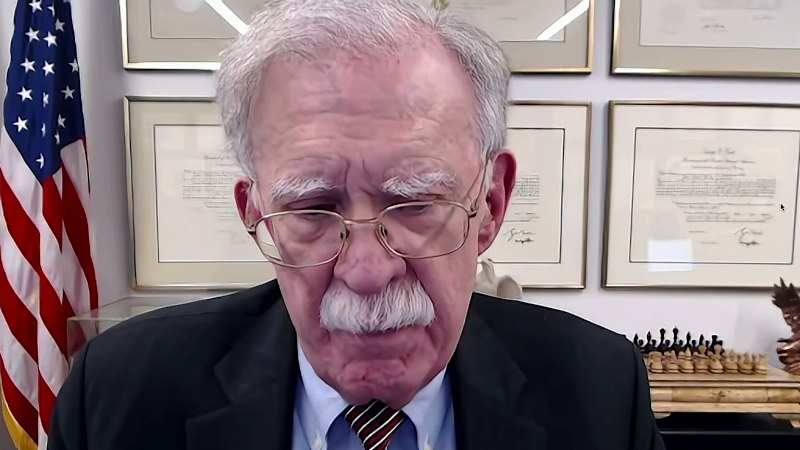
Most people see Bolton and immediately fixate on the mustache, the hawkish reputation, or the partisan shouting matches that follow him across cable news networks. They treat his commentary like just another round of Washington theater. That is a mistake. When a former National Security Advisor—a man who spent seventeen months inside the inner sanctum of the Trump administration and decades navigating the machinery of the State Department and the Pentagon—sounds the alarm about institutional collapse, he is not making a political speech. He is describing a structural failure in the plumbing of American power.
And when the plumbing fails in Washington, the water eventually floods a living room in Ohio, a wheat farm in Kansas, or a small manufacturing plant in Pennsylvania.
The Illusion of the Solo Pilot
To understand what Bolton is actually warning us about, you have to strip away the partisan noise and look at how decisions get made when the stakes involve nuclear deterrence, global supply chains, and regional wars.
Consider a hypothetical scenario. Picture a commercial airliner cruising at thirty-five thousand feet over the Atlantic. Inside the cockpit, the pilot decides that the navigation charts, the co-pilot’s instruments, and the air traffic controllers on the ground are all part of a conspiracy to slow him down. So he turns off the radio, ignores the fuel gauge, and flies purely by looking out the windshield at the clouds. For the first hour, the ride feels smooth. The passengers are watching movies and drinking ginger ale. They have no idea that the aircraft has drifted four hundred miles off course into a gathering storm.
This is the exact dynamic Bolton has spent months dissecting in interviews and public appearances. His core argument is deceptively simple: a White House cannot function on impulse, personal grievances, or transactional whim when the rest of the world is playing a generational game of survival.
During his tenure from April 2018 to September 2019, Bolton watched firsthand how the traditional National Security Council process—the grueling, unglamorous system of vetting intelligence, testing assumptions, and gaming out second- and third-order consequences—was routinely bypassed. Briefing books went unread. Intelligence assessments that contradicted personal instincts were dismissed as disloyal. Alliances built over seventy-five years through blood and treasure were treated like bad real estate deals that could be terminated with a single tweet.
Bolton’s dread about the prospects for the White House stems from what happens when that style of governance returns without the guardrails that barely held it together the first time. In 2017 and 2018, the building was still populated by seasoned institutionalists—figures like Jim Mattis, John Kelly, and H.R. McMaster—who acted as shock absorbers between a volatile Oval Office and a dangerous world. They absorbed the heat, slowed down the most reckless impulses, and kept the traditional alliances breathing.
Those shock absorbers are gone.
What remains, in Bolton’s assessment, is an environment where loyalty overrides competence, and where the absence of a coherent national security strategy creates a vacuum that America’s adversaries are already rushing to fill.
What Happens When Deterrence Evaporates
Washington insiders love the word deterrence, mostly because it sounds clean and theoretical. In reality, deterrence is nothing more than psychology backed by credible force. It is the quiet certainty in the mind of an adversary in Beijing, Moscow, or Tehran that crossing a specific line will trigger a predictable, devastating response from the United States.
When the White House broadcasts unpredictability as a virtue, deterrence begins to rot from the inside out.
Let us make this concrete. Meet Elena, a fictional logistics coordinator working at a mid-sized medical device company outside Columbus, Ohio. Elena does not follow cable news. She does not care about palace intrigue in Washington or who is up and who is down in the West Wing. She cares about whether the microchips and specialized glass vials her company imports from East Asia arrive on time so she can keep forty-five people employed on the assembly line.
Elena’s livelihood depends entirely on a quiet, invisible umbrella of American security guarantees in the Indo-Pacific. For decades, the U.S. Seventh Fleet and a web of ironclad alliances with Japan, South Korea, and Taiwan have kept the shipping lanes of the South China Sea open and predictable. Beijing has hesitated to blockade Taiwan or choke off regional trade not out of goodwill, but because American power appeared steady, resolved, and backed by an unbreakable alliance network.
Now consider what happens when the White House signals that alliances are conditional—that mutual defense treaties are merely protection rackets where allies have not paid enough rent.
Bolton has repeatedly pointed to this exact vulnerability regarding NATO and East Asia. When an American president casually suggests that the United States might not defend an ally, or treats historic security commitments as bargaining chips, leaders in Moscow and Beijing do not hear clever negotiating tactics. They hear hesitation. They hear an opening.
If Beijing calculates that Washington is too distracted, too divided, or too transactional to intervene in a crisis over Taiwan, the math changes overnight. A blockade in the Taiwan Strait does not stay in the Pacific. Within seventy-two hours, global semiconductor shipments freeze. Within three weeks, Elena’s factory in Ohio runs out of components. Within two months, millions of Americans are staring at empty pharmacy shelves, stalled auto plants, and an inflation spike that makes the post-pandemic years look like a minor hiccup.
That is the invisible wire connecting a late-night rant in the West Wing to a kitchen table in the Midwest. Bolton understands that wire because he has spent his life watching how small cracks in American credibility turn into geopolitical earthquakes.
The Trap of the Transactional Deal
There is a seductive myth in modern politics that foreign policy is just business by another name. If you can negotiate a skyscraper deal in Manhattan, surely you can negotiate peace on the Korean Peninsula or end a war in Eastern Europe in twenty-four hours.
History is ruthless to leaders who believe this.
In 1938, Neville Chamberlain returned from Munich waving a piece of paper signed by Adolf Hitler, genuinely convinced that a personal face-to-face agreement had secured peace in our time. Chamberlain treated a revisionist dictatorship like a rival firm willing to split market share. He failed to grasp that some actors do not want a better deal; they want to burn down the building and own the ashes.
Bolton watched a modern version of this illusion play out in real time during the Singapore and Hanoi summits with North Korean leader Kim Jong Un. The administration believed that personal chemistry, flattering letters, and high-stakes photo opportunities could accomplish what decades of rigorous diplomacy and sanctions had not.
The result was entirely predictable to anyone who had actually studied Pyongyang’s playbook. North Korea pocketed the prestige of standing shoulder-to-shoulder with an American president, froze nothing of consequence, and quietly expanded its nuclear arsenal and ballistic missile testing program while Washington celebrated the optics of friendship.
Bolton’s warning about the White House’s prospects centers on the danger of repeating this exact mistake on a far larger, far more lethal scale. Whether the issue is Russia’s war in Ukraine, Iran’s nuclear threshold, or China’s territorial ambitions, treating existential geopolitical conflicts like transactional real estate deals leaves the United States holding worthless paper while adversaries seize permanent strategic advantages.
Worse still, when those deals inevitably sour, the reaction is rarely a calm recalibration. Instead, policy swings wildly from naive accommodation to erratic brinkmanship, leaving allies terrified and enemies emboldened.
Confusing Noise With Strength
I have to be honest about something that makes this whole subject deeply unsettling, even for people who have spent decades studying it: the sheer difficulty of separating genuine strategic shifts from daily political noise.
There are days when watching the news out of Washington feels like trying to read a compass inside an MRI machine. The needle spins violently every few hours. One moment, tariffs are an existential weapon; the next, they are paused for a phone call. One morning, a historic alliance is obsolete; by evening, a spokesperson insists nothing has changed.
It is exhausting. And that exhaustion is itself a strategic vulnerability.
A government cannot execute a complex, multi-year foreign policy when its senior officials spend eighty percent of their waking hours managing internal leaks, deciphering contradictory public statements, and trying to figure out what the boss actually wants before he changes his mind at dinner.
In a healthy White House, the National Security Council acts like the central nervous system of the executive branch. Information flows up from embassies, intelligence agencies, and military commands; options are debated rigorously; a clear decision is made; and orders flow down cleanly so the entire government moves in unison.
When that system breaks down—when loyalty tests replace expertise and major policy shifts are announced without consulting the Pentagon or the State Department—the central nervous system goes numb. Ambassadors in foreign capitals can no longer tell their host governments what American policy actually is, because they honestly do not know. Foreign leaders stop talking to American diplomats and start trying to flatter the president directly, or worse, they start hedging their bets by cutting quiet side deals with Beijing and Moscow.
Bolton’s bleak assessment is not rooted in personal bitterness, though his public feud with his former boss is no secret. It is rooted in the cold mechanics of statecraft. You cannot improvise your way through a multipolar world where Russia, China, Iran, and North Korea are actively coordinating their efforts to undermine American power.
The Quiet Cost of Institutional Amnesia
There is another layer to Bolton’s warning that rarely makes the evening news, because it happens slowly, behind closed doors, without dramatic press conferences. It is the hollowing out of institutional memory.
Every time a White House purges career intelligence officers, seasoned diplomats, and nonpartisan military planners out of suspicion that they belong to a hostile "deep state," the country loses decades of hard-won expertise. You cannot replace a fluent Mandarin speaker who has spent twenty years tracking People’s Liberation Army logistics with a loyal campaign surrogate who looks good on television. You cannot replace a nuclear arms control negotiator with a donor.
When a crisis erupts at three in the morning—a submarine collision in contested waters, a sudden coup in a nuclear-armed state, a cyberattack on the domestic power grid—the president does not need cheerleaders in the room. He needs people who know where the bodies are buried, who understand the technical limits of our weapons systems, and who have the spine to tell him when his gut instinct is going to get thousands of Americans killed.
Without those voices in the room, the White House becomes an echo chamber. Mistakes compound. Blind spots widen. And by the time the consequences become visible to the public, the options left on the table are all terrible.
The Empty Chair
Think back to that basement room in the West Wing, with its stale air, muffled phones, and heavy mahogany table.
For more than eighty years, through Democratic and Republican administrations alike, the survival of the free world has depended on a fragile, imperfect, but ultimately resilient process inside that room. It depended on leaders who understood that American power is strongest when it is steady, predictable, and anchored by allies who trust our word.
John Bolton’s warnings force us to confront an uncomfortable truth about where that process stands today. The threats gathering beyond our borders are more coordinated and more dangerous than at any point since the height of the Cold War, yet the machinery designed to confront them is sputtering from internal distrust, erratic leadership, and the steady erosion of institutional competence.
The red phone in the basement of the White House is still sitting on the table. Sooner or later, at an hour no one chooses, it is going to chirp—and the real danger is not who is on the other end of the line, but whether anyone left in the room still knows how to answer it.