The fluorescent lights in a hospital pharmacy hum at a frequency you only notice at three in the morning. I have stood under those lights, holding a clear plastic vial of an experimental oncology drug, wondering whether the numbers printed on the label represented a miracle or a miscalculation. You do not think about Senate confirmation hearings when you are staring at an IV drip. You do not think about committee votes, party whips, or procedural deadlines in Washington, D.C.
Yet every single pill in your cabinet, every vaccine in a clinic refrigerator, and every blood-pressure monitor on a pharmacy shelf passes through an invisible gatekeeper. That gatekeeper is the Food and Drug Administration. And right now, the battle over who holds the keys to that gate has stalled in the very place it was expected to sail through.
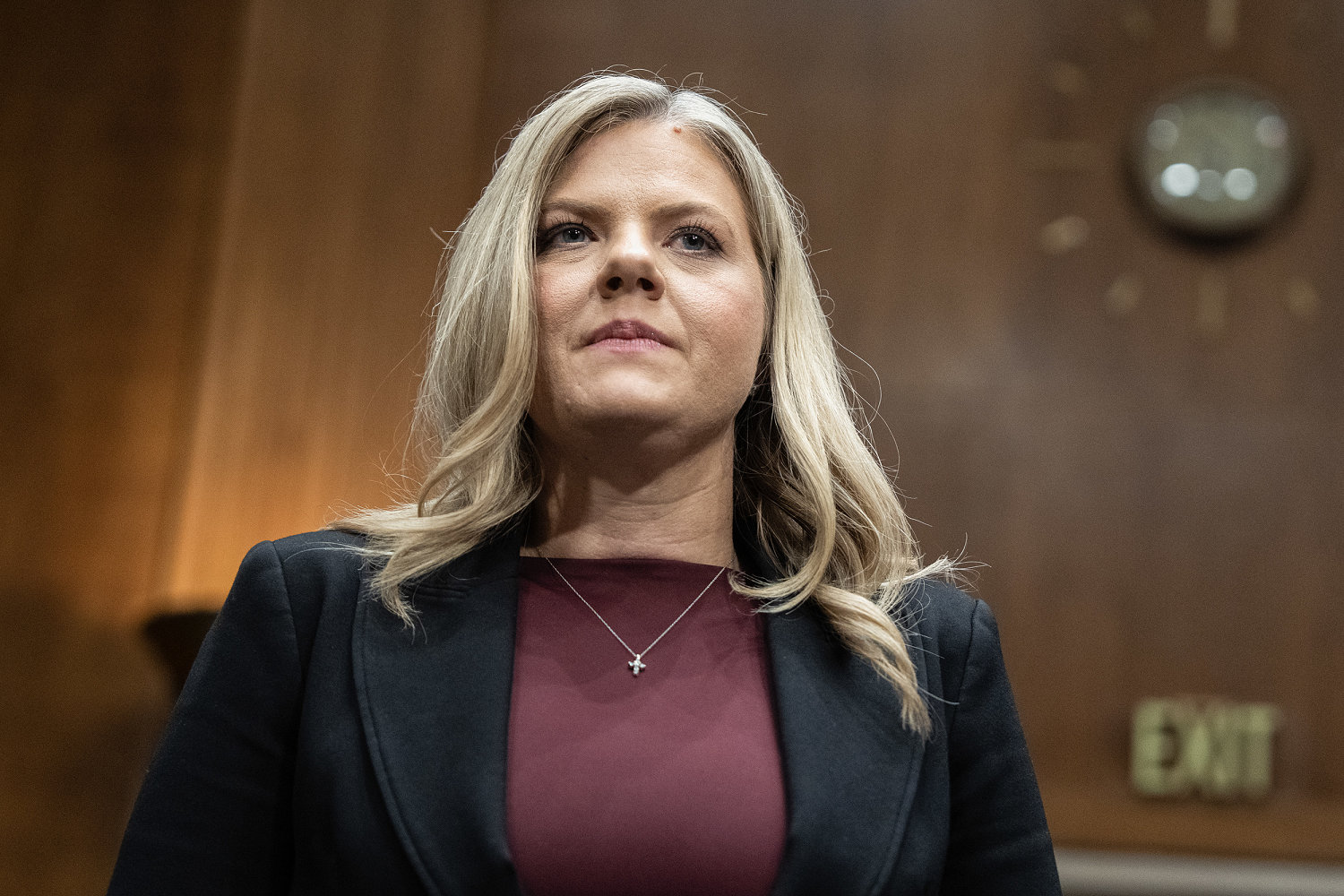
According to news reports detailing the confirmation process, President Donald Trump’s nominee to lead the FDA is facing unexpected skepticism from Senate Republicans just as a critical confirmation deadline approaches. On paper, this looks like routine Capitol Hill friction—another political tug-of-war over a cabinet-level post. In reality, it is a high-stakes collision between two competing visions of American medicine, public trust, and regulatory power.
The Anatomy of a Senate Stall
Politics usually follows predictable gravity. When a president nominates an agency head and his own party controls the confirmation machinery, the path forward tends to be smooth, greased by party loyalty and shared ideological goals.
This time, the gears are grinding.
As reported by political outlets tracking the nomination, several Republican senators have raised pointed questions about the nominee’s past positions, regulatory philosophy, and alignment with core conservative priorities. The doubts do not stem from a single scandal. Instead, they reflect deep fractures within the Republican coalition itself over what the FDA should actually be doing.
Consider the competing pressures pulling at a senator on the Health, Education, Labor, and Pensions Committee. On one side are populist reformers who view the federal health bureaucracy as bloated, overly cautious, and captured by pharmaceutical interests; they want a disruptor who will slash red tape and challenge medical orthodoxy. On the other side are traditional pro-business conservatives and senators from states with massive biotech and agricultural hubs, who worry that unpredictable leadership could destabilize the rigorous scientific standards that give American drugs global market value.
Add to that the contentious debate over reproductive health regulations—specifically the FDA’s oversight of medication abortion—and suddenly a nominee who seemed like a consensus choice becomes a lightning rod. Some anti-abortion lawmakers have demanded firm commitments to roll back mail-order access to mifepristone, while more moderate members warn that sweeping regulatory reversals could trigger legal chaos and political backlash.
The clock is ticking. When a confirmation deadline looms, delay is not neutral. Every week without a confirmed commissioner leaves the agency in a state of suspended animation, run by acting officials who lack the political mandate to overhaul major policies or defend the institution during a crisis.
What an Acting Commissioner Cannot Do
To understand why this deadlock matters beyond the Beltway, imagine—purely as a hypothetical illustration—a mid-sized biotech lab in North Carolina. Let us call the lead researcher Elena. Elena has spent seven years developing a targeted therapy for a rare pediatric neurological disorder. Her team has exhausted its venture capital, mortgaged equipment, and gathered clinical trial data showing promising results in forty children.
Elena’s company is ready to submit its application to the FDA. Under normal circumstances, the agency operates like an air-traffic control tower: complex, strict, sometimes frustratingly slow, but governed by clear flight paths. Now imagine the control tower has an interim supervisor who knows she might be replaced in three weeks.
Does the agency greenlight an accelerated approval pathway for Elena’s drug, risking criticism if post-market data looks messy? Or does it play it safe, demanding another eighteen months of trials that Elena’s company cannot afford?
When leadership is uncertain, institutions default to self-preservation. Reviewers hesitate to take bold swings. Major guidance documents—the rulebooks that tell food manufacturers, medical device engineers, and drugmakers what standards they must meet—sit in limbo on desks in White House review offices.
The FDA regulates roughly twenty cents of every dollar spent by American consumers. That is not a metaphor; it is an economic reality spanning everything from infant formula and pet food to artificial intelligence diagnostic software and gene therapies. When the top seat remains empty or contested, the ripple effects move quietly outward, slowing approvals, chilling investment, and leaving manufacturers guessing which rules will apply next quarter.
The Trust Deficit Inside the Medicine Cabinet
Why are Republicans divided over a nominee chosen by their own party’s president? The answer lies in how profoundly the last few years reshaped the public’s relationship with medical authority.
For decades, the FDA operated largely in the background of American life. Most citizens could not name the commissioner. The agency’s reputation rested on a quiet bargain: Americans accepted slower access to new treatments in exchange for a near-guarantee that approved drugs were safe and effective. That bargain held firm after the thalidomide crisis of the early 1960s, when FDA reviewer Frances Oldham Kelsey famously refused to approve a sedative linked to severe birth defects in Europe, cementing the agency’s image as a heroic shield.
That consensus fractured during the pandemic. Suddenly, emergency use authorizations, vaccine mandates, booster schedules, and off-label treatments became nightly cable news fodder. To millions of Americans, the FDA looked less like an impartial referee and more like a political actor. Trust in public health institutions plummeted, particularly among conservative voters.
When Trump returned to office promising to shake up federal health agencies—a movement amplified by allies calling for a sweeping overhaul of food additives, vaccine schedules, and chronic disease policy—expectations collided. Many Republican voters demanded a radical break from the establishment. Yet inside the Senate, lawmakers still answer to constituents who rely on the very system populists want to dismantle: cancer patients waiting on breakthrough trials, farmers needing veterinary drug approvals, and hospitals navigating chronic shortages of generic saline and chemotherapy agents.
You cannot easily tear down an air-traffic control tower while planes are circling the runway.
The Invisible Stakes of Regulatory Whiplash
Let us step back from the partisan noise and look at how drug and food safety actually works on the ground. Think of the FDA’s regulatory framework like the suspension bridge spanning a wide river. The cables are clinical trial requirements; the towers are manufacturing inspections; the roadbed is post-market surveillance that catches side effects after a product hits pharmacy shelves.
If you loosen the cables too much—approving drugs on flimsy evidence just to appear fast and business-friendly—the bridge sways dangerously. Patients end up paying tens of thousands of dollars for therapies that do not work, or worse, cause harm. Conversely, if you tighten the bolts until the structure cannot flex—imposing ideological litmus tests or paralyzing reviewers with political second-guessing—nothing gets across the river at all.
According to lawmakers and policy analysts following the confirmation battle, Republican doubters are wrestling with precisely this tension. Some senators fear the nominee will not go far enough in overhauling agency culture and confronting pharmaceutical industry influence. Others worry that aggressive disruption could undermine the gold-standard scientific review process that makes an FDA stamp of approval the benchmark for regulators around the world.
There is also the quiet, unglamorous crisis that rarely makes headlines: generic drug shortages and foreign supply chains. Right now, dozens of essential hospital medications—sterile injectables, pediatric antibiotics, basic anesthetics—are in short supply across the United States. Meanwhile, the vast majority of active pharmaceutical ingredients are manufactured overseas in facilities in India and China that the FDA struggles to inspect frequently enough.
Fixing that requires a commissioner with deep operational mastery, bipartisan credibility, and the clout to secure funding and authority from Congress. A nominee limping across the finish line—or forced to withdraw after a bruised confirmation fight—enters the building already weakened.
What Happens When the Deadline Hits
In the Senate, deadlines have a way of forcing clarity out of fog. As the calendar closes in on the committee’s decision point, several outcomes sit on the table, each carrying distinct consequences for patients, doctors, and industry leaders.
In one scenario, the White House and Senate leadership launch an intensive behind-the-scenes persuasion campaign. This usually involves quiet assurances: private meetings in senators’ offices, written responses to lingering committee questions, and subtle commitments on staffing or policy priorities—such as promising a thorough review of specific drug approvals or food safety rules without making public pledges that would alienate other factions. If enough hesitant Republicans decide that confirming the president’s choice beats leaving the agency rudderless, the nomination advances to a narrow floor vote.
In another scenario, the doubts harden into a formal blockade. Because committee margins in the Senate are razor-thin, even one or two defections within the majority party can stall a nomination indefinitely unless opposition Democrats step in to provide votes—an unlikely lifeline in a polarized confirmation battle unless the nominee makes major concessions toward traditional regulatory norms. If the math fails, the administration faces a painful choice: pull the nomination and restart a vetting process that could eat up months, or leave an acting leader in charge while fighting a prolonged confirmation war.
Neither path is painless. A bruising confirmation fight forces a nominee to make promises to specific political constituencies just to survive the vote. Once confirmed, those promises become handcuffs, limiting the commissioner’s ability to follow changing scientific evidence when an unexpected public health emergency hits.
The Human Weight Behind the Headlines
It is easy to read a headline about Republican doubts over an FDA pick and treat it like a scoreboard update in a sport played exclusively by politicians and lobbyists. Who is up? Who is down? Which senator extracted a concession?
I keep thinking back to that hospital pharmacy at three in the morning, and to the quiet trust embedded in every routine medical moment. When a parent measures out five milliliters of liquid amoxicillin for a toddler with an ear infection, they are making an act of faith. They are trusting that the concentration on the bottle matches the liquid inside, that the manufacturing plant was clean, and that the scientists who reviewed the data answered to evidence rather than political expediency.
When a grandmother takes a daily blood thinner, she is relying on an unbroken chain of oversight stretching from a clinical trial database to a manufacturing line to a local drugstore counter.
That chain is only as strong as the people entrusted to guard it. The senators debating behind closed doors on Capitol Hill are not merely voting on a resume or settling an intra-party dispute over ideology. They are deciding what kind of referee will stand between American families and an increasingly complex, fast-moving medical marketplace.
The vote will happen soon, one way or another. Someone will eventually walk into the commissioner’s suite in White Oak, Maryland, hang a framed certificate on the wall, and inherit an inbox overflowing with life-or-death decisions. Until that door closes and the real work begins, the quietest crisis in American healthcare will remain the empty chair at the head of the table.