Wait.
That single word has defined the financial lives of ordinary people for over a century. If you wanted to buy a piece of a reliable, institutional-grade money market fund—the kind of safe, yield-bearing financial engine that keeps corporate treasuries humming—you waited. You waited for the market to open, you waited for your broker to process the paperwork, you waited for the clearinghouse to settle the trade, and if a sudden emergency hit on a Saturday afternoon, you waited until Tuesday morning just to touch your own cash.
Meanwhile, the clock on Wall Street and Central never really stopped ticking for the people at the very top.
Consider a hypothetical scenario that plays out thousands of times every single week across Asia. Meet Chloe, a twenty-nine-year-old architectural designer living in a shoebox apartment in Kowloon. Chloe is disciplined. She saves thirty percent of her paycheck, terrified of the volatile swings of the stock market, yet acutely aware that inflation is quietly eating away at the cash sitting in her standard savings account. She wants her money to work while she sleeps, earning the steady, dependable yields of a short-term government bond fund.
Until recently, Chloe’s options were bleak. She could leave her savings in a traditional bank account earning a fraction of a percent, or she could lock her money into a traditional mutual fund where getting her cash back required navigating a maze of cutoff times, T+2 settlement delays, and rigid banking hours. On a Sunday evening, when her elderly mother suddenly needed an urgent medical deposit, Chloe’s wealth was effectively frozen behind thick glass. She could see the numbers on her screen, yet she couldn't spend a single dollar of them until the legacy banking machinery ground back to life on Monday morning.
That invisible wall between everyday savers and liquid, institutional-grade yield just cracked wide open in Hong Kong.
In a move that barely registered outside the financial press—buried under dry headlines about regulatory sandboxes and distributed ledgers—Hong Kong’s Securities and Futures Commission (SFC) authorized the world’s first secondary trading framework for tokenised public funds.
Read that again, without the jargon. For the first time anywhere on earth, ordinary retail investors can buy, sell, and transfer shares of regulated, public investment funds directly with one another on a secondary market, powered by blockchain rails, with near-instant settlement.
The Architecture of a Broken Clock
To understand why this quiet regulatory shift in Hong Kong carries the weight of a seismic event, you have to look under the hood of how our money actually moves.
I still remember the first time I tried to liquidate a modest bond fund position during a sudden personal cash crunch years ago. The fluorescent hum of the bank branch, the polite apology from the relationship manager explaining that I had missed the 3:00 PM cutoff by eleven minutes, the sinking realization that my own money was trapped in a digital purgatory over a long weekend. That feeling of powerlessness—of watching a progress bar spin while real life demands immediate action—is something millions of savers know intimately.
The plumbing of traditional finance was built for an era of paper ledgers and pneumatic tubes. When you buy or sell a traditional public fund, your order doesn't execute the way a text message sends. Instead, it enters a batch-processing queue. At the end of the trading day, the fund manager calculates the Net Asset Value (NAV), tallies all the buy and sell orders, mints new shares or redeems old ones directly with the fund house, and sends instructions down a chain of custodians, transfer agents, and clearing banks.
Think of traditional fund investing like taking a commercial flight with three layovers. Even if you only want to travel a short distance, you have to go through the central hub, pass through security checkpoints, wait for the scheduled departure time, and pray there isn't a weather delay.
Tokenisation changes the vehicle entirely.
When a traditional asset manager—like the major institutions operating under Hong Kong’s Project Ensemble—tokenises a public money market fund, they aren't inventing a speculative cryptocurrency out of thin air. Let’s be brutally clear about this distinction, because the word "token" triggers an immediate, understandable allergy in anyone who watched the crypto collapses of the past decade.
A tokenised public fund is backed one-to-one by real, regulated, boring, rock-solid financial assets—like short-term US Treasury bills or high-grade commercial paper—held safely by a licensed custodian and overseen by the SFC. The token is simply the digital wrapper. Instead of your ownership being recorded in an isolated, slow-moving database owned by a transfer agent, it is recorded as a programmable digital token on a blockchain ledger.
Why Secondary Trading Changes Everything
Here is the catch that held the entire industry back until Hong Kong stepped onto the stage.
Even when banks began issuing tokenised funds over the past two years, those tokens were trapped in a primary-market loop. If Chloe bought a tokenised fund from Bank A, she could only sell it back to Bank A. There was no open marketplace—no secondary market—where she could trade that token directly with another investor, use it as instant collateral, or swap it for digital cash at 2:00 AM on a Sunday. Without secondary trading, a tokenised fund was just a faster horse pulling the exact same carriage.
By greenlighting secondary trading for SFC-authorized tokenised retail funds, Hong Kong regulators solved the missing half of the equation.
Consider what happens next when a tokenised fund can trade freely on a regulated secondary market. Suddenly, that share of a conservative money market fund behaves like digital cash that happens to pay daily interest.
Let’s return to Chloe in her Kowloon apartment. Under this new framework, her savings sit in a regulated, tokenised money market fund earning roughly four to five percent annualized yield, accruing every single day. When her mother’s medical emergency strikes on a Sunday night, Chloe doesn't panic. She opens her licensed digital wealth app, taps sell on the secondary market, and within seconds, an automated market maker or another investor on the network buys her fund tokens in exchange for tokenized deposits or regulated stablecoins. Within minutes, the money is sitting in her hospital payment portal.
She didn't sacrifice yield for liquidity. She didn't sacrifice safety for speed.
The Invisible Stakes Behind the Headlines
You might be wondering why Hong Kong—a city often caught in the geopolitical crossfire between East and West—is moving faster than New York, London, or Zurich on this front.
The answer lies in survival and ambition. Over the past five years, skeptics repeatedly wrote Hong Kong’s financial obituary, predicting that capital and talent would permanently flee to Singapore or Dubai. Rather than defending the old walls, Hong Kong’s financial architects—the Hong Kong Monetary Authority (HKMA) and the SFC—made a calculated bet. They realized they didn't need to out-muscle Wall Street at twentieth-century banking if they could build the operating system for twenty-first-century capital markets first.
Through initiatives like Project Ensemble, Hong Kong spent years quietly wiring together commercial banks, asset managers, and blockchain infrastructure providers to test how tokenised deposits could settle tokenised assets atomically. "Atomic settlement" sounds intimidating, yet the concept is remarkably simple: both sides of a trade happen simultaneously, or neither happens at all. Payment and delivery occur in the exact same digital heartbeat, eliminating the counterparty risk that forced traditional markets to build multi-day clearing buffers in the first place.
When the SFC opened the doors to secondary trading for tokenised public funds, it wasn't a reckless regulatory gamble. It was the culmination of rigorous guardrails. The regulators insisted on strict investor protection rules, clear disclosure of technology risks, robust cybersecurity audits, and seamless off-chain backup records so that even if a blockchain network ever hiccuped, an investor's legal ownership remains ironclad.
What No One Tells You About the Transition
Still, I would be lying to you if I pretended this transition will happen overnight without friction, confusion, or growing pains.
The truth is, we are standing in the awkward adolescence of modern finance. Right now, if you walk into most retail bank branches in Hong Kong—or anywhere else in the world—and ask a teller about secondary liquidity for tokenised public funds, you will likely be met with a blank stare. The infrastructure is live, the regulatory green light is shining, and major asset managers like ChinaAMC, Bosera, and Franklin Templeton have already planted their flags in the region, yet the user experience is still catching up to the engineering.
There are real questions that remain unanswered. Will secondary market liquidity stay deep enough during a severe market panic, when everyone rushes for the exit at the exact same second? When markets move at the speed of light, panic can also travel at the speed of light. Traditional banking’s slow, clunky settlement delays accidentally acted as circuit breakers during moments of mass hysteria, giving cooler heads time to prevail before a bank run could empty the vaults in seconds. Regulators and market makers will have to prove that algorithmic liquidity pools and secondary trading venues can absorb sudden shocks without freezing up.
And then there is the human barrier of trust. After years of headlines screaming about crypto hacks, lost private keys, and vanishing exchanges, convincing a sixty-year-old retiree that a "tokenised fund" is just as safe as their traditional passbook account requires more than clever software. It requires radical transparency. It requires hiding the complex blockchain plumbing completely beneath interfaces that feel as familiar, warm, and reassuring as a neighborhood bank branch.
The End of the Waiting Room
Yet history rarely waits for everyone to feel comfortable before it turns the page.
Think back to the late 1990s, when the idea of typing your credit card number into a web browser felt like handing your wallet to a stranger on a dark street. Think back to the early days of mobile banking, when people swore they would never deposit a check by taking a photograph of it with their phone. Every major leap in how human beings handle value begins as a niche experiment, shrouded in intimidating technical language, before quietly dissolving into the background of everyday life.
Within a decade, nobody will talk about "tokenised public funds" anymore, just as nobody today talks about "electronic funds transfer" when they split a dinner bill on their phone. We will simply expect our savings to earn a fair return up to the exact second we spend them. We will look back at the era of T+2 settlement, banking hours, and locked-up liquidity with the same disbelief we reserve for dial-up modems and paper stock certificates.
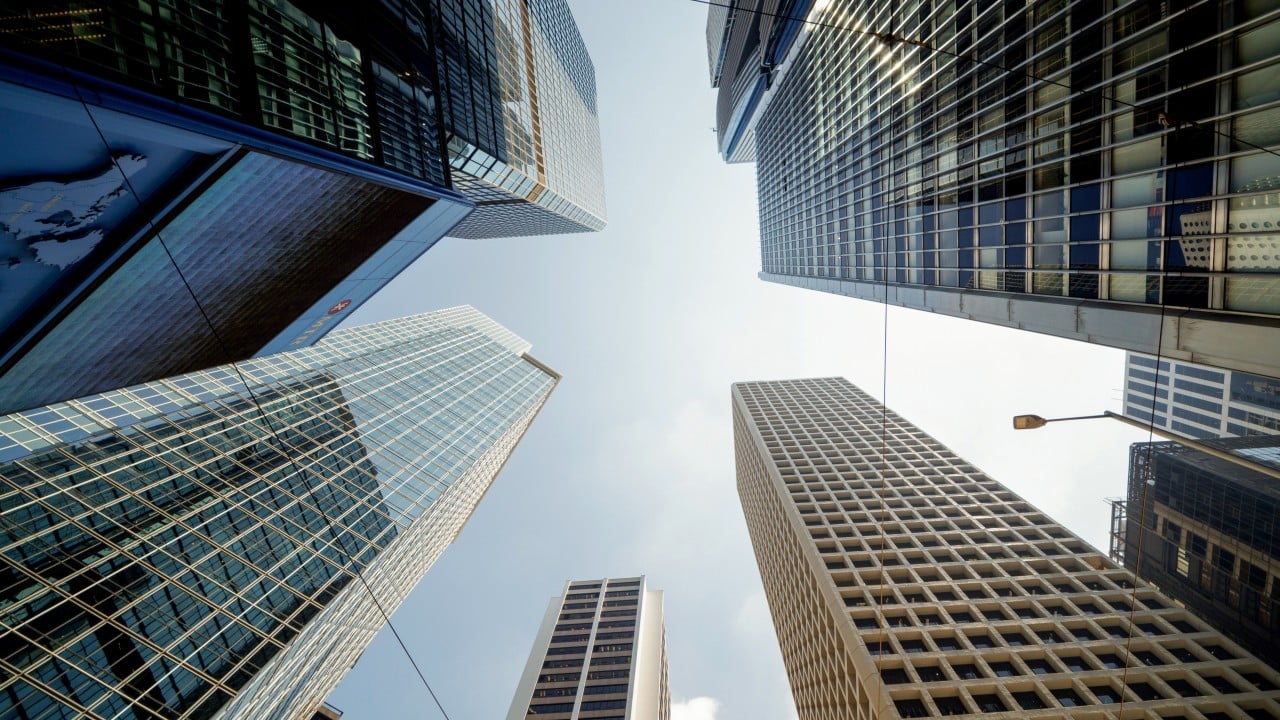
In a towering glass building overlooking Victoria Harbour, a server just settled a trade in three seconds that used to take three days. No bells rang. No confetti fell on a trading floor. Somewhere in Kowloon, a young designer checked her phone, saw her emergency transfer clear on a Sunday night, turned off the bedside lamp, and finally went to sleep.