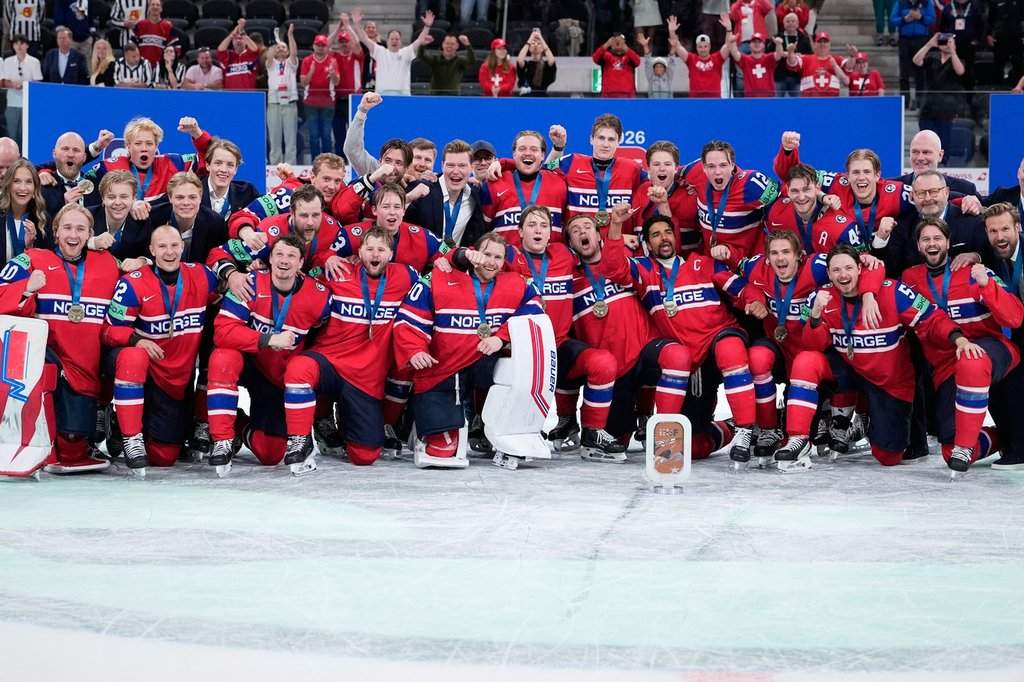
Norwegian ice hockey officials have publicly asserted that their national under-20 team is being removed from the upcoming IIHF World Junior Championship in Canada to make room for Russia. This move signals an abrupt, behind-the-scenes shift in how international hockey's governing body handles geopolitical bans, raising immediate questions about competitive fairness, tournament integrity, and the true motivations driving global sports administration.
For years, the exclusion of Russian and Belarusian national teams from International Ice Hockey Federation events seemed settled policy. Following the 2022 invasion of Ukraine, the IIHF Council repeatedly extended its ban, citing safety and security concerns for athletes, officials, and fans. Now, reports emerging from Oslo indicate that the council is preparing to reinstate Russia directly into the top division. Because tournament formats operate on strict ten-team caps, bringing one powerhouse back requires pushing a smaller program out. Norway, having fought its way through the grueling promotion-relegation cycle, finds itself on the chopping block.
The Mechanics of a Tournament Squeeze
The IIHF World Junior Championship is not an open invitational. It is a rigid, ten-team hierarchy built on decades of promotion and relegation rules. Every year, the tenth-place finisher in the top division drops down to Division I Group A, while the winner of that second-tier tournament earns a coveted spot among the elite.
Norway earned its place through this exact sporting meritocracy. For a mid-tier hockey nation with a fraction of the registered players and rink infrastructure of Canada, Sweden, or the United States, reaching the top flight is the culmination of multi-year player development cycles. Funding from national sports federations, corporate sponsorships, and youth recruitment all hinge on visibility at the premier tournament.
Reintroducing Russia without expanding the tournament creates an immediate mathematical problem. You cannot fit eleven teams into a ten-team schedule designed around two five-team groups, quarterfinals, and a tightly choreographed broadcast window. Someone has to leave.
When Russia was initially suspended, the IIHF froze its ranking points rather than relegating the nation through traditional means. This bureaucratic maneuver kept Russia technically perched at the top of the federation's seeding structure, waiting in suspended animation. By treating Russia's absence as a temporary pause rather than a forfeiture of division status, the governing body preserved a legal and procedural pathway to drop them right back into the top tier—displacing whichever lower-seeded nation stood on the bottom rung of the ladder.
Why Canada Makes This Complicated
Hosting the World Juniors in Canada changes the financial and political calculus entirely. In Europe, the tournament is a respected junior showcase; in Canada, it is a holiday tradition and a massive commercial engine. Hockey Canada, alongside the IIHF, relies on packed NHL-sized arenas, lucrative domestic television rights with TSN, and high-stakes rivalries to generate millions in revenue that subsidize global hockey development.
A Russia-Canada matchup is guaranteed box office gold. From the Summit Series in 1972 to the Miracle on Ice and countless World Junior classics, the geopolitical and sporting tension between North American hockey and the Russian program drives ratings like nothing else in the sport. Without Russia, recent tournaments have lacked their traditional villain and primary foil to Canadian dominance.
Yet bringing Russia back onto Canadian soil introduces severe logistical and diplomatic friction. The Canadian federal government has maintained strict sanctions and visa restrictions against Russian nationals and state-backed entities. Securing entry for dozens of players, coaches, medical staff, and federation officials requires high-level government exemptions. Furthermore, public backlash in Canadian host cities could turn arena concourses into political flashpoints, directly contradicting the IIHF's long-standing justification that the ban existed solely to guarantee "safety and security" at tournament venues.
If the security environment in North America has not fundamentally changed, reinstating Russia exposes the original safety rationale for what many critics always suspected it was—a diplomatic shield used to avoid taking an explicit political stance.
The Collateral Damage to Developing Hockey Nations
The immediate victim of this administrative pivot is the integrity of the promotion-relegation system. International sports rely on a simple social contract. Follow the rules, win your games on the ice, and you earn the right to compete against the best. When governing bodies override on-ice results to accommodate commercial interests or political pressure, that contract breaks down.
Consider the ripple effect on a federation like Norway's. Preparing an under-20 roster for the World Juniors requires years of targeted investment. Coaches map out scouting trips, schedule exhibition tournaments against top-tier opposition, and structure domestic junior leagues around peak readiness for late December. Pulling the rug out from under the program after qualification is secured wastes scarce financial resources and denies an entire generation of Norwegian prospects the chance to measure themselves against NHL first-round draft picks.
The damage extends beyond a single roster. When smaller hockey nations see that their hard-won spots in premier tournaments are conditional—subject to revocation whenever a superpower is ready to return—it discourages long-term investment in grassroots development. Why pour millions into building rinks and coaching pipelines in countries like Norway, Denmark, Latvia, or Austria if the governing body can arbitrarily alter the rules of entry?
Geopolitics Meets Sports Governance
To understand how we arrived at this juncture, you have to look beyond the ice rink and examine the broader currents moving through international sports administration. The International Olympic Committee has gradually softened its stance toward Russian athletes, creating frameworks for individual neutral participation across various summer and winter disciplines.
Team sports present a much thornier problem than individual events. You cannot easily strip national identity from a twenty-five-man hockey roster wearing matching jerseys, executing coordinated systems, and representing a state-funded federation. Ice hockey in Russia is deeply intertwined with state prestige and political leadership. The Kontinental Hockey League and the Russian Ice Hockey Federation operate with close ties to the Kremlin, making the concept of a truly "neutral" Russian junior hockey team practically impossible to enforce.
Despite these realities, international federations face immense internal pressure to normalize relations. Russian officials hold significant sway within global sports committees, and prolonged exclusions threaten to fracture international governing bodies permanently. In hockey, keeping one of the sport's foundational pillars out of major competitions indefinitely risks creating a permanent split in the global game, diminishing the prestige of world championships and best-on-best tournaments.
The IIHF Council has walked a tightrope since 2022, deferring decisions in six-month increments while waiting for the geopolitical climate to shift. By quietly signaling a return for Russia at the expense of Norway, the federation is testing the waters—betting that the outrage from a smaller European federation will be easier to manage than continued pushback from hockey's traditional power brokers.
What Happens When Rules Bend for Revenue
Every major sports organization claims to prioritize the purity of competition, yet financial survival almost always dictates policy. The IIHF is no different. Unlike FIFA or the IOC, international ice hockey operates on relatively thin margins outside of its marquee events. The World Junior Championship in Canada is the single most reliable cash cow on the federation's calendar.
When broadcasters, sponsors, and host organizing committees look at tournament matchups, a preliminary round game featuring Canada against Russia delivers vastly superior metrics compared to Canada against Norway. In recent tournaments, lopsided blowouts between top-seeded powerhouses and newly promoted nations have drawn criticism from analysts and fans alike. Double-digit scorelines make for poor television, even if they are a natural byproduct of an open, merit-based qualification system.
Reinstating Russia solves the competitive balance issue at the top of the bracket overnight. It restores a perennial medal contender, deepens the talent pool on display for NHL scouts, and revitalizes the commercial appeal of the tournament.
The price of that commercial boost is paid entirely by nations like Norway. By bypassing the traditional relegation pathway—requiring Russia to work its way back up through the lower divisions, just as any other suspended or newly formed federation would have to do—the IIHF establishes a two-tiered justice system. Superpowers get fast-tracked back to the main stage; smaller nations are treated as placeholders.
The Precedent Set on the Ice
If the IIHF follows through with bumping Norway to accommodate Russia, the fallout will linger long after the medals are handed out in Canada. Governing bodies derive their authority from perceived fairness. Once athletes and national federations believe the rulebook is written in pencil, trust evaporates.
Other European federations—particularly Finland, Sweden, and Czechia—have historically voiced strong opposition to premature Russian reinstatement. Their reactions will determine whether this decision holds or triggers a broader revolt within the IIHF membership. A boycott threat from Nordic or Central European powers would instantly erase any commercial gain achieved by bringing Russia back into the fold.
Hockey cannot thrive as a closed club reserved exclusively for its wealthiest markets. The growth of the sport depends on giving emerging nations a legitimate, unobstructed path to the highest level of competition. Stripping a spot from a team that earned it on the ice to hand it to a federation returning from suspension sends an unmistakable message to every developing program in the world that merit only matters until the heavyweights decide they want their seats back.