The fluorescent lights in the Rayburn House Office Building hum at a frequency that vibrates right behind your molars.
If you have ever stood in those marble hallways at seven in the evening, waiting for a legislative aide to emerge from behind a heavy oak door, you know the specific smell of Washington ambition. It is stale coffee, damp wool coats, and the faint, metallic tang of copier toner. For decades, if you walked those corridors with brown skin and a surname that required phonetic spelling on a visitor badge, you carried a quiet, familiar weight. You were the constituent, the tech policy wonk, the medical resident lobbying for visa reform, or the donor writing a check at a suburban Marriott. You were rarely the person whose name was engraved on the brass plaque beside the door.
Then, slowly, the plaques began to change.
They called themselves the Samosa Caucus. It was a self-deprecating, slightly cheeky moniker coined by Representative Raja Krishnamoorthi in 2018 to describe the small, tightly knit group of Indian American lawmakers serving in the United States Congress. For a brief moment, the trajectory looked like an unbroken upward line. Five members in the House—Ami Bera, Pramila Jayapal, Ro Khanna, Raja Krishnamoorthi, and Shri Thanedar—stood as proof that one of the fastest-growing, highest-earning, and most politically engaged demographics in America had finally cracked the code of federal representation.
Until the floor started shifting beneath their feet.
Politics is rarely a neat staircase. Sometimes it is a trapdoor. Heading into the 2026 election cycle, the celebrated momentum of Indian American representation hit a sudden, jarring wall. With key figures stepping away from their House seats to pursue higher office—Krishnamoorthi eyeing the Senate in Illinois, Thanedar facing shifting political winds, and other veteran voices recalibrating their futures—the informal bloc faced the very real prospect of contraction. A caucus of five is already small enough to fit inside a single Capitol Hill elevator. Shrink it down to three or four, and the collective voice risks fading back into background noise.
That is why Pia Dandiya’s victory matters so much more than a standard election night box score suggests.
The Arithmetic of Being Seen
To understand why a single congressional win sends a jolt through millions of living rooms from Edison, New Jersey, to Fremont, California, you have to understand how power actually operates on Capitol Hill.
Congress is an institution built on noise and numbers. A lone representative is a single tuning fork; struck in a crowded room, the note is pleasant, maybe even pure, but easily drowned out by the shouting around it. When five or six members share a cultural shorthand, a family history of immigration, and an intuitive grasp of how foreign policy in South Asia collides with small-business taxation in the Midwest, they form a chord. Committee chairs listen differently when a bloc speaks. Cabinet secretaries return phone calls faster.
Consider a hypothetical scenario that plays out in real life every single week in Washington. Imagine a mid-level regulatory rule change buried on page four hundred of an appropriations bill—a tweak to H-1B visa processing timelines, or a shift in tariffs affecting generic pharmaceutical ingredients manufactured in Hyderabad and distributed in Ohio. To a lawmaker with no personal connection to the diaspora, that paragraph is dry administrative ink. It gets skimmed over on the way to a floor vote.
To a member of the Samosa Caucus, that paragraph has a face. It looks like an aunt waiting twelve years for a green card backlog to clear, or a cousin whose startup is stalled in legal limbo.
When the caucus began shrinking, the anxiety inside community organizing circles was palpable, even if it rarely made the front pages of national newspapers. I remember sitting in a cramped community center in suburban Chicago two winters ago, watching local volunteers stuff envelopes in the bitter cold. A retired engineer—a man who had spent thirty years building bridges across the Midwest—looked up from his stack of flyers and asked a question that hung in the air long after the meeting ended.
"Did we peak too early?" he asked. "We finally got into the room, and now the chairs are emptying out."
He wasn't talking about vanity. He was talking about vulnerability. Representation in American politics is never permanent; it is rented, and the lease comes due every two years.
More Than a Clever Nickname
Let us be honest about the name itself. "Samosa Caucus" has always been a double-edged sword.
On one hand, it is warm, disarming, and instantly memorable—a cultural wink that turned an abstract demographic milestone into something you could picture on a plate during Diwali receptions on the Hill. On the other hand, cute nicknames have a habit of trivializing serious power. They make it easy for pundits to treat a complex, ideologically diverse group of lawmakers as a novelty act rather than a governing coalition.
Look closely at the actual members who have carried that banner, and the stereotype dissolves immediately. You have Pramila Jayapal, a fierce progressive firebrand leading the Congressional Progressive Caucus. You have Ami Bera, a pragmatic physician and moderate voice on foreign affairs. You have Ro Khanna, bridging Silicon Valley futurism with Rust Belt economic populism. They do not vote in lockstep. They argue over tax brackets, defense spending, and regulatory policy with the same intensity as any other cross-section of Congress.
What binds them is not a rigid party line, but a shared fluency.
Think of the Samosa Caucus less like a political party and more like a bilingual translator in an emergency room. When a crisis erupts—whether it is a spike in anti-Asian hate crimes, a diplomatic flare-up along the Line of Actual Control in the Himalayas, or a sudden shift in student visa enforcement—having people in the room who do not need the cultural context explained to them from scratch saves precious time. They already know the history. They already understand the nuances between different regional communities, languages, and faiths within the broader South Asian umbrella.
Without that fluency at the table, policy gets made through stereotypes and second-hand briefings. And when the numbers in that caucus dip, the bandwidth narrows.
The Weight of a New Arrival
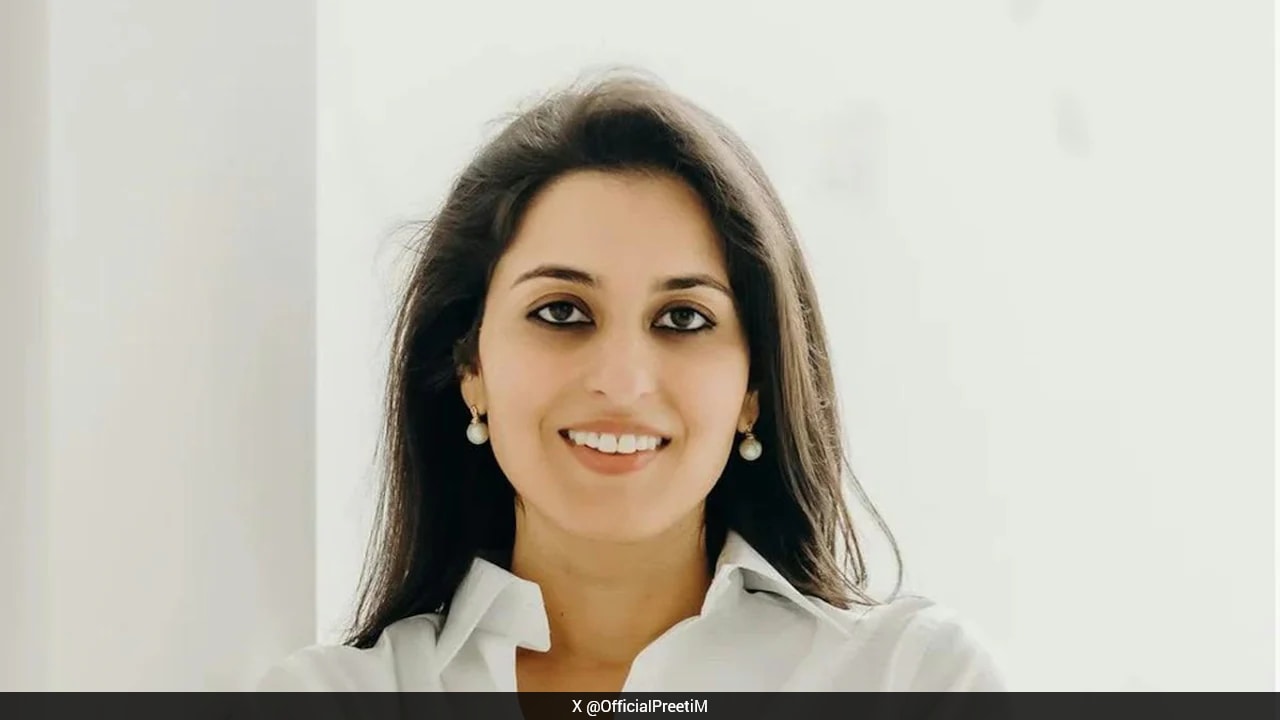
Enter Pia Dandiya.
When a newcomer breaks through in a cycle defined by attrition, the victory carries a double charge. First, it arrests the decline. It proves that the pipeline of Indian American candidates is not a one-hit wonder powered by a handful of charismatic outliers from the 2010s, but a sustainable, regenerating political bench.
Second, and perhaps more importantly, it shifts the generational center of gravity.
Every wave of immigrant political empowerment goes through distinct phases. The first generation builds the economic foundation, working double shifts, buying homes, and quietly funding campaigns from the sidelines. The second generation enters the arena as pioneers, often feeling the immense pressure to be twice as polished, twice as cautious, and endlessly grateful just to be invited to the table.
The wave arriving now—embodied by Dandiya’s ascent—operates with a different posture. They are not asking for permission to belong in American civic life; they grew up inside it. They understand grassroots coalition building not as a favors-traded transaction among community elders, but as a broad, multiracial, neighborhood-by-neighborhood grind that speaks to school funding, healthcare costs, and reproductive freedom alongside immigration and foreign affairs.
Watch how a modern congressional campaign actually wins in a competitive district, and you see why Dandiya’s win resonates beyond ethnic lines. Nobody wins a seat in the House of Representatives solely on diaspora pride. Indian Americans make up roughly one and a half percent of the total U.S. population. Even in districts with heavy concentrations of South Asian voters, you cannot build a governing majority without winning over union households, suburban retirees, working-class families, and young voters who care far more about the price of groceries than the origin of a candidate’s surname.
Dandiya had to thread that exact needle. She had to carry the hopes of a community watching its congressional footprint shrink, while simultaneously proving to every other voter in her district that she was fighting for their kitchen-table reality. That is an exhausting tightrope to walk. One slip—appearing too narrow in focus, or conversely, appearing detached from your roots—and the coalition fractures.
What Happens When the Door Stays Open
Critics and political cynics often ask whether descriptive representation—having lawmakers who look like the people they serve—actually changes material outcomes. It is a fair question, and the honest answer is messy. Putting a South Asian face in a congressional seat does not magically clear a decade-long immigration backlog overnight. It does not single-handedly rewrite trade agreements or lower insulin prices. Congress is a slow, grinding machine designed to resist rapid change.
Sometimes, looking at the sheer gridlock in Washington, it is easy to wonder if any single seat matters at all.
Yet history offers a clear rebuttal to that cynicism. Look at the Congressional Black Caucus in the early 1970s, or the Congressional Hispanic Caucus in the decades that followed. In their earliest years, their numbers were small, their committee assignments modest, and their legislative wins hard-fought. Critics dismissed them as symbolic. Over time, however, that persistent presence transformed the agenda of the federal government. Issues that were once ignored as niche concerns became central pillars of national debate. Young staffers hired into those offices became chiefs of staff, agency heads, judges, and future candidates themselves.
Representation works like compound interest. The initial deposit looks small. For years, the returns seem incremental. Then, quietly, the baseline shifts.
When Pia Dandiya takes her oath of office, she is not merely filling a vacant slot on a roster. She is keeping the institutional memory alive. She is ensuring that the next twenty-two-year-old kid from a working-class immigrant family who wants to intern on Capitol Hill sees a doorway that is still propped open, rather than one slowly swinging shut.
The Sound of a Full Table
Step back into that marble hallway in the Rayburn Building for a moment.
Imagine it is six months from now. A contentious hearing on artificial intelligence, healthcare access, and high-skilled immigration is wrapping up in a packed committee room. Cameras click. Lobbyists crowd the exits, thumbing messages into their phones.
Inside the anteroom, a handful of lawmakers gather briefly before heading down to the House floor for a vote. They come from different states, different ideological wings, and different personal journeys. One is a veteran physician who has watched the caucus grow from a solitary experiment into a recognized force. Another is a seasoned progressive organizer. And standing beside them, holding a fresh stack of briefing binders with her own name printed across the top tab, is Pia Dandiya.
They are trading notes, laughing briefly over a shared reference nobody else in the corridor catches, before turning back toward the heavy wooden doors of the chamber. The numbers are holding. The seat is warm. And the conversation inside the room just got a little bit louder.