Two minutes remain in a tied hockey game, and the multimillion-dollar thoroughbreds are gasping for air on the bench.
Look down the boards at the men waiting to hop over next. They do not have sneaker deals. Their faces rarely grace the glossy billboards looming over the highway outside the Canadian Tire Centre. Their job description, boiled down to its rawest essence, is to absorb punishment, buy thirty seconds of oxygen for the stars, and pray the puck stays out of their own net until the whistle blows.
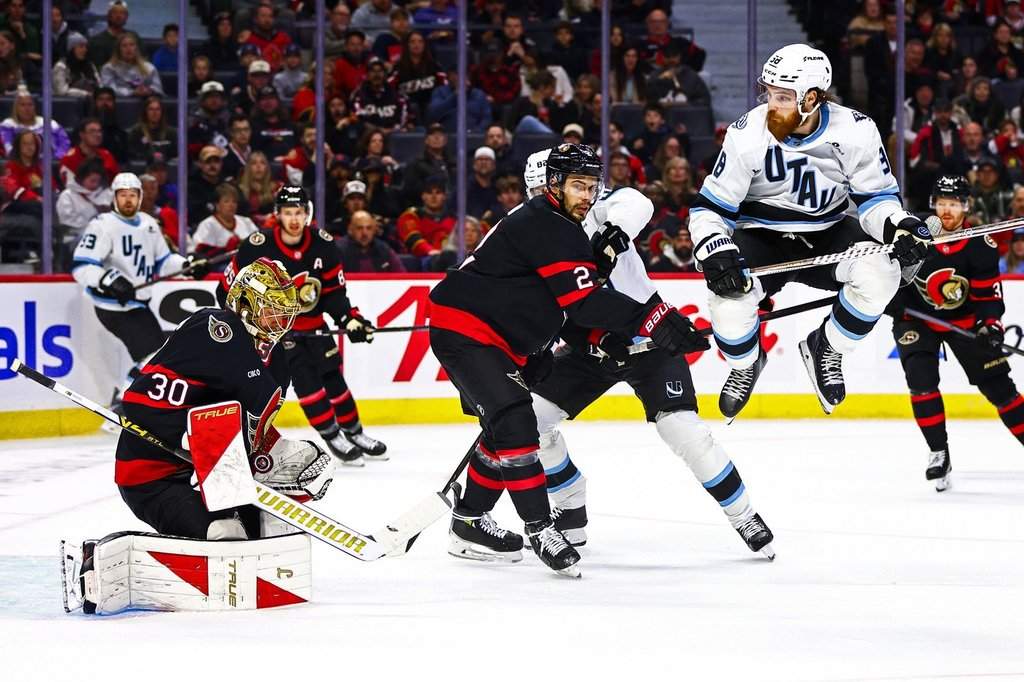
When Nick Cousins stepped onto the ice late in the third period against the Utah Mammoth, nobody in the building was preparing a highlight reel. Nobody was waiting for a viral spin-o-rama or a between-the-legs deke. They just wanted survival. They wanted to get to overtime without a catastrophe.
Cousins had other ideas.
If you have ever sat three rows behind the glass in November—when the season is old enough to hurt, yet far too young to offer the adrenaline of a playoff chase—you know the sound of a game like this. It isn't the roar of April. It is a dull, heavy thud. The wet slap of rubber against frozen boards. The sharp, metallic scrape of dulling blades carving into chewed-up ice. The low, guttural bark of a defenseman warning his partner of a forechecker closing in at twenty miles an hour.
For fifty-eight minutes, the Ottawa Senators and the Utah Mammoth had locked themselves into that exact kind of trench warfare. Every neutral-zone pass was contested. Every entry into the offensive zone required paying a toll in bruised ribs and slashed wrists.
And then, in the dying ticks of regulation, a fourth-line journeyman found a sliver of daylight, snapped his wrists, and reminded an entire arena why we bother watching the margins of a roster.
The Architecture of Invisible Hockey
To understand why a late goal from Nick Cousins carries so much emotional weight, you first have to unlearn the way modern sports media teaches us to watch hockey.
We are conditioned to worship the outliers. We track expected goals, Corsi percentages, high-danger scoring chances, and top-end skating speeds. We build entire franchises around twenty-two-year-old prodigies who treat the puck like a yo-yo on a string. When the Ottawa Senators drafted and signed their core, the vision was blindingly obvious: speed, skill, and overwhelming offensive firepower.
Meanwhile, the Utah Mammoth arrived in the league carrying the baggage of relocation and the fierce, desperate hunger of a young roster trying to prove they belong in their new desert home. When these two teams collide, the marquee billing belongs to the artists—the Brady Tkachuks, the Tim Stützles, the Clayton Kellers.
Yet anyone who has spent a lifetime around rinks knows a dirty secret about professional hockey. Talent wins Tuesday nights in October. Grit wins the games where both teams are exhausted, frustrated, and staring at a tie score with ninety seconds on the clock.
Think of a hockey team like an old mechanical watch. The superstars are the sweeping gold hands on the face—the parts everyone admires, the parts that tell you what time it is. Players like Nick Cousins are the tiny, greased brass gears buried deep inside the casing. Nobody buys the watch because of them. Nobody notices them when everything is running smoothly. Yet if one of those gears strips a tooth, the gold hands freeze dead in their tracks.
Cousins has spent his entire NHL career inside that casing. Drafted in the third round back in 2011, he has worn the sweaters of Philadelphia, Arizona, Montreal, Vegas, Nashville, Florida, and now Ottawa. Seven franchises. Hundreds of flights. Countless mornings waking up in a Marriott courtyard, taping a sore ankle, and wondering if the coach is going to scratch him for a twenty-year-old call-up from the minors.
You do not survive a decade in the National Hockey League as a bottom-six forward without developing a razor-sharp instinct for chaos. You learn where the puck bounces when a tired defenseman rims it weakly around the glass. You learn how to lean your hip into a bigger man just enough to knock him off his stride without drawing a referee’s arm. Most of all, you learn to stay ready when the game gets ugly.
Fifty-Eight Minutes of Friction
The collision between Ottawa and Utah was ugly from the opening faceoff, in the purest, most honest sense of the word.
Utah plays with the frantic, unbothered energy of a group that has nothing to lose and a whole new city to win over. The Mammoth forecheck in waves, relentlessly pressuring defensemen until simple breakout passes turn into panicked turnovers. Against a Senators squad still learning how to balance youthful aggression with defensive patience, Utah’s style acts like sand thrown into a finely tuned engine.
For two periods and change, the Senators had to fight for every inch of territory. Whenever Ottawa’s top lines threatened to break the game open, Utah clogged the slot, blocked shots with their shins, and turned the neutral zone into a traffic jam. On the flip side, whenever the Mammoth surged forward, Ottawa’s goaltending and penalty kill had to scramble to keep the dam from breaking.
Consider what happens mentally to a bench during a deadlocked third period like this.
Around the ten-minute mark, the game subtly shifts. Passes that were crisp in the first period start bouncing over sticks. Coaches shorten their benches, quietly tapping the shoulders of their top six forwards while the fourth line sits at the far end of the pine, watching their breath fog in the arena air.
Suppose you are a hypothetical rookie sitting on that bench—let’s call him Liam, twenty-one years old, playing his twelfth NHL game. In a tie game with three minutes left, Liam’s primary emotion isn't ambition; it is terror. He is terrified of blowing a coverage assignment. He is terrified of icing the puck. He is terrified of being the reason the coach stares at the ceiling during the post-game press conference.
Now contrast that with a veteran like Nick Cousins.
At thirty-plus years old, with a Stanley Cup ring earned in the trenches with the Florida Panthers already sitting in his safe at home, Cousins isn't playing with fear. He has seen too much. He knows that the end of a tight game isn't a test to be survived—it is an ambush waiting to be sprung. While the stars on both sides are locked in a stalemate, shadow-boxing each other into exhaustion, the margins of the roster suddenly become the most dangerous place on the ice.
The Anatomy of a Late Dagger
Hockey goals rarely look like the chalkboard diagrams coaches draw during television timeouts. In reality, a late game-winner is usually the product of three tiny mistakes stacked on top of one small moment of courage.
Watch how the sequence unfolded against the Mammoth.
As the clock ticked down toward the final minute of regulation, the ice was scarred and snowy, slowing the puck down just enough to ruin timing. Utah’s defenders, fatigued from chasing Ottawa’s top lines all night, were focused entirely on protecting the center of the ice. That is the cardinal rule of late-game defense: give them the perimeter, guard the house.
When you guard the house too tightly, however, you lose sight of the shadows along the walls.
The Senators pushed the puck deep, refusing to settle for a passive dump-and-change. A battle ensued along the boards—the kind of mundane, stick-on-stick wrestling match that happens forty times a period without anyone remembering it five seconds later. Except this time, the puck squirted free toward a pocket of soft ice.
Cousins didn't hesitate. He didn't look for a prettier pass. He didn't try to force the puck through three pairs of shin pads to a higher-paid teammate.
He simply stepped into the space, loaded his weight onto his back leg, and fired.
There is a specific, unmistakable sound a puck makes when it beats a goaltender clean through traffic late in a tied game. First comes the sharp crack of composite carbon snapping against vulcanized rubber. Then comes a fraction of a second of absolute silence—a vacuum where eighteen thousand people inhale at the exact same moment—followed by the hollow ping or the soft swish of nylon as the red light flares behind the net.
In an instant, the entire emotional temperature of the building inverted.
Utah’s players slumped forward over their sticks, their helmets drooping as the realization hit them: fifty-nine minutes of disciplined, suffocating road hockey had just evaporated on a single bounce and a veteran’s quick release. Across the ice, the Senators' bench erupted—not with the cool, practiced celebrations of an early-season blowout, but with the wild, shoulder-shoving relief of men who had just stolen two points out of a locked safe.
Why We Need the Villains and the Grinders
Be honest with yourself for a moment. Outside of Ottawa, Nick Cousins is not universally beloved.
Throughout his career, he has been called an agitator, a pest, a guy who lives right on the jagged edge of the rulebook. Opposing fans boo him when he touches the puck. Rival players slash the backs of his calves after the whistle. Even hockey analysts sometimes struggle to quantify what a player like him actually brings to a roster when he isn't showing up on the scoresheet.
I remember watching a game years ago from the upper bowl of an old barn in the middle of February, freezing cold, nursing a flat beer while two mediocre teams ground each other into dust. The star winger on the home team had three assists that night, gliding effortlessly through open ice. Yet the moment the crowd stood on its feet—the only moment that actually made the hair on my arms stand up—was when a bruised, gap-toothed fourth-line center dove headfirst in front of a ninety-mile-an-hour slapshot with forty seconds left, limped back to his feet without a stick, and cleared the zone off his shin pad.
We say we love sports for the beauty. That is a lie we tell ourselves when the stakes are low.
We actually love sports for the desperation. We love the sight of ordinary, flawed, replaceable human beings refusing to yield an inch when their lungs are burning and nobody expects them to be the hero.
For the Ottawa Senators, beating the Utah Mammoth in the final moments isn't just another tick in the win column of an eighty-two-game marathon. This is a franchise that has spent years trying to shed the label of "promising" and become "dangerous." Promising teams lose games like this in overtime after dominating the shot clock. Promising teams wait around for their best player to save them.
Dangerous teams win when their top line is held in check. Dangerous teams have a Nick Cousins lurking in the weeds, waiting for a tired defenseman to blink.
The Weight of Two Points in November
Look at the standings in April, and every single year, without fail, you will find a team sitting on the golf course because they missed the playoffs by two points.
Two points. One single night.
Nobody in April remembers whether those two points came on a highlight-reel hat trick against a powerhouse rival or a greasy, late-period wrister against the Utah Mammoth on a random weeknight. All that remains in the ledger is the W.
For Utah, the loss stings precisely because they played well enough to earn at least a single point in overtime. Leaving Ottawa empty-handed after matching the Senators stride for stride for nearly sixty minutes is the kind of gut-punch that tests a young locker room’s resilience. You do everything right—you clog the lanes, you finish your checks, you frustrate the home crowd—and you still walk onto the charter plane staring at a loss.
For Ottawa, though, the victory tastes entirely different. It tastes like validation.
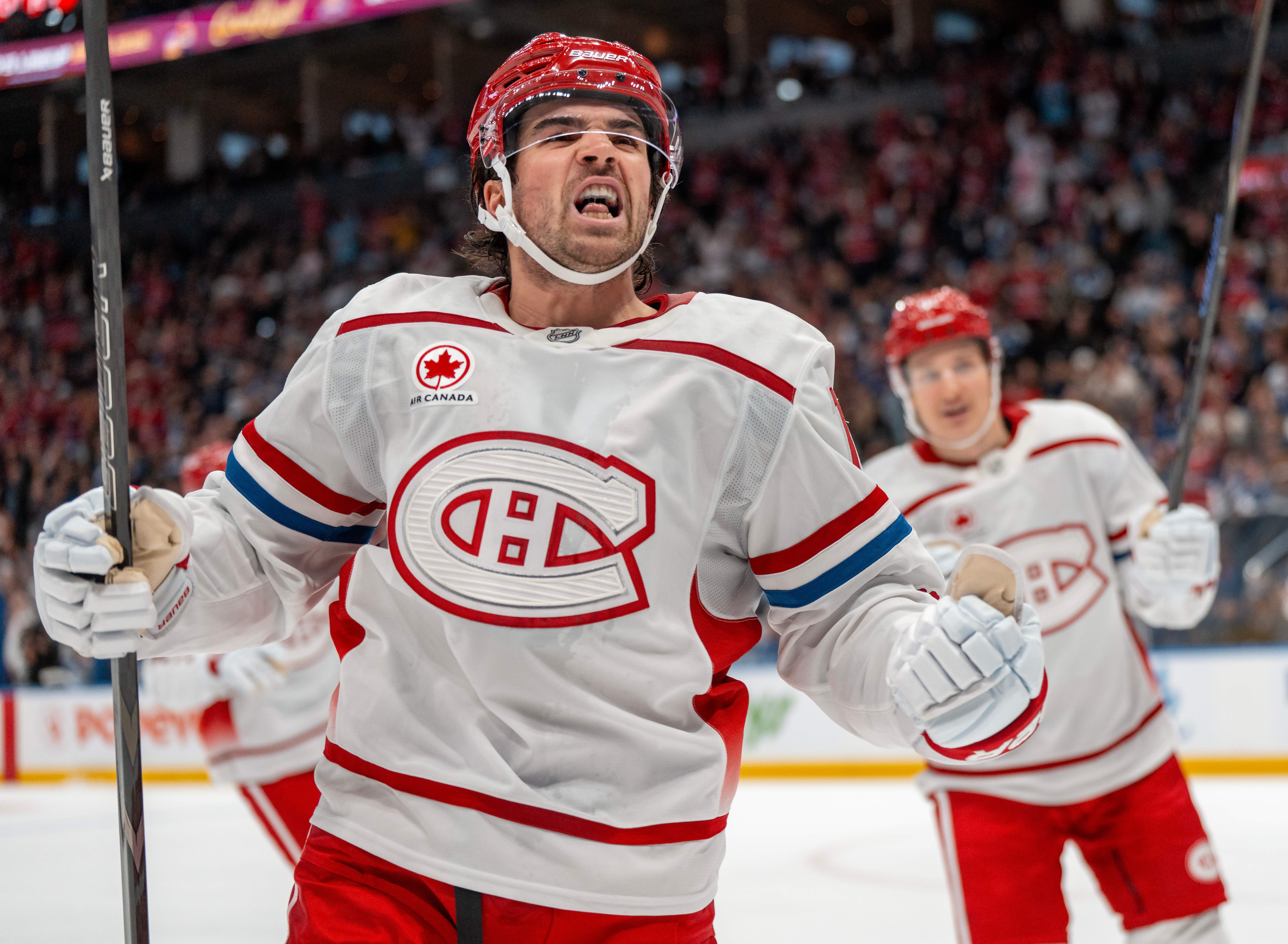
When the final buzzer sounded and the players converged around their goaltender for the customary helmet-taps and chest-bumps, the cameras naturally found Cousins. His face was flushed red from exertion, his hair plastered to his forehead with sweat, a crooked grin breaking across his mouth as his teammates mobbed him near the corner boards.
There was no rehearsed celebration. No pointing to the rafters. Just the quiet, fierce satisfaction of a man who has spent his entire life doing the dirty work, suddenly handed the keys to the whole building for one unforgettable second.
Down the tunnel they went, skates clacking against the rubber matting, the roar of the crowd slowly fading behind the heavy steel doors as the Zamboni rolled out onto the ruined ice to erase every trace of the battle.