Mile twenty-one.
If you have ever stood on the corner of First Avenue and 110th Street on the first Sunday in November, you know the exact sound of mile twenty-one. It is not the triumphant roar of the Verrazzano-Narrows Bridge at dawn, nor is it the frantic, breathless cheering of Fourth Avenue in Brooklyn. It is a heavy, rhythmic slap of rubber against cold asphalt. It is the sound of fifty thousand pairs of lungs negotiating a truce with gravity.
For the runners, the New York City Marathon is a theater of glorious suffering. For the rest of us—the ones watching from behind metal barricades with lukewarm coffee in paper cups—it is an annual hallucination. We see ordinary people doing extraordinary things, and somewhere between the elite pack flying past at sub-five-minute paces and the charity runners walking backward to save their quads, a dangerous little spark ignites in our chests. I could do that, we think. Next year, I’m running.
Then Monday morning arrives. The barricades come down, the blue line fades into the grime of Manhattan streets, and the reality of running hits us square in the wallet and the knees.
Let’s introduce a hypothetical character to ground this sudden Monday-morning ambition—let’s call her Elena. Elena is thirty-four, works an unpredictable desk job in Queens, and spent Sunday afternoon screaming until her voice cracked as strangers ran up Fifth Avenue. On Monday, she decides to buy running shoes. She walks into a specialty shop or opens a browser tab, eager to claim her new identity, and promptly chokes on her coffee. Top-tier daily trainers now routinely clear $160, $180, even $200. Suddenly, the purest, simplest human movement—putting one foot in front of the other—carries the entry fee of a weekend getaway.
This is the quiet trap of modern fitness. We romanticize the grit of the marathon while ignoring the friction of the Tuesday morning five-miler in the rain. We talk endlessly about heart rate zones and carbohydrate loading, yet we rarely talk about the sheer economic and physical exhaustion of finding a shoe that doesn't punish your joints or empty your checking account.
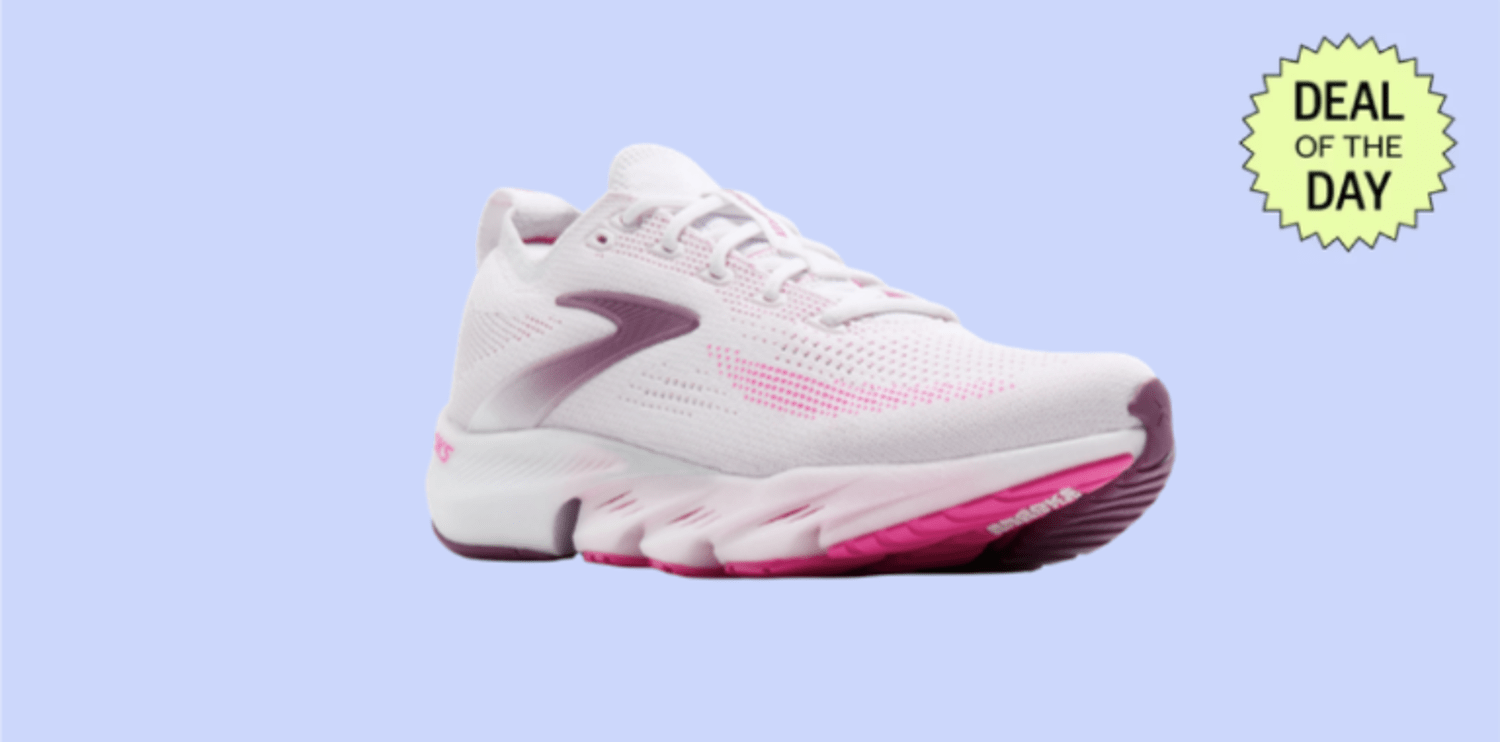
Which brings us to a peculiar anomaly happening right now in the wake of marathon weekend. The Brooks Glycerin Flex, a shoe engineered specifically to bridge the gap between plush protection and natural movement, has quietly dropped by nearly $70 across select retailers.
On paper, that is just a line item in a seasonal clearance cycle. In reality, for anyone standing at the starting line of a new habit, it is the difference between quitting in week three and falling in love with the road.
The Tyranny of the Rigid Plank
To understand why a markdown on this specific shoe matters, we have to talk about what happened to running footwear over the last decade.
For years, the industry was locked in an arms race of maximalism. If a little foam was good, a towering slab of space-age polymer was better. Runners began strapping what amounted to rigid, rockered mattresses to their feet. And for elite athletes chasing world records on flat courses, that stiffness worked wonders. It acted like a springboard, catapulting them forward with minimal energy loss.
For the rest of us? It often felt like running in wooden clogs.
I learned this the hard way three winters ago. Seduced by marketing promises of effortless speed, I bought a pair of hyper-stiff, max-stack trainers for my winter base building. For the first three miles, they felt like trampolines. By mile six, my ankles were screaming. Because the shoe refused to bend where my foot naturally wanted to flex, every tiny stabilizer muscle in my lower legs had to work overtime just to keep me upright on uneven city pavement. I spent two months nursing posterior tibial tendonitis, staring out the window at crisp morning air I couldn't breathe, furious at a piece of foam that promised protection and delivered injury.
Think of your foot as a suspension bridge rather than a brick. When you land, the twenty-six bones and thirty-three joints in your foot are designed to splay, absorb shock, and articulate independently before snapping back to propel you forward. When you strap that suspension bridge to an unyielding board, the shock doesn't disappear. It simply travels upward—straight into your shins, your knees, and your lower back.
Brooks, a brand that built its reputation in Seattle’s relentless drizzle by catering to everyday runners rather than flashy podium chasers, noticed the backlash. They realized that while runners loved the cloud-like softness of their flagship Glycerin line, many missed the ground feel and agility of a traditional trainer. They wanted the pillow, without the brick.
Engineering the Bend
The solution was the Glycerin Flex, and its magic lies in a deceptively simple piece of geometry.
Instead of relying purely on a monolithic block of foam, Brooks carved deep, strategic flex grooves into the outsole and midsole—most notably an articulated split down the forefoot and heel. Visually, it looks almost segmented, like the scales on an armadillo’s back. Functionally, it allows the shoe to twist, bend, and conform to the foot’s natural gait cycle.
The foam itself is nitrogen-infused DNA Tuned cushioning. If the term sounds like corporate jargon, picture a loaf of artisan sourdough bread versus a block of dense pound cake. Traditional EVA foam is the pound cake—uniform, heavy, and quick to pack down after a couple hundred miles. Nitrogen infusion injects microscopic gas cells into the liquid polymer before it molds, creating larger cells in the heel for a soft, forgiving landing, and smaller, denser cells in the forefoot for a snappy toe-off. You get the sourdough crumb: airy, resilient, and remarkably light.
When you combine that dual-density foam with a chassis that actually bends at the ball of the foot, something clicks. You stop fighting your footwear. You can feel the subtle texture of the asphalt beneath you, make sharp ninety-degree turns around slow-moving pedestrians on the Hudson River Greenway without feeling like you’re going to topple off a platform, and transition smoothly from a slow recovery jog into brisk strides.
It is not a racing super-shoe. If you are trying to break two hours and thirty minutes in the marathon, you want carbon plates and aggressive geometry. The Glycerin Flex is built for the other ninety-nine percent of your running life: the groggy 6:00 AM loops before the kids wake up, the lunch-break stress relievers, the long, conversational Saturday mornings where the only goal is to come home feeling better than when you left.
The Anatomy of the Marathon Discount
So why is a shoe this capable suddenly sitting at nearly $70 off its usual $160 to $170 retail price tag right around NYC Marathon weekend?
Retailers operate on predictable, ruthless calendars. November is a hinge point in the running industry. The major fall marathons—Berlin, Chicago, New York—represent the emotional climax of the running year. Brands flood the market with limited-edition "NYC" colorways, pop-up shops line Fifth Avenue, and marketing budgets burn bright.
The moment the final finisher crosses the line in Central Park, the industry’s gaze shifts immediately to spring. Warehouses need to clear floor space for next year’s model updates, seasonal color palettes need to be liquidated before Black Friday noise takes over, and the massive surge of marathon-weekend traffic creates a fierce price war among online sporting goods retailers trying to capture newly inspired buyers.
This creates a brief, golden window of market inefficiency. You are not buying a defective shoe, nor are you buying outdated technology from five years ago. You are buying the exact biomechanical engineering that carried thousands of runners through months of grueling autumn training, simply because the calendar flipped from October to November and a warehouse manager needs to make room for spring inventory.
Let’s go back to Elena in Queens. If she walks into a store at full retail, buying two pairs of shoes to rotate—a standard practice among seasoned runners to let foam decompress between runs and double the lifespan of the footwear—would set her back nearly $350 before tax. At nearly $70 off, that math changes entirely. She can secure a premier, injury-preventing daily trainer for roughly $100, leaving enough breathing room in her budget for decent merino wool socks, a reflective vest for the darkening November evenings, or simply keeping that money in her savings account.
What Nobody Tells You About Starting
There is a quiet vulnerability to buying running shoes when you don't yet consider yourself a runner.
You look at the technical specs—10mm heel-to-toe drop, neutral support, engineered warp-knit upper—and it feels like a secret language designed to keep outsiders out. You wonder if spending triple digits on sneakers makes you a fraud if your pace is twelve minutes a mile and you have to walk up the hills.
Hear this clearly: pavement does not care how fast you move. Concrete exerts the exact same two-and-a-half to three times your body weight in impact force whether you are running a six-minute mile or a fourteen-minute shuffle. In fact, slower runners spend more time with their feet in contact with the ground on every single stride, meaning protective, adaptable cushioning is arguably more vital for beginners than it is for seasoned racers.
The upper of the Glycerin Flex speaks directly to this unglamorous reality. Built with a soft, breathable engineered knit, it hugs the midfoot securely while leaving generous room in the toe box for your feet to swell—which they inevitably will after thirty minutes on the road. There are no rigid plastic overlays digging into your bunions, no razor-thin racing tongues sliding sideways into your arch. It feels, in the best possible way, like putting on a familiar sweatshirt.
When you remove physical discomfort from the equation, you strip away the brain’s favorite excuse to quit. Humans are wired to avoid pain and conserve energy. If your heels ache or your arches burn during your first week of training, your brain will quietly file running under threats to survival and convince you to stay under the covers the next morning. When the shoe disappears on your foot, the habit has a fighting chance to take root.
The Long Road to Next November
The crowds are gone from First Avenue now. The blue paint on the asphalt is already smudging under the tires of yellow cabs and delivery trucks. The marathon is over, and the intoxicating high of race weekend has evaporated into the crisp chill of late autumn.
This is the exact moment where real runners are made—not in front of cheering crowds with foil blankets draped over their shoulders, but in the quiet, unglamorous weeks when nobody is watching and the temperature drops below forty degrees.
Taking advantage of a steep, seventy-dollar price drop isn't really about chasing a bargain. It is about lowering the barrier to entry for a healthier, steadier version of yourself. It is about recognizing that the right tool doesn't do the work for you, but it faithfully absorbs the shock so you can show up again tomorrow.
Lace them up while the streets are still quiet, step off the curb, and let the road meet you halfway.