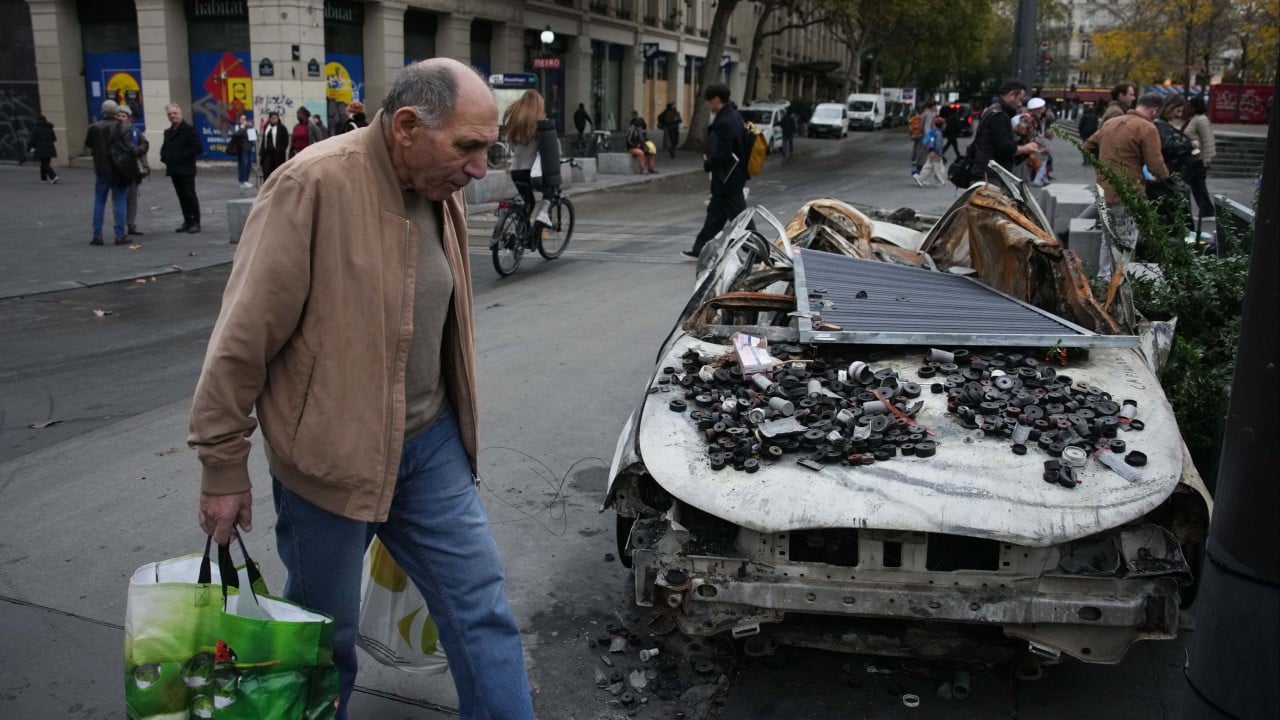
Cold. That is the first thing you notice when a household turns the thermostat down two degrees to survive a utility bill. Not a dramatic freeze. Just a persistent, low-grade chill that settles into wool socks and damp windowpanes before the kettle even whistles.
I know that chill well. Years ago, sitting at a cramped kitchen table with a stack of energy statements and an overdue rent notice, I learned that macroeconomic policy is never abstract when you are counting coins for bread and gas. A percentage point on a central bank chart or a tariff percentage on a customs ledger feels distant until it decides whether your child wears a thicker sweater indoors or whether your small shop can afford to keep the lights on until dusk.
Across Europe, cost-of-living pressures have turned everyday errands into quiet acts of triage. Groceries cost more. Heating costs more. Borrowing costs more. When households feel squeezed from every direction, anger rarely stays neat. It spills into street protests, union walkouts, angry council meetings, and sharp political shifts. And when domestic pressure mounts on governments in Brussels, Berlin, Paris, and beyond, trade policy stops being a polite boardroom exercise. It becomes a pressure valve.
To see how street-level frustration can harden into sharper trade friction between the European Union and China, we have to look past the headlines about diplomatic summits and trace the chain from a supermarket aisle to a port crane.
Where Kitchen Table Strain Meets Brussels Politics
Start with a hypothetical scenario to make the mechanics tangible. Picture Marek (a hypothetical character), a machinist in a mid-sized German town who has spent fifteen years milling precision components for industrial equipment. Marek is not an ideologue. He cares about steady shifts, reliable overtime, and keeping his family comfortable as prices climb on everything from olive oil to electricity. When local protests erupt over high living costs and sluggish wages, Marek marches not out of love for grand geopolitical theory, but because his paycheck stretches less far every month.
Now zoom out from Marek's street to the offices of European policymakers watching those protests unfold.
Governments under domestic economic strain face a brutal political math. Raising taxes on already stretched households invites backlash. Cutting public support risks unrest. Blaming foreign competitors for hollowing out local jobs or distorting prices can look—at least in the short run—like defending workers without asking them to swallow another bill.
That is where EU-China trade tensions gain momentum. Europe and China are deeply intertwined commercially, yet they are also locked in fierce competition across strategic sectors. When European industries complain that state-backed subsidies, lower production costs, or aggressive export pushes from China undercut local manufacturers—whether in electric vehicles, solar components, steel, chemicals, or consumer goods—cost-of-living anxiety gives those complaints sharper teeth.
Consider what happens next: a government facing angry voters at home feels stronger pressure to protect domestic employment and fiscal stability, even if trade measures risk higher prices or retaliation.
Let's be honest about the paradox here. It is confusing, and if we pretend it is simple, we lose credibility. Cheap imported goods can sometimes cushion a household budget in the short term. If a family buys a lower-cost appliance, phone, or garment made abroad, their wallet gets a brief break. Yet if domestic factories close or shed jobs under intense import pressure, the exact same families face wage stagnation, job insecurity, and shrinking local tax bases that fund public services.
So cost-of-living protests pull in two directions at once. Voters want lower prices today. They also want secure jobs and fair rules tomorrow. Politicians trying to satisfy both often reach for trade remedies—anti-dumping probes, tariffs, subsidy investigations, or stricter industrial rules—to show they are fighting back.
The Invisible Ledger Behind Everyday Goods
Think of global trade like a long, delicate suspension bridge stretching across a wide river. On paper, every cable has a load rating. In real life, wind, rain, rust, and shifting weight test the structure every day. (This bridge comparison is a metaphor for how interdependent supply chains carry political and economic stress.)
When cost-of-living protests shake the approaches to the bridge in Europe, tension travels along the cables toward Beijing.
China's economy has leaned heavily on manufacturing and exports to offset softer domestic demand and property-sector headwinds at home. From the perspective of European producers, an export surge backed by industrial policy looks less like ordinary market competition and more like a wave threatening to swamp established European businesses. From Beijing's perspective, European tariffs and trade investigations look like protectionism disguised as fairness, aimed at slowing China's climb up the value chain.
Neither side views itself as the aggressor. Both see themselves defending vital interests.
In European capitals, leaders worry about "de-risking"—reducing dangerous over-reliance on single suppliers for critical inputs like batteries, raw materials, pharmaceuticals, and green-tech components. Cost-of-living protests amplify that worry because affordability crises expose how vulnerable everyday life is to external shocks. When energy or supply bottlenecks hit, ordinary people pay first.
Meanwhile, Beijing holds powerful economic levers of its own. Retaliation does not always have to match tariff for tariff. It can target specific agricultural exports, luxury goods, spirits, pork, dairy, or industrial inputs—sectors tied directly to specific European regions and constituencies. A targeted trade move in China can hit farmers in one EU country or manufacturers in another, testing Brussels's unity just when domestic protests are already straining national governments.
I have watched enough economic debates to know how quickly nuance gets flattened once fear enters the room. In moments of high inflation and tight budgets, people look for someone to blame. Sometimes the blame lands on greedy retailers. Sometimes on central banks. Sometimes on domestic politicians. And very often, on foreign trade rivals who seem to play by different rules.
Once a narrative hardens—"our livelihoods are being undercut from abroad"—compromise becomes politically expensive. A minister who backs down can look weak to protestors in the square. A negotiator who pushes too hard can trigger counter-measures that hurt exporters back home.
Why Retaliation Rarely Feels Fair on the Ground
Suppose Claire (another hypothetical character) runs a small family winery or food-processing business in southern Europe. She has nothing to do with electric vehicle tariffs or semiconductor disputes. Her margins are already tight because packaging, fuel, and transport cost more than they did a few years ago. If a trade spat with China prompts retaliatory duties or customs delays on European food and drink exports, Claire feels the blow immediately in lost orders and canceled shipments.
Now place Lin (a third hypothetical character) on the other side of the ocean, working at an export-oriented factory in coastal China that ships components or finished goods to Europe. When European trade barriers rise or orders cool, Lin's factory faces tighter margins, fewer shifts, or fierce price wars in other markets.
Neither Marek in Germany, nor Claire in southern Europe, nor Lin in China wrote the trade rules. Yet all three live inside their consequences.
This is why cost-of-living protests matter so much to the future of EU-China relations. Trade disputes are often analyzed as chess matches between two giant blocs. Chess is neat. Pieces move across squares according to fixed rules. Real economies are messy gardens where roots tangle underground. Pull hard on one vine to protect a patch of soil, and another plant across the bed loses water or light.
Historical memory adds weight to the moment. Europe's modern economic project was built around open markets, rules-based commerce, and integration—ideas that delivered decades of rising living standards and peace. Yet when those living standards feel threatened at home, faith in frictionless global trade frays. Populist and protest movements across the continent frequently link economic strain to globalization, immigration, and foreign competition. Even mainstream leaders who value trade cannot ignore street-level anger when election calendars loom and household budgets are strained.
At the same time, China has its own domestic pressures—youth employment concerns, sluggish consumer confidence, and the imperative to keep factories humming and social stability intact. When external pressure mounts, Beijing rarely concedes under public threat; doing so looks like weakness domestically.
Standoff. Escalation. Counter-escalation.
That cycle is not inevitable, but the incentives pushing toward sharper friction are real. Cost-of-living protests do not automatically trigger a full-blown trade war, yet they create the political climate in which tougher trade stances become easier to justify and harder to walk back.
The Choice Between Relief Today and Resilience Tomorrow
So where does that leave ordinary households, businesses, and policymakers?
Uncertain. That is the honest answer. Anyone claiming to know the exact tariff rate or protest count six months from now is guessing with confidence they haven't earned. What we can see clearly are the trade-offs that will shape the outcome.
If Europe leans too heavily into broad, reactive protectionism without addressing structural costs at home—like energy prices, housing bottlenecks, and sluggish productivity—consumers could end up paying more for everyday goods while industries still struggle with high domestic operating costs. Worse, retaliatory measures from China could hit European exporters and deepen economic drag.
Conversely, if Europe does nothing while subsidized or below-cost imports overwhelm key industries, domestic manufacturing jobs could erode further, feeding the exact economic insecurity that fuels cost-of-living anger in the first place.
The harder path—and the one serious economists and policymakers keep arguing for, even when politics makes it difficult—is walking a tightrope. Targeted, evidence-based measures where genuine market distortions harm strategic industries, paired with domestic reforms that lower real living and production costs inside Europe, alongside pragmatic channels to keep essential trade flowing.
Easier said than done. Always.
Because when you are standing in a chilly room looking at a stack of bills, long-term industrial strategy sounds like a luxury. You want relief now. You want prices to stop climbing. You want your work to feel worth it again.
And that human need—to feel secure in your own home and confident about next month—is the quiet force humming beneath every protest march and every trade dispute.
A receipt at the checkout counter still looks like a simple strip of paper with numbers lined up at the bottom, yet each line carries the weight of distant factories, shifting politics, and the unspoken question of who pays the price when the world feels out of balance.


