Silence.
That is what a threat does before the first shot is ever fired, settling into a hallway like cold draft air from a cracked window while people on both sides of a closed door pretend they cannot feel the chill.
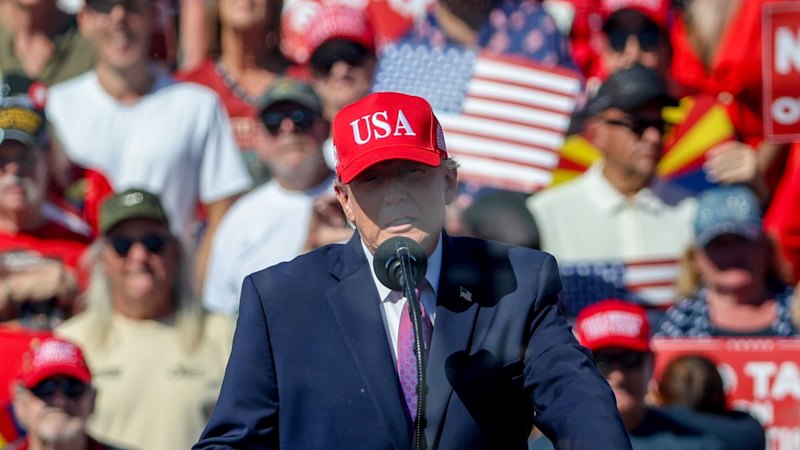
When Donald Trump said that leakers should be shot, plenty of people heard a crowd-pleasing line from a politician who treats politics like a contact sport. They laughed. They groaned. They scrolled past. Some argued over whether he meant it literally or figuratively, which is almost always the wrong argument to have when power and violence are placed in the same sentence by someone who commands the machinery of the state.
Words matter differently when they come from the top of the pyramid. A joke at a dinner table evaporates in five minutes. A threat from a chief executive lingers in the nervous systems of civil servants, analysts, aides, and reporters for years. It changes who picks up the phone at 10:00 p.m. It changes who walks away from a photocopier with a stack of pages tucked inside a coat. It changes what the public never gets to know until the damage is already baked into policy.
I have sat in rooms where people spoke in hushed tones about how a single document could ruin a career, a marriage, or a life. The fluorescent lights hummed overhead. Coffee turned lukewarm in paper cups. You could hear the faint click of keyboards from desks twenty feet away and wonder which keystrokes were being logged, audited, or watched. Even when no one is actively hunting you, suspicion does the hunting for free.
That is the hidden cost of escalating rhetoric against leakers and news-gathering. It is not merely a clash between a president and the press. It is a slow, methodical drying up of the springs that feed an informed republic.
When Language Crosses a Line
To understand why rhetoric like "leakers should be shot" hits a raw nerve in democratic life, we have to look past partisan loyalty for a moment and ask a simple question: What actually is a leak?
In popular shorthand, "leak" sounds sneaky, disloyal, or reckless. Sometimes it is. Officials leak trial balloons to test public reaction. Rivals leak damaging memos to knife an opponent in the back. Bureaucrats leak out of ego, spite, or turf warfare. Pretending every leak is a heroic act of public service would be dishonest.
Yet stripping away all nuance and calling for leakers to be shot treats every unauthorized disclosure as treasonous sabotage. It collapses the difference between a state secret that endangers lives on the ground and an inconvenient truth that embarrasses an administration.
Historically, leaders who want total control of information rarely start by padlocking every printing press on day one. That looks too crude, too obvious. Instead, they raise the temperature of the rhetoric. They frame journalists as enemies of the people and insiders who speak out as traitors or criminals. Over time, harsh language normalizes harsher measures—broader subpoenas, aggressive surveillance, tougher prosecutions under laws like the Espionage Act, and a climate where fear does the work of censorship.
We have seen variations of this pattern across administrations of both parties, though the volume and theatricality have shifted dramatically. Every modern White House complains about leaks when stories land that it did not authorize. Every president wants message discipline. What separates routine political frustration from an escalation against news-gathering is when punishment is framed not just as legal accountability, but as lethal retaliation—even if defenders insist it was meant as hyperbole.
Consider what happens next: once a leader floats lethal punishment as a punchline or an ideal, lower-level loyalists often treat it as permission to take the gloves off. You do not need a firing squad to silence a source. A ruined security clearance, a ruined reputation, a ruined bank account, or a dawn knock at the door from federal agents will usually do the trick.
Inside the Hypothetical Room Where Truth Gets Weighed
(Note: The following scenario is hypothetical, constructed to illustrate the real-world dilemmas faced by public servants and reporters.)
Picture a mid-level analyst—let's call her Hannah—sitting at a desk inside a federal agency on a rainy Tuesday evening. Everyone else on her floor has left. The building is quiet except for the ventilation system and the occasional chime of an incoming email.
For six months, Hannah has watched internal projections get quietly rewritten. Data showing that a new policy will harm vulnerable communities or strain a vital program is trimmed from briefing packets. Warnings from career specialists are softened into optimistic talking points. Nothing she is looking at involves troop movements or covert operations. It is bureaucratic spin dressed up as settled fact.
Hannah is not a spy. She took an oath to support the Constitution, not to protect a press secretary's narrative. Still, she knows the rules. She knows what happens to people who talk to journalists without permission.
Now imagine she hears the president say that leakers should be shot.
Even if her rational mind tells her, He's exaggerating for the rally crowd, her stomach tightens anyway. She thinks about her mortgage. She thinks about her younger brother's medical bills. She thinks about how easy it is for an agency to leak her name to friendly outlets, paint her as a disgruntled mediocrity, and bury her under legal fees.
Across town, a reporter—let's call him David—is staring at a blinking cursor. He has heard whispers of the altered projections, yet no one is willing to hand over the original numbers. Sources who used to return his calls within an hour now text back only to say they cannot talk on their work lines, or their personal lines, or at all. "Too hot right now," one writes before going dark.
Neither Hannah nor David is a cartoon hero or a cartoon villain. Hannah is wrestling with conscience and self-preservation. David is trying to separate rumor from verified proof so he does not publish something sloppy or unfair.
When threats against leakers escalate, Hannah stays silent, and David's story shrinks from a thorough public reckoning into a vague rumor that never quite proves the point. The public loses the receipts.
Why Anonymous Sources Exist in the First Place
If you have ever wondered why reporters rely on anonymous sources instead of making everyone put their name on a quote, you are asking the right question. Honest skepticism is healthy. Unnamed sources can be abused. A clever official can use anonymity to plant spin without owning the consequences.
That is why serious newsrooms treat unnamed sources like explosives: you handle them with strict protocols, verification, and restraint. Good editors push reporters to get facts on the record whenever possible, require multiple independent corroborations, and tell readers why a source needs anonymity—such as fear of retaliation or job loss.
Think of a whistleblower or leaker like a smoke alarm inside a large apartment building. Nobody loves the sound of a smoke alarm at three in the morning. Sometimes it goes off because someone burned toast on the fourth floor. Annoying? Yes. Worth smashing with a hammer so you never hear it again? Only if you want the building to burn down while everyone sleeps peacefully.
If you intimidate everyone who might pull the alarm—or threaten them with violence—you do not get a safer, quieter building. You get blind spots.
Many of the most consequential stories in American public life—from abuses of executive power to safety cover-ups and intelligence failures—came to light because insiders decided their duty to the public outweighed their duty to secrecy or career comfort. Without those disclosures, citizens would be forced to judge leaders solely by the press releases those leaders write about themselves.
That is a terrible bargain for any voter, regardless of party. If your favorite politician is in charge today, you might cheer when critics and leakers are threatened. Tomorrow, someone whose politics you despise will hold the same levers of power and use the exact same precedents against the people you trust.
The Chilling Effect Is Already in the Air
Doubt is natural here. Some readers will look at an off-the-cuff remark like "leakers should be shot" and say, "Come on, you're taking it too seriously. Everyone knows how he talks."
I get that reaction. I really do. When you hear extreme language day after day, your ears build calluses. You start grading statements on a curve, translating bluster into ordinary politics so you do not exhaust yourself reacting to every spike in volume.
The trouble is that calluses dull sensation, not reality.
Even when a threat is meant as bluster, its effects are measurable in human behavior. Lawyers who represent whistleblowers and government employees routinely report that clients hesitate longer, ask sharper questions about surveillance and metadata, and sometimes decide the risk simply is not worth it. Journalists spend more time defending their right to do basic reporting and less time digging into complex public records.
Meanwhile, the machinery of government grows larger, more complex, and more secretive every decade. More agencies. More contractors. More classification stamps. More digital trails that can follow a single document from screen to screen.
At the exact moment when public oversight needs to be sharper than ever, escalating hostility toward leakers and news-gathering pushes in the opposite direction. It tells insiders: keep your head down, sign the memo, collect your paycheck, and let history sort out the wreckage later.
But history is a lousy substitute for accountability in real time. Once a bad policy is locked in or a cover-up succeeds, fixing it later costs ten times more—in money, trust, and human lives.
What You Can Actually Do About It
Feeling powerless in the face of big political rhetoric is exhausting, yet you are not helpless. Protecting a healthy flow of truth is not just a job for lawyers and investigative journalists; it is a habit of citizenship.
First, learn to read leaks with sharper eyes instead of knee-jerk dismissal or blind belief. Ask who benefits from a story appearing right now. Ask what documents or concrete facts back up the claim. A leak is a clue and a starting point, not an infallible scripture—and neither is an official denial issued five minutes later.
Second, support independent, accountable journalism. Real investigative reporting is expensive. It takes months of patient sourcing, public-records battles, fact-checking, and legal review. Free social media outrage cannot replace newsrooms that actually have boots on the ground and editors willing to say no when a story is not ready.
Third, refuse to treat threats against speakers and reporters as harmless entertainment. You do not have to agree with every journalist or every leaker to recognize that threatening violence against people who expose information crosses a line that hurts everyone. Draw that boundary clearly, even when it is inconvenient for your side.
Finally, pay attention to the quiet mechanisms behind the headlines. Watch how agencies handle transparency requests, how whistleblowers are treated when they go through official channels, and whether leaders answer tough questions or dodge them with insults. The loudest line in a speech is rarely the whole story; the quiet rules being enforced behind closed doors tell you where things are really heading.
A free society does not survive because leaders are saints. It survives because there are enough people—inside government, inside newsrooms, and inside ordinary living rooms—who refuse to confuse obedience with truth.
When the noise dies down and the cameras move on to the next outrage, the real test remains: will the next person who sees something wrong feel enough courage to speak, or will they remember the warning and look away?