The zipper broke somewhere over the Atlantic.
I did not notice it until I was standing under the harsh fluorescent lights of a bathroom in London Heathrow, jet-lagged to the point of mild hallucination, digging through the bottom of my carry-on backpack. My fingers brushed against a small, white cylinder. Then another. Then a distinct, powdery grit that clung to my cuticles like chalk dust.
For years, my packing routine had been an exercise in lazy improvisation. Like millions of other travelers, I tossed my daily vitamins, emergency ibuprofen, prescription blood pressure medication, and a couple of melatonin gummies into a standard clear zip-top sandwich bag. It seemed logical at the time. It was lightweight, transparent, and cost fractions of a penny.
Until it failed.
Sitting on the cold tile floor of Terminal 5, trying to distinguish a crushed antacid from a high-dose antihistamine while a boarding announcement echoed overhead, the illusion of convenience evaporated. In that moment, the humble sandwich bag revealed itself for what it truly is when exposed to the violent friction of transit: a fragile, static-charged liability.
We spend thousands of dollars on flights, obsess over the thread count of hotel sheets, and debate the merits of hard-shell versus ballistic nylon luggage. Yet, when it comes to the chemical compounds that keep our bodies functioning, regulating our sleep, our blood pressure, and our sanity across time zones, we trust a piece of polyethylene designed to hold sliced turkey.
The Anatomy of a Crushed Capsule
To understand why this habit is so destructive, you have to look at what actually happens inside a bag in motion. Think of your backpack or suitcase not as a storage container, but as a low-speed rock tumbler. Every time you hoist your bag into an overhead bin, shove it under a seat, or drag it across cobblestones, the contents undergo thousands of micro-impacts.
Plastic bags offer zero structural integrity. Without rigid walls, tablets grind against one another. Enteric coatings—those specialized polymer barriers designed to keep a pill intact until it passes your stomach acid and reaches your small intestine—get scuffed away. When that coating fails, you do not just lose efficacy; you risk severe stomach irritation or a sudden, unintended spike in medication absorption.
Then there is the moisture problem. Airplanes are notoriously dry, hovering around ten to twenty percent humidity, which causes people to assume their belongings are safe from dampness. The moment you step off that plane into a humid climate, or leave your bag in a steamy hotel bathroom while you shower, condensation forms inside unsealed or poorly sealed plastic. Pills absorb that ambient moisture. Vitamins oxidize, turning brown and smelly. Gelatin capsules fuse together into a single, unrecognizable amber blob.
Consider a hypothetical scenario that plays out in customs lines every single day. Imagine a traveler—let us call her Sarah—standing at a border checkpoint in Tokyo or Dubai. She has a mild headache and reaches into her purse for her trusty zip-top baggie. Inside is a mix of white ovals and blue capsules. A customs officer notices the unlabeled bag of loose pharmaceuticals. Because Sarah discarded the original prescription bottles to save space, and because the pills are jumbled together like candy, she has no proof of what they are. In countries with strict narcotic and pharmaceutical laws, an unlabeled bag of white pills is not an innocent travel hack. It is a legal emergency.
Even the Transportation Security Administration, which generally allows medications in carry-on bags without strict container rules, advises keeping prescriptions clearly labeled to avoid delays. More importantly, state laws and international borders are rarely as forgiving as domestic airport checkpoints.
I learned this lesson the hard way in Heathrow. That chalky dust at the bottom of my bag meant I had to throw away four days' worth of necessary medication, triggering a frantic, expensive afternoon hunting down an urgent care clinic in a foreign city instead of exploring the streets I had paid to see.
Engineering Sanity for the Road
When I returned home, I threw my box of sandwich bags back into the kitchen drawer where it belonged and began looking at how real travelers—pharmacists, flight attendants, and frequent flyers—actually carry their medicine.
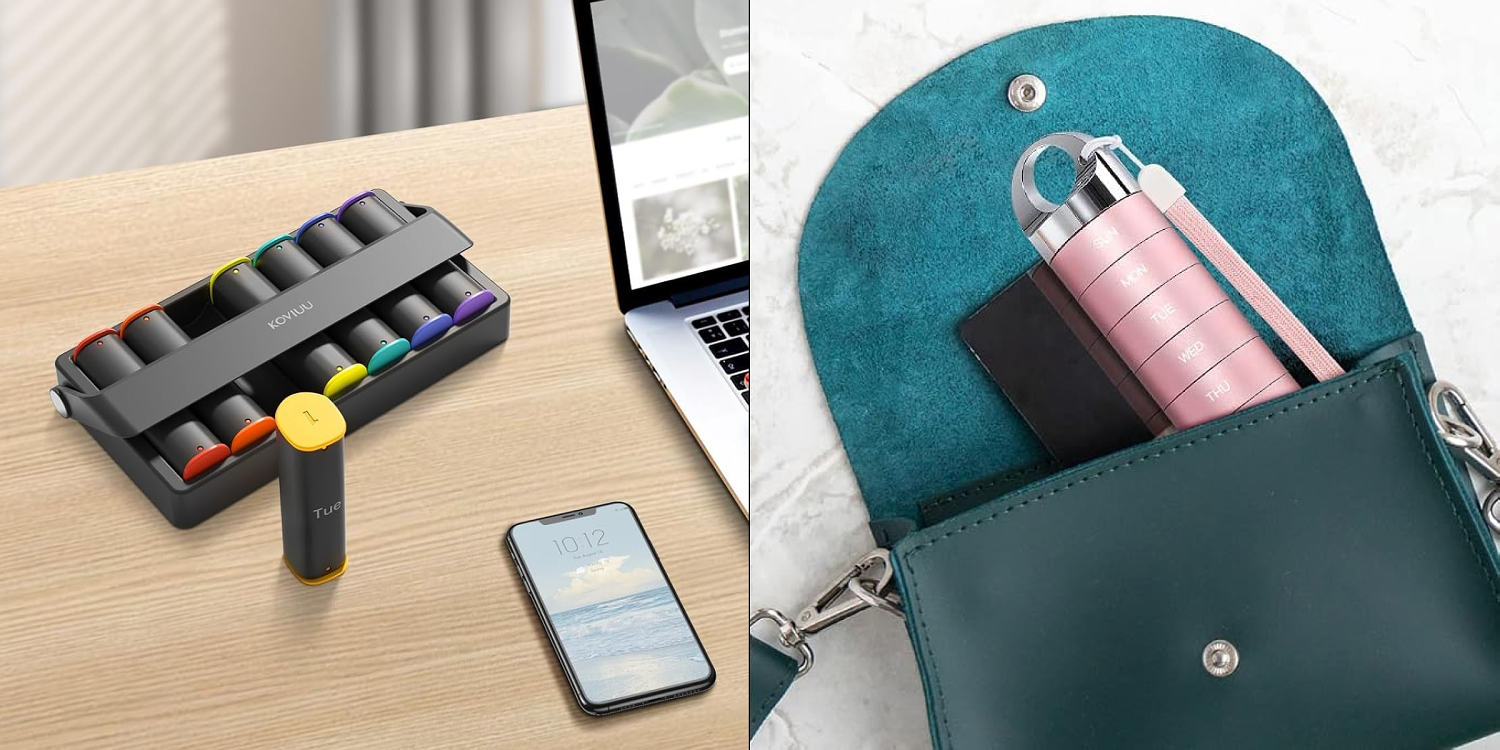
What I discovered is that the best travel pill cases are not merely plastic boxes with the days of the week stamped on them. Those cheap, flimsy drugstore organizers are barely a step up from a plastic bag; their hinges snap after three trips, and their lids pop open at the slightest pressure. True travel-grade medication storage relies on specific engineering principles: silicone gaskets, magnetic closures, aluminum alloys, and modular interiors.
Take, for instance, the shift toward metal and high-grade polymers. When you hold a machined aluminum pill case, the difference is immediate. It feels like a piece of camera gear or a well-made pocket knife. These cases use threaded caps with rubber O-rings—the exact same sealing mechanism used in waterproof flashlights and diving watches. When you screw the cap shut, it creates an airtight, watertight chamber. You could drop it in a puddle in monsoon-season Bangkok, and the ibuprofen inside would remain bone-dry.
For those carrying a single daily prescription or an emergency dose of allergy medication, a compact keychain cylinder like the Matador Waterproof Travel Canister or a sleek anodized aluminum tube becomes an invisible safety net. You clip it to the inside zipper of your personal item, and you never have to think about it again.
Matching the Vessel to the Voyage
The mistake most people make when upgrading from plastic bags is buying a one-size-fits-all solution. A weekend trip requires a completely different architecture than a three-week international expedition.
If you are a minimalist packing for a seventy-two-hour sprint, bulk is the enemy. This is where slim, pocket-sized organizers shine. Look at designs like the Ikigai Cases or the Dosey compacts. Ikigai manufactures its cases from solid blocks of aerospace-grade aluminum, using a sliding lid mechanism held shut by neodymium magnets and a ball detent. It makes a deeply satisfying mechanical click when it closes. It will never pop open in your pocket, and because it is flat, it slides into the front sleeve of a briefcase without creating an awkward bulge.
Dosey takes a different, softer approach, resembling a stylish compact mirror or a tiny leather-bound notebook rather than a medical device. Inside, removable plastic sleeves let you keep pills in their original foil blister packs—a massive advantage for international travel, as blister packs preserve the manufacturer's imprint and expiration date while protecting each dose individually.
But what if you take multiple supplements, morning and evening prescriptions, and need a buffer for delayed flights?
For the heavy-duty traveler, organization becomes a matter of cognitive load. When you are crossing six time zones, your internal clock is shattered. You cannot remember if you took your morning dose in New York or if you are taking your evening dose in Paris. In this state of mental fog, a clear visual system is vital.
Enter the Port and Polish Pill Box and the Lewis N. Clark Travel Pill Organizer. These designs abandon the loud, primary-colored plastic aesthetic of traditional medical supplies in favor of sleek, neutral tones and intuitive layouts. A double-sided magnetic case—like the Meacode or Zoppen folding organizers—opens like a book. On one side, you have small compartments for daily doses; on the other, larger bays for bulky fish oil capsules or emergency antacids. The inner lids snap shut independently, creating a double-barrier defense. Even if the outer magnetic shell gets jostled in a chaotic overhead bin, the inner doors hold the line.
For those who refuse to part with their original prescription labels—a smart move for anyone crossing international borders—the AUVON Weekly Pill Organizer offers a clever middle ground. Its individual daily pods are large enough to hold a week's worth of complex regimens, and they slide into a protective outer case that shields them from crushing forces. You can even tuck folded copies of your pharmacy labels into the outer sleeve, marrying the convenience of a daily sorter with the legal protection of documentation.
The Invisible Weight of Preparedness
There is a strange psychological shift that happens when you stop treating your health essentials as an afterthought.
When you use a sandwich bag, you are subconsciously signaling to yourself that your routine is temporary, fragile, and chaotic. Every time you reach into your bag, you are greeted by a crumpled, noisy piece of trash that reminds you of the friction of travel.
Conversely, when you pack a dedicated, well-engineered case, you introduce a pocket of calm into an inherently stressful environment. Let us return to our hypothetical traveler, Sarah, navigating that bustling customs hall or a turbulent flight. Instead of digging through a cluttered backpack for a crumpled baggie, she reaches into her outer pocket and pulls out a sleek, matte-black case. She slides the lid open with one thumb. Inside, every tablet is pristine, separated, and instantly identifiable. There is no powder on her fingers. There is no guesswork. There is no panic.
I have carried the same machined aluminum organizer through fourteen countries over the last four years. It has been dropped on the concrete floors of train stations in Milan, baked in the trunk of a rental car in Arizona, and tossed into countless overhead bins from Tokyo to Toronto. The exterior is covered in tiny silver scratches—a topography of everywhere I have been.
Yet, every single time I slide that lid open, the interior is spotless. The pills inside are whole.
Travel is unpredictable by nature. Flights get canceled, luggage goes missing, and weather turns violent without warning. You cannot control the airspace over the Atlantic, and you cannot control the delays at Gate 14B. The least you can do is ensure that when you reach into your bag for the things that keep you well, they are still intact.