Exhale.
That is what the financial markets did at 2:04 PM on a Tuesday, when the news ticker flashed green and the terrifying headline vanished from the top of the screen. For forty-eight hours, shipping insurers in London had been sweating through their collars, and grain buyers in Cairo had been staring at spreadsheets that looked like heart monitors during a cardiac arrest. Then, a crisis was averted. A tariff was delayed, or a truce was signed, or a central bank blinked at the exact millisecond the cliff edge crumbled beneath our boots.
Everyone went back to lunch. The pundits on cable news declared that the fever had broken.
They are wrong.
If you have ever stood on a loading dock in Rotterdam watching forty-foot steel containers sit idle because of a single signature three thousand miles away, you know that the relief is an illusion. I spent six years working in cross-border supply chain logistics before moving into economic analysis, and the smell of diesel exhaust mixed with cold ocean salt still triggers a phantom knot in my stomach. Why? Because when you live inside the machinery of global trade, you learn a terrifying truth: the storm rarely breaks when the sky is black. It breaks on the sunny afternoon when everyone decides to leave their umbrella in the car.
Right now, the world is celebrating a dodged bullet while ignoring the finger still resting on the trigger inside the Oval Office.
The Illusion of the Calm Water
To understand why this moment is so dangerous, let us step away from the podiums in Washington and look at a hypothetical character—let’s call her Elena. Elena runs a mid-sized medical device manufacturer outside Munich. She is not a geopolitical strategist. She cares about titanium tolerances, sterile packaging, and making payroll for ninety-four employees every second Friday.
When the headlines scream about executive orders, trade wars, or sudden shifts in American foreign policy, Elena does not read the op-eds. She calls her freight forwarder.
For months, Elena has been paralyzed by what economists politely call "policy uncertainty," which is a sterile academic phrase for not knowing if your business will be illegal or bankrupt by next Tuesday. When Washington finally steps back from the brink—offering a temporary waiver, a softened rhetoric, or a sudden diplomatic pause—Elena feels a rush of warmth. She unlocks her capital expenditure budget. She orders the raw materials. She exhales.
Here is the trap.
Elena’s relief is built entirely on the assumption that the crisis was an anomaly, a passing thunderstorm that has now moved out to sea. She is treating a structural flaw in the American executive branch as if it were a temporary mood swing.
Think of the global economy not as a sturdy concrete bridge, but as a suspension bridge held up by thousands of braided steel cables. Those cables are treaties, predictable regulations, central bank independence, and the quiet, boring assurance that the United States will act tomorrow roughly the way it acted today. Every time a president governs by sudden, unilateral shock—threatening alliances at midnight, tearing up agreements at dawn, and reversing course by noon—one of those thin steel wires snaps.
The bridge does not fall when the first wire breaks. It does not even sway when the tenth wire breaks. In fact, the commuters driving across it feel a surge of confidence because, look, the bridge is still standing! We survived!
Why the Oval Office Holds the Match
You might be asking yourself why a single office in a single country still holds this much sway over Elena’s factory in Germany, or a coffee farmer’s harvest in Colombia, or your own retirement account in Ohio. Haven't we spent the last decade talking about a multipolar world?
Yes. And that talk is mostly comforting fiction when the sirens go off.
Let us look at the hard, unvarnished mechanics of how power actually moves. Roughly 88 percent of all global foreign exchange transactions still involve the US dollar on one side of the trade. More than half of global trade is invoiced in dollars, even when an American company isn't involved in the transaction at all. When a Thai electronics firm buys copper from a Chilean mine, they price it in the currency backed by the full faith and credit of the United States government.
That dominance was never meant to be a weapon. It was designed after the rubble of World War II as a public utility—a boring, reliable electrical grid that anyone could plug into to build prosperity.
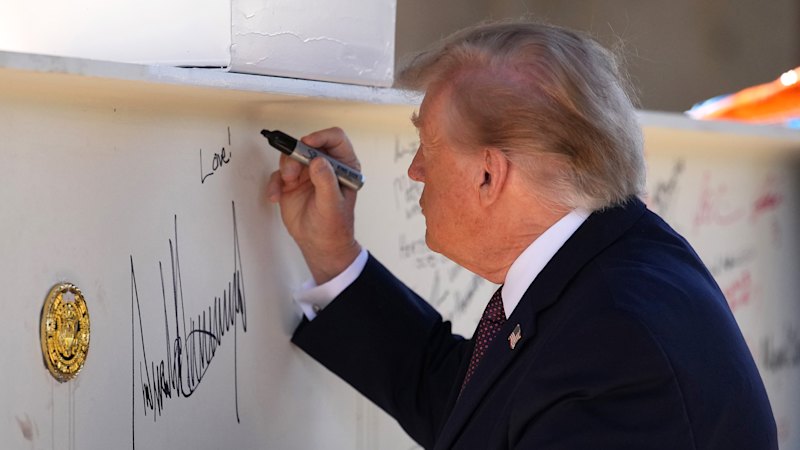
Over the past several administrations, however, and accelerating at a dizzying pace in recent years, the American presidency has transformed from the custodian of that grid into a wildly unpredictable operator standing next to the master breaker switch. Through emergency economic powers originally intended for wartime crises, a modern US president can unilaterally impose sweeping tariffs, freeze sovereign assets, sanction entire industries, and upend decades of diplomatic consensus with the stroke of a Sharpie. Congress, paralyzed by tribal warfare, has largely surrendered its constitutional leash. The courts move in years; the White House moves in tweets and executive memos.
I will admit something that most financial commentators are too proud to say: it is genuinely frightening to watch. When I sit down to forecast market stability for the coming quarter, the hardest variable to model is no longer inflation data, crop yields, or energy reserves. It is the psychological state and political incentives of whoever sits behind the Resolute Desk.
You cannot build a discounted cash flow model around human whim.
The Invisible Tax We Are All Paying
So what happens when the immediate crisis passes, the world sighs in relief, and the underlying risk in the White House remains untouched?
We pay an invisible tax. Every single one of us.
Consider what happens next in our hypothetical factory in Munich. Elena has ordered her titanium, yes, because the immediate threat of a twenty-five percent tariff was paused. But she is no longer trusting the bridge. Quietly, defensively, she begins building a backup supply chain in Southeast Asia that is thirty percent less efficient. She holds onto extra cash instead of giving her engineers a raise. She delays opening a distribution hub in Michigan.
Multiply Elena by ten million business owners, central bankers, and institutional investors from Tokyo to Toronto.
According to research from the Federal Reserve and the International Monetary Fund, spikes in trade and policy uncertainty alone—even when the threatened policies are never actually enacted—shave measurable percentages off global Gross Domestic Product. Companies freeze hiring. Capital flows retreat into safe, unproductive bunkers like gold or short-term treasury bills instead of funding new cancer treatments, clean energy grids, or local infrastructure.
This is the quiet rot that happens during the "sigh of relief." While the news cycle celebrates the disaster that didn't happen, the slow bleeding of global trust continues unchecked.
Worse still is the geopolitical mimicry it breeds. When the world’s primary superpower signals that rules are optional, treaties are temporary, and alliances are purely transactional, every other autocrat and strongman on the planet takes notes. Why should Beijing respect maritime boundaries if Washington treats international trade law as a punchline? Why should smaller nations in Eastern Europe or the South China Sea trust American security guarantees when those guarantees appear to expire at the end of every four-year election cycle—or worse, every news cycle?
The Dangerous Comfort of Normalcy Bias
Psychologists have a term for what happens to us in moments like this: normalcy bias.
It is the cognitive glitch that makes people stay in their living rooms packing a suitcase while a wildfire crests the ridge behind their house. Because the catastrophe hasn't burned through the front door yet, the brain refuses to process the reality that the environment has fundamentally changed. We desperately want to believe that yesterday’s calm is proof of tomorrow’s safety.
In the autumn of 1929, after the initial October stock market crash, there was a massive rally in November. Newspapers ran triumphant headlines declaring that the worst was over, that the fundamentals of the economy were sound, and that sensible men had restored order. People breathed a massive sigh of relief and poured their remaining savings back into the market. The real collapse—the one that reshaped the twentieth century—didn't hit its stride until months later, when the underlying rot finally hollowed out the entire banking system.
History does not repeat itself verbatim, and we are not standing in 1929. Today’s financial guardrails are far thicker, and our central banks have tools their predecessors couldn't dream of.
Yet the human wiring remains identical. We are addicted to the relief of the temporary reprieve. We confuse a pause in the chaos with a cure for the disease.
Breaking the Addiction to the Next Headline
If you are an investor, a business owner, or simply a citizen trying to navigate a world where the rules seem to rewrite themselves overnight, waiting for Washington to suddenly rediscover institutional restraint is a losing strategy. The structural incentives in American politics—hyper-polarized media, primary elections that reward spectacle over governance, and an executive branch bloated with unchecked emergency powers—are not going to vanish by next spring.
Resilience now requires a fundamental shift in how we read the room.
First, stop pricing in stability based on diplomatic smiles. When the White House announces a breakthrough, a pause, or a framework for future talks, treat it as weather, not climate. Enjoy the sunshine, move your cargo while the ports are open, and lock in your contracts—but do not dismantle your storm shutters.
Second, look at where real redundancy lives. The winners of the next decade will not be the companies or countries that optimized for maximum efficiency in a frictionless world. That world is dead. The winners will be the ones built like modular ships, with sealed bulkheads that can take a torpedo in one compartment without sinking the entire vessel. Diversified currency exposure, regionalized supply chains, and decentralized decision-making are no longer expensive luxuries; they are the basic cost of survival.
Finally, we have to confront our own appetite for the drama. Every time we treat governance like a reality television show—cheering when our side lands a rhetorical blow on the global stage, groaning when the markets dip, and cheering again when the hero steps back from the edge—we validate the very instability that is slowly impoverishing us.
The applause in the financial districts will fade by Friday. The pundits will move on to the next outrage, and the shipping containers will keep rolling off the cranes in Rotterdam, heavy with goods and light on certainty.
The room is quiet again, the alarms have stopped ringing, and everyone is smiling at how smoothly the plane is flying—even though the pilot is still holding a match next to the fuel gauge.