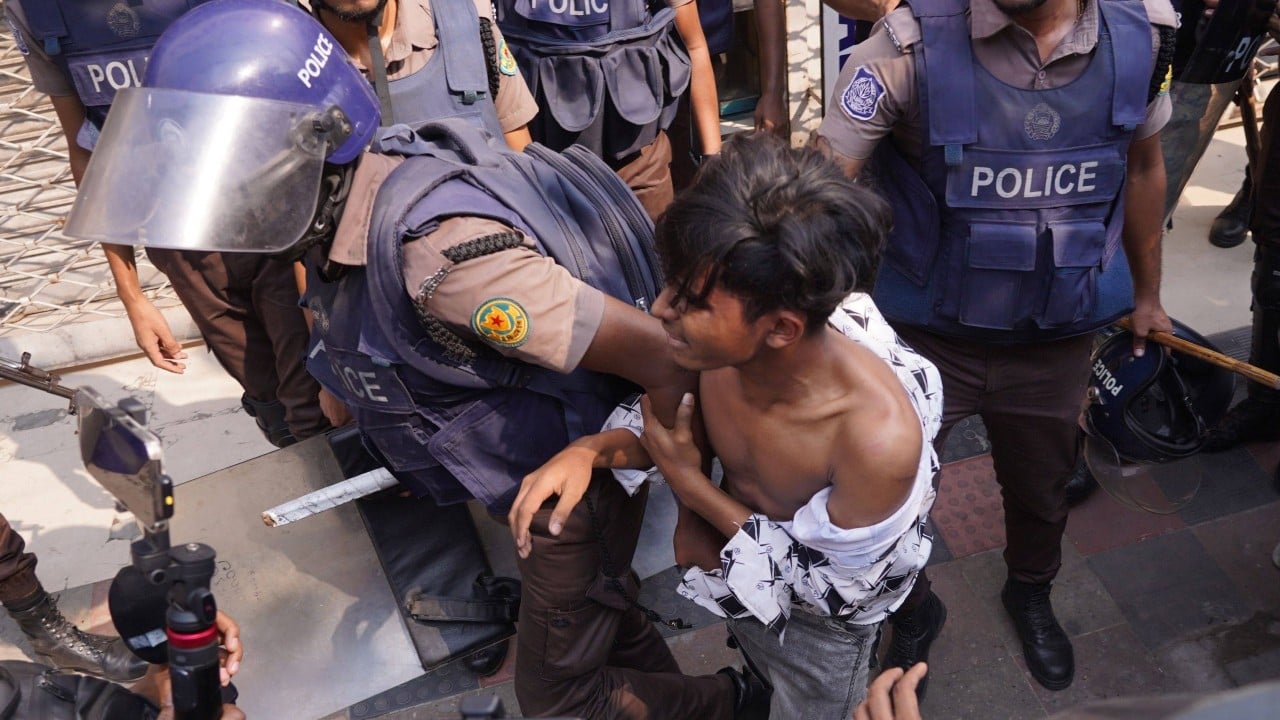
At 5:45 in the morning, before the Dhaka sun has fully burned through the river mist, the sound begins. It is not the roar of a factory floor. Not yet. It is the rhythmic, shuffling scrape of thousands of plastic sandals against concrete alleys in Gazipur and Ashulia.
Walk beside them for ten minutes and you will smell the diesel exhaust from the congested highways, the sharp tang of roadside tea, and the faint, metallic dust that clings to cotton fabric. You will see women wrapping their dupattas tightly against the morning chill, carrying small steel tiffin boxes filled with rice and lentils. They are walking back through iron gates that, just days ago, were locked behind clouds of tear gas and burning tires.
The headlines tell us that Bangladesh’s garment factories have reopened. The industry, they say, is returning to normal, though it remains "on edge."
Normal. It is a convenient word for a balance sheet. In the fluorescent-lit boardrooms of Western fashion retailers, "reopened" means the winter holiday shipments are moving again. It means the supply chain is unclogging. It means the cotton hoodies, the distressed denim, and the breathable athletic wear will arrive on racks in New York, London, and Berlin right on schedule.
But stand on the factory floor when the fluorescent tubes flicker to life and the industrial Juki sewing machines begin their deafening, synchronized chatter. Look at the hands guiding the fabric under the needle. There is nothing normal about the tension humming beneath the floorboards.
The Arithmetic of Survival
To understand why the streets of Dhaka erupted, and why the current quiet feels like a held breath, you have to abandon the macroeconomics of export quotas and look at the kitchen table of a hypothetical worker. Let us call her Rina.
Rina is twenty-six. She has spent eight years at an overlock machine, stitching the side seams of knitwear destined for European high-street brands. She is fast. Her fingers move with a muscle memory so refined she barely needs to look at the needle. She produces roughly one hundred and twenty pieces an hour.
For years, the minimum wage in Bangladesh’s ready-made garment sector sat at 8,000 taka a month—roughly seventy-three US dollars. Following intense, often violent street protests, the government-appointed wage board raised that minimum to 12,500 taka, or about one hundred and thirteen dollars. On paper, a fifty-six percent jump looks like a victory.
In reality, it is a math problem that refuses to solve itself.
Rina and her fellow workers were not demanding luxury. They were demanding 23,000 taka—around two hundred and eight dollars—because the world around them had become unaffordable. In Bangladesh, inflation has hovered stubbornly near ten percent, driven by surging energy costs and a weakening currency. The price of rice, cooking oil, lentils, and eggs has doubled in recent years. A single cramped room with a shared tin-roofed bathroom in an industrial suburb now eats up nearly half of Rina’s new paycheck before she has bought a single grain of salt.
When the 12,500-taka figure was announced, it did not feel like a raise. It felt like a verdict. It told four million workers—most of them women who migrated from rural villages to escape climate-battered farms and generational poverty—that their survival was simply too expensive for the global market to bear.
The Squeeze Nobody Sees
It is easy to cast the local factory owners as the sole villains in this drama. Many of them drive luxury SUVs through the gridlocked streets of Gulshan, living behind high walls guarded by private security. When strikes shut down production, they point to razor-thin profit margins, rising electricity tariffs, and the existential threat of losing orders to Vietnam, India, or Cambodia.
They are not entirely lying.
Think of the global apparel supply chain like an inverted pyramid balanced on a pin. At the top sit the massive Western fashion brands and retail conglomerates. They hold the design patents, the marketing budgets, and the consumer loyalty. At the bottom sits the sewing machine operator in Dhaka. Between them lies a brutal gauntlet of middlemen, sourcing agents, and factory owners competing in a relentless race to the bottom.
For the past three decades, the fundamental business model of fast fashion has relied on one unspoken rule: the price of clothing must never go up, even when the cost of everything else does. You can buy a cotton t-shirt today for less than you paid for one in 1998. That miracle of modern retail was not achieved through technological wizardry. It was achieved by squeezing the pin at the bottom of the pyramid.
When a global brand demands a five percent price cut from a Bangladeshi supplier to protect its quarterly earnings, the factory owner cannot negotiate with the cotton growers or the shipping conglomerates. Those prices are fixed by global commodities markets. There is only one variable cost left on the ledger that can be compressed, delayed, or denied.
Human labor.
I have sat in small, stifling union offices in Dhaka where worn-out ledgers are stacked to the ceiling, documenting decades of this quiet compression. You see it in the unpaid overtime targets that creep upward by ten pieces an hour every few months. You see it in the sudden dismissals of workers who speak too loudly about ventilation or maternity leave. When a factory owner claims that paying 23,000 taka will bankrupt the industry, he is revealing a terrifying truth about global capitalism: an entire eighty-five-percent chunk of Bangladesh’s export economy—worth over forty-five billion dollars a year—is built on the assumption that its workforce cannot afford to eat properly.
Inside the Factory Gates
Now that the gates have swung open again, the atmosphere inside the plants is thick with mutual suspicion.
Consider what happens when a factory reopens after weeks of labor unrest. The physical damage—broken windows, overturned security booths—is swept away quickly. The machines are oiled. The generators are primed. Yet the social contract, fragile as it was, has been shattered.
During the height of the protests, hundreds of factories were shuttered. Clashes between workers and industrial police left at least four workers dead and dozens injured. Thousands of unnamed workers were charged in police cases—a common tactic used to chill future organizing, leaving anyone who stepped onto the street vulnerable to arbitrary arrest months later.
So when Rina sits back down at her machine this week, she does not look at her supervisor the way she did a month ago. The supervisor, under immense pressure from management to clear the backlog of delayed shipments, patrols the aisles with a clipboard and a stopwatch. Every missed stitch, every bathroom break that lasts sixty seconds too long, becomes a flashpoint.
"We are sewing with our heads down," one union organizer told me recently, his voice raspy from days of shouting over megaphones and inhaling smoke. "They opened the doors because the buyers in America were threatening to cancel contracts. They did not open the doors because they solved our hunger."
This is the invisible reality behind the "on edge" headlines. Productivity in a garment factory is not purely mechanical; it relies on a delicate choreography of human focus. When four million people are exhausted, undernourished, and nursing fresh grief and anger, mistakes happen. Needles break. Seams pucker. Whole batches fail quality control. And every rejected carton costs the factory money, tightening the vise even further.
The History We Keep Forgetting
If this feels like a familiar story, it is because we have watched this exact tragedy play out before, with catastrophic results.
In April 2013, the Rana Plaza commercial building on the outskirts of Dhaka collapsed, killing 1,134 garment workers and injuring thousands more. The day before the collapse, cracks had appeared in the concrete pillars. Banks and shops on the lower floors immediately evacuated. The garment workers on the upper floors were ordered back to their machines because the factories had urgent deadlines to meet.
Rana Plaza forced a reckoning. International accords were signed, buildings were inspected, fire exits were unlocked, and structural safety improved dramatically across Bangladesh. The industry modernized its physical infrastructure, transforming itself into a global hub with more LEED-certified green factories than any other country on earth.
Yet while the concrete walls were reinforced, the economic floor beneath the workers was left to rot.
We fixed the buildings so they wouldn't fall on the workers, while leaving the wages so low that poverty crushes them slowly instead.
The protests that paralyzed Gazipur and Ashulia are the direct descendants of that unfinished business. They are a reminder that fire escapes and sprinkler systems mean very little to a mother who has to skip dinner so her child can have milk, or who cannot afford medicine when a seasonal fever sweeps through her slum.
The Illusion of Distance
It is tempting, sitting thousands of miles away, to view Bangladesh’s wage crisis as a distant, intractable problem of developing-world politics. We tell ourselves that economics is complicated, that boycotts hurt the very workers they aim to help, and that market forces must eventually find their own equilibrium.
That distance is an illusion. You are likely wearing the outcome of this negotiation right now.
Every time a brand signs a purchase order in Dhaka, it is implicitly setting the caloric intake of a family in Gazipur. Some major global retailers issued public statements during the unrest, urging the Bangladeshi government to negotiate a fair wage and respect workers' rights. Those letters make for reassuring corporate social responsibility reports.
They ring hollow, however, unless those same brands are willing to pay more per garment to fund the raise.
You cannot demand ethical labor practices at unethical prices. If a retailer applauds a fifty-six percent minimum wage hike in a press release while refusing to adjust its Free-On-Board purchasing prices by even a few cents per shirt, it is not supporting workers. It is simply demanding that the factory owner perform a magic trick—pulling living wages out of thin air while keeping the retail price tag untouched.
The math is shockingly simple. Adding fifty cents to the wholesale cost of a garment—a fraction of a percent on a thirty-dollar retail price—would easily fund a genuine living wage across the entire Bangladeshi sector. Consumers wouldn't even notice the difference at checkout. Brands would barely see a ripple in their gross margins.
Yet the system resists even that tiny concession, terrified that whoever blinks first will lose market share to a cheaper rival.
The Sound Before the Storm
Walk back out of the factory gates at 8:00 PM, when the evening shift finally spills into the dark alleys of Ashulia.
The streetlamps flicker weakly against the humidity. Street vendors hawk fried snacks and cheap plastic toys under bare bulbs. The workers walk slower now, their shoulders slumped, rubbing the stiff muscles between their shoulder blades where eight to ten hours of leaning over a needle have left their mark.
They stop at the small grocery stalls, counting out crumpled taka notes for a kilo of coarse rice and a handful of green chilies. They do the mental arithmetic—subtracting the rent, subtracting the debt owed to the local clinic, subtracting the money sent home to aging parents in the village. They look at what is left in their palms. It is not enough. It was not enough yesterday, and despite the new wage decree, it will not be enough next month.
The factories are open. The containers are moving toward the port of Chattogram. The ships are being loaded for the long voyage across the Indian Ocean and the Suez Canal, bound for the shopping malls of the West.
Everything looks quiet from a satellite. Everything looks like business as usual on a quarterly earnings call.
Listen closer, though, to the steady, relentless clack-clack-clack of four million sewing machines running through the night. That is not the sound of an industry at peace. It is the ticking of a clock.