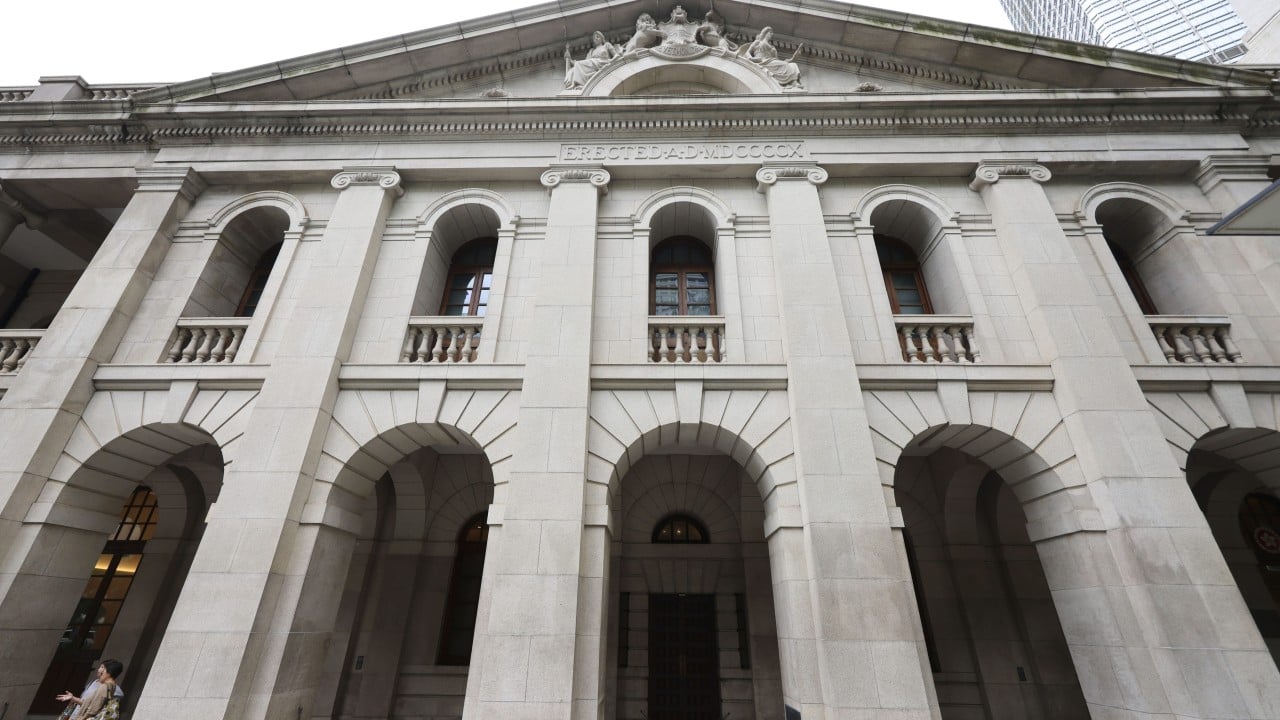
Twenty-fourth.
On a spreadsheet, a number like twenty-four looks almost polite, even respectable, sitting comfortably inside the top quarter of a global index while ferries still slice across Victoria Harbour and glass towers catch the late-afternoon glare. You can stand on the Star Ferry pier, smell diesel and salt water, watch suit-clad executives speed-walk past noodle stalls in Central, and think nothing has cracked. The concrete is solid. The elevators run on time. The clearinghouses hum.
Yet a slip in a global rule of law index rarely announces itself with sirens. It arrives in quieter ways: a covenant rewritten just in case, a boardroom pause before signing a long-horizon contract, a young lawyer asking whether precedent still holds the same weight when political gravity leans in one direction. When an overall score falls and a city lands at twenty-fourth globally, the headline reduces decades of legal architecture to a single ranking, leaving most readers wondering what that drop actually costs the people living inside it.
I have spent years sitting in courtrooms, legal clinics, and commercial dispute rooms where abstract doctrines turn into lived consequences. Law sounds dry until you watch a small-business owner try to collect on an unpaid invoice, or a tenant fight an eviction notice, or a journalist weigh the risk of publishing a sentence. That is where rule of law stops being a political science phrase and becomes oxygen.
What Twenty-Fourth Actually Measures
To understand why a dip in the rule of law index matters beyond diplomatic headlines, it helps to strip away the jargon. Rule of law is not merely a thick stack of statutes or a row of marble pillars. At its core, it is a shared wager: that rules bind everyone, including the people who write or enforce them, and that disputes are settled by predictable standards rather than whim or raw power.
When a global index records a lower overall score for Hong Kong and places it twenty-fourth worldwide, it is tracking friction across multiple dimensions—constraints on government powers, absence of corruption, fundamental rights, open government, regulatory enforcement, and civil and criminal justice. No single metric tells the whole story on its own, and rankings inevitably spark fierce debate over methodology, weighting, and perception surveys.
Still, I will be candid: reading legal indices can feel dizzying. One report emphasizes commercial predictability and contract enforcement; another highlights civic space, judicial independence, or institutional checks. Sometimes those threads pull in opposite directions, leaving even seasoned observers uncertain about which trend carries the heaviest weight over ten or twenty years.
(Note: The following character and scene are a hypothetical scenario constructed to illustrate how legal shifts ripple through everyday decisions.)
Picture Clara, a hypothetical commercial litigator in her late thirties who has spent twelve years advising mid-sized logistics and fintech firms in Hong Kong. On a humid Tuesday morning in Central, she sits across from a founder trying to raise Series B capital from overseas limited partners. The product works. The margins are real. Yet the investors' counsel keeps circling back to one question: if a dispute arises over cross-border data or shareholder rights, how predictable is the local enforcement path, and what happens if regulatory priorities shift mid-stream?
Clara does not need to quote a ranking to feel the pressure in that room. When an overall score slides, risk premiums do not jump overnight like a stock market crash. They seep into term sheets like dampness through drywall—slowly, unevenly, changing how much trust people are willing to extend without extra protection.
The Invisible Ledger of Trust
Trust is the quiet engine of every harbor city. Long before container ships or high-frequency trading algorithms, Hong Kong built its reputation on a bargain that merchants, sailors, and bankers could grasp instinctively: your word and your contract meant something even if you were far from home.
Using a metaphor helps here. Think of the legal system as the hull of a ship. When the hull is sound, the crew focuses on wind, tides, and cargo; they rarely stare down at the timber beneath their boots. A lower score in a rule of law index does not mean the ship is sinking today. It means water is beginning to seep through a seam somewhere below deck, forcing the crew to spend more energy bailing and inspecting every plank.
Why does that matter to someone who never sets foot in a boardroom? Because law governs ordinary life long before it governs billion-dollar mergers. It shapes whether a landlord can arbitrarily lock out a shopkeeper, whether a whistle-blower or civil servant has clear procedural guardrails, whether regulators apply rules evenly across domestic and foreign players, and whether ordinary citizens trust that the referee is not playing for one side.
Consider what happens next when confidence in institutional guardrails softens:
- Contracts grow defensive. Parties add extra arbitration clauses, offshore escrow accounts, or shorter timelines because long-term certainty feels less guaranteed.
- Self-correction slows down. When institutions face fewer external checks or narrower space for public scrutiny, blind spots linger longer before anyone fixes them.
- Talent recalibrates. Professionals—lawyers, compliance officers, founders, educators—quietly weigh where their skills and ethical compasses fit best over the next decade.
None of these shifts requires a dramatic collapse. Small adjustments compound. A five-percent hesitation here, an extra layer of legal review there, a quiet preference for neutral forums elsewhere—over years, those micro-decisions reshape where capital lingers and where roots grow deep.
Commercial Strength Versus Civic Guardrails
One of the sharpest tensions in discussions around Hong Kong is the belief that commercial law can remain airtight even as broader civic and institutional scores slip. Supporters of that view often point to the city's common law heritage, bilingual legal profession, deep capital markets, and ongoing role as a conduit between mainland China and global finance. They argue that commercial disputes, arbitration, and financial regulation operate on a pragmatic track that keeps business humming regardless of political crosswinds.
There is real weight to that argument. Practicality has kept Hong Kong resilient through past shocks, recessions, and transitions. Courts and arbitral bodies still handle complex commercial matters every day, and many businesses continue to operate smoothly.
But the real problem lies elsewhere: can a legal system permanently separate commercial predictability from broader rule-of-law health?
History suggests that the boundary is porous. Law is a single ecosystem, not a set of hermetically sealed drawers. When questions arise about judicial independence, prosecutorial discretion, press freedom, or the scope of national security and administrative powers, those questions inevitably touch how people perceive predictability across the board. Even if a commercial contract is drafted with surgical precision, investors and citizens alike ask how the broader environment treats dissent, transparency, and institutional accountability.
I have seen this tension play out in both directions during my years watching legal transitions. Sometimes officials and defenders of the system insist that statistics and outside indexes misunderstand local realities or apply foreign yardsticks. Sometimes critics read every dip in a score as proof of total systemic decay. Both extremes flatten a complicated reality. A twenty-fourth-place ranking and a falling overall score are neither a death sentence nor a trivial footnote; they are a signal that friction is rising and that the margin for error is narrowing.
What People Actually Ask When the Score Drops
When news breaks that Hong Kong's overall rule of law score has fallen and placed it twenty-fourth globally, people rarely talk in index jargon around the dinner table. They ask blunt, practical questions.
First, they ask whether this means the courts have stopped working tomorrow. No. Legal systems do not switch off like a light bulb. Hearings still take place, contracts are still enforced, and lawyers still argue cases every day. The concern is directional and structural: whether standards are tightening, narrowing, or becoming less insulated from non-legal pressures over time.
Second, they ask why a drop matters if Hong Kong is still ahead of dozens of other economies. Because standing still or slipping backward carries a different meaning for a place that staked its identity on being a premier global hub. When your pitch to the world is exceptional reliability, moving from the top tier toward the middle—or seeing your score trend downward—forces a harder justification for every fee, every relocation, and every long-term bet.
Third, they ask whether anything can reverse a slide once it starts. Rebuilding or defending rule-of-law credibility is slow work. It requires consistency over years rather than a single press release—transparent procedures, evenhanded enforcement, respect for legal professionals, and genuine space for accountability. Rules gain authority not by being shouted, but by being applied fairly when doing so is inconvenient.
The Cost of Looking Away
It is tempting, especially when life is busy and bills are due, to treat global rankings as noise generated far away by researchers who do not live with local realities. I understand that impulse. After all, you cannot pay rent with an index score, and you cannot dine out on a policy brief.
Yet the invisible stakes are precisely the ones that shape rent, jobs, opportunity, and voice five years down the road. Law is the stage on which every other ambition plays out. If the stage tilts even slightly, every actor on it has to adjust their footing.
Standing by Victoria Harbour at dusk, the lights along the waterfront still look sharp enough to cut glass, reflecting on dark water that never stops moving.