Across Pennsylvania, crews are tearing down 19th-century stone and timber mill dams to eliminate drowning hazards, restore migratory fish runs, and cut municipal liability costs. Built during the industrial boom to grind grain, saw lumber, and forge iron, these low-head structures outlived their economic purpose more than a century ago. Today, they sit as crumbling concrete and masonry walls across thousands of miles of creeks and rivers, trapping sediment, warming cold-water trout streams, and creating lethal hydraulic currents that trap swimmers and paddlers. Removing a single 150-year-old dam restores natural river flow within days, turning a stagnant, silt-choked impoundment back into a self-sustaining waterway.
Pennsylvania leads the entire United States in dam removals, having dismantled hundreds of obsolete barriers over the past two decades. Yet the state still holds thousands of aging structures, many of them uninspected, poorly documented, or orphaned by defunct businesses. The push to tear them down is rarely a simple environmental crusade. It is an urgent collision of public safety, crumbling infrastructure liability, and hard-nosed economics.
Why 19th-Century Mill Dams Became Modern Liabilities
In the 1800s, water power was the engine of the American economy. Every rural township in Pennsylvania needed a gristmill, a sawmill, or a tannery, and building a low-head dam—typically between four and fifteen feet tall—was the easiest way to divert water into a millrace and turn a waterwheel. These structures were engineered with stacked fieldstone, timber cribbing, and early mortar, designed for local utility rather than century-scale permanence.
When steam, coal, and the electrical grid arrived, the mills closed. The dams stayed behind.
Over the following decades, ownership fractured. A mill property might be subdivided into residential lots, sold to a local municipality, or abandoned altogether when the last corporate owner dissolved. The physical structure remained in the riverbed, silently deteriorating through freeze-thaw cycles, spring floods, and ice jams.
The primary driver behind most modern removals is not ecological nostalgia—it is liability. Under Pennsylvania law, the owner of a dam is legally responsible for the damage caused if that structure fails, as well as the safety of anyone who enters the water around it. For a cash-strapped borough, a private homeowner, or a local watershed association, owning a decaying 150-year-old dam is a financial time bomb.
The Drowning Machine Effect
Low-head dams look harmless. From upstream, a five-foot drop across a creek resembles a gentle waterfall or a calm wading pool. That visual deception makes them among the deadliest structures in civil engineering.
When water pours evenly over the crest of a low-head dam, it plunges to the riverbed and creates a submerged hydraulic jump—a powerful, recirculating backwash that pulls water and floating objects backward toward the face of the dam. Unlike natural rapids, which push debris downstream, a low-head hydraulic traps whatever enters it in a relentless vertical washing-machine cycle.
The aerated water at the base of the dam also loses buoyancy. Even strong swimmers wearing personal flotation devices can be pushed down repeatedly until exhaustion sets in. Rescue teams call them drowning machines for good reason, and attempting a rescue without specialized swift-water gear frequently claims the lives of first responders alongside the original victims.
How Crews Dismantle a 150-Year-Old Barrier
Tearing down a dam that has held back water for a century and a half requires far more than rolling an excavator into the creek and swinging a hydraulic hammer. A century of trapped silt, organic debris, and sometimes legacy industrial pollutants sits piled behind the wall. Release that material all at once, and you suffocate miles of downstream aquatic habitat.
Sediment Management and Testing
Before a single stone is moved, engineers core-sample the impoundment—the slow-moving pool behind the dam—to measure sediment depth and test for heavy metals, polychlorinated biphenyls, or agricultural runoff. In rural watersheds where the mill simply ground corn or wheat, the trapped sediment is usually clean alluvial soil and leaf litter. In valleys that once hosted tanneries, foundries, or textile mills, the mud can contain lead, arsenic, or chromium.
If the sediment is clean and minimal, contractors often use a notching technique. They cut a controlled gap into the dam wall, allowing the water level to drop gradually over several weeks so the river can flush the fine silt downstream at a natural pace during moderate flows. If the sediment load is massive or contaminated, crews must first construct cofferdams to divert the stream, excavate the legacy mud by hand or machine, and haul it to an upland disposal site before touching the dam structure itself.
Deconstruction and Channel Stabilization
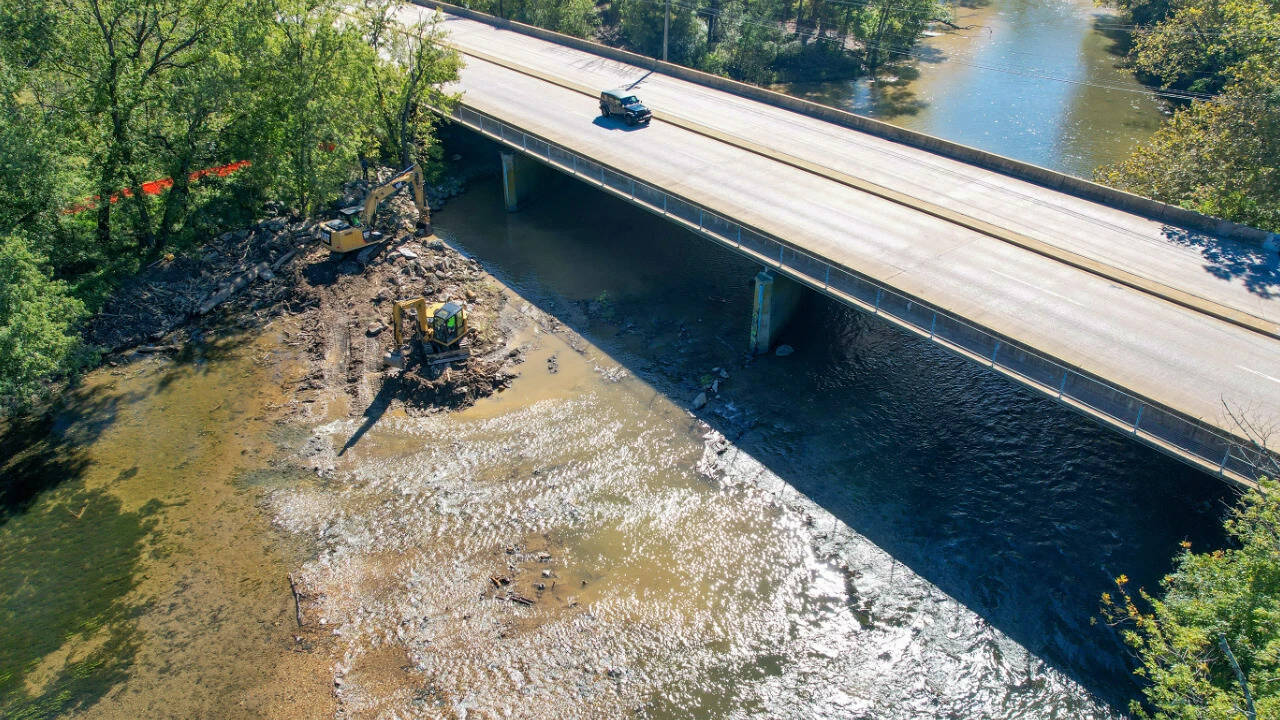
Once the water is diverted or drawn down, heavy excavators equipped with hydraulic breakers dismantle the dam from the top down. Historic timber cribbing—often preserved remarkably well by decades of oxygen-free submersion—is pulled from the riverbed alongside hand-cut stone blocks and later concrete patches.
Removing the wall exposes a flat, featureless mudflat where the impoundment used to be. Left alone, the river would carve an unstable, eroding trench through that soft earth. Restoration specialists immediately regrade the exposed banks, install rock vanes or root wads to direct current away from eroding shorelines, and plant native riparian grasses and shrubs to lock the soil in place before the next major rainstorm arrives.
What Happens When the Water Runs Free
The ecological response to a dam removal is immediate and dramatic. Within hours of the final breach, the stagnant, sun-baked pond disappears, replaced by a narrower, faster-moving channel shaded by trees.
Water temperature drops quickly. Shallow impoundments act like solar collectors during Pennsylvania summers, heating water past the thermal tolerance of native brook trout and other cold-water species. Restoring flow lowers summer water temperatures by several degrees, reconnecting fragmented cold-water refuges across the watershed.
Reopening Blocked Migration Corridors
For migratory fish, a five-foot stone wall is as impassable as a skyscraper. Species like American shad, river herring, and American eel evolved to move freely between coastal waters and inland headwaters to spawn and mature. In the Susquehanna and Delaware River basins, centuries of mill dam construction cut off thousands of miles of historic spawning habitat.
When a barrier comes down, the biological return happens without human stocking. Freshwater mussels—whose larvae hitchhike on the gills of migratory fish to disperse upstream—begin recolonizing newly opened reaches. Macroinvertebrates like mayflies and stoneflies replace the pollution-tolerant worms and midges that dominated the silty impoundment bottom, rebuilding the aquatic food web from the bottom up.
The Friction Nobody Talks About
Despite the clear safety and ecological math, dam removals rarely happen without fierce local pushback. To a conservation biologist, a 150-year-old mill dam is a barrier to river health. To a nearby resident who grew up fishing off the spillway or skating on the frozen millpond, that structure is a cherished community landmark.
Aesthetic Attachment vs Ecological Reality
People bond with the landscape they know. Over a century, a flatwater millpond becomes home to painted turtles, great blue herons, and bass anglers who prefer casting into calm water rather than wading a rocky riffle. When the dam comes out, the immediate aftermath looks raw: exposed mud banks, tangled roots, and a creek that suddenly looks half as wide as it did the week before. Even though native wildflowers and trees cover those banks within two growing seasons, the initial shock breeds resentment.
Historic preservationists also raise legitimate objections. Stone mill dams represent the physical craftsmanship of early American engineering. Tearing them down erases a tangible piece of local industrial history. In response, many modern removal projects salvage dressed stone from the dam to build interpretive walls, trailheads, or historical markers along the riverbank, preserving the story of the mill without keeping the hazard in the water.
Property Values and Well Water Fears
Adjacent landowners frequently worry that draining an impoundment will lower the local water table and dry up nearby residential wells, or reduce property values by replacing waterfront pond views with creek frontage.
Hydrogeological studies consistently show that low-head mill dams rarely recharge deep bedrock aquifers—most residential wells tap water far below the shallow influence of a creek. As for property values, studies across the Northeast indicate that homes along restored, free-flowing rivers typically hold or gain value once riparian vegetation matures, particularly when the removal eliminates flood-prone backwater effects. Still, overcoming those fears requires months of public meetings, transparent engineering data, and direct engagement long before machinery arrives on site.
The Economics of Removal Versus Repair
For dam owners, the ultimate deciding factor almost always comes down to the balance sheet. Under Pennsylvania Department of Environmental Protection regulations, owners of regulated dams must maintain emergency action plans, fund regular engineering inspections, and repair structural deficiencies identified by state inspectors.
Consider a hypothetical scenario common across rural Pennsylvania: a small township inherits a 12-foot stone-and-concrete mill dam built in 1875. State inspectors find severe scour undermining the spillway apron and order mandatory repairs to prevent a breach during a 100-year flood. Bringing that obsolete structure up to modern safety standards—reinforcing the foundation, rebuilding the spillway, and installing safety signage—can easily cost between $800,000 and $1.5 million. And once repaired, the township still faces ongoing maintenance bills, inspection fees, and permanent liability insurance every single year.
Removing that exact same dam typically costs a fraction of the repair bill—often between $150,000 and $400,000—and federal and state grants from agencies like the U.S. Fish and Wildlife Service, the National Oceanic and Atmospheric Administration, and Pennsylvania's Growing Greener program routinely cover 75 to 100 percent of the demolition and restoration expenses.
Once the excavators leave, the maintenance budget drops to zero. The liability vanishes. The river handles the rest of the work on its own.