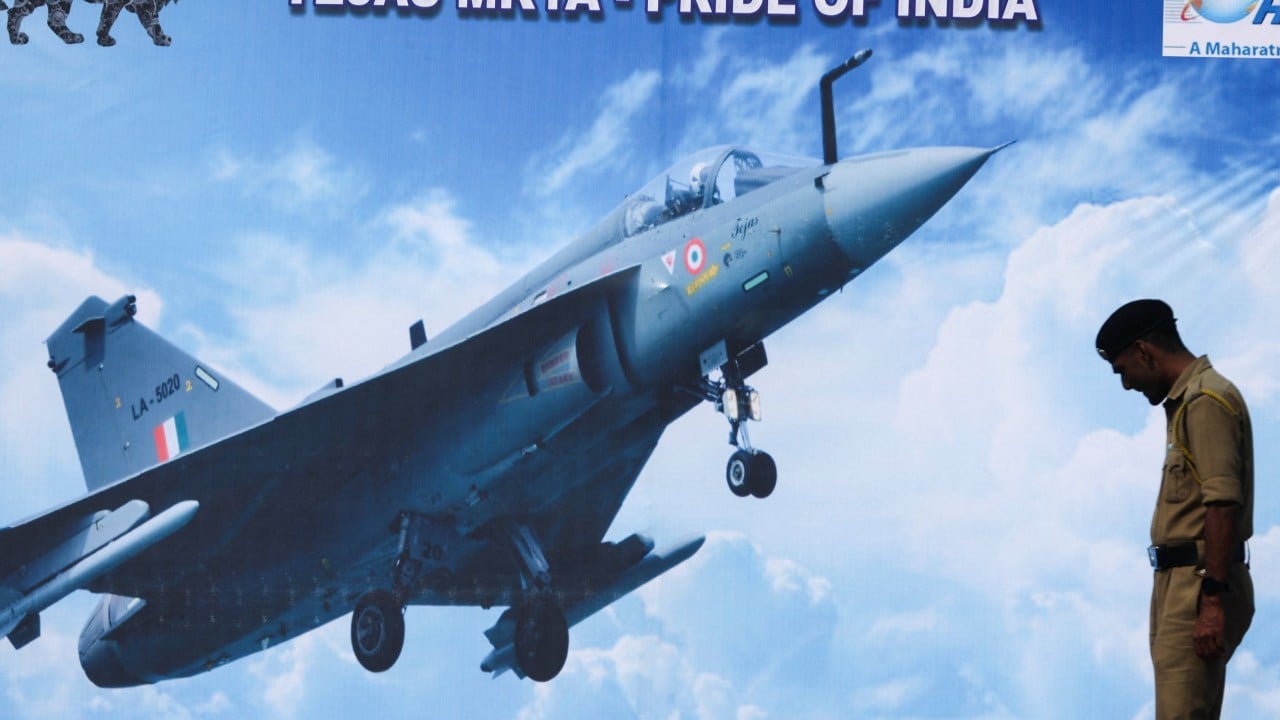
Dawn breaks over a high-altitude airbase in northern India, and the air smells faintly of burned kerosene and cold iron. On the tarmac, a single fighter jet sits ready, its titanium skin catching the first pale light while two more bays beside it stand empty.
Wait. Empty?
In defense briefings, a shrinking fleet looks like a neat line on a spreadsheet: thirty-one squadrons instead of the forty-two authorized. Analysts argue over procurement delays, engine deliveries, and multi-billion-dollar budgets. It is easy to read those figures from a comfortable chair and treat them like weather reports—something happening somewhere else, to someone else.
It isn't.
A squadron isn't just eighteen or twenty airplanes with roundels painted on the wings. It is a living ecosystem of pilots who have spent a decade learning how to read a radar scope at four hundred knots, crew chiefs who know the pitch of a turbine spooling up by ear, and young officers who leave families behind on cold mornings without knowing when they will see them next. When a hangar sits empty, that human rhythm breaks.
To make the human stakes concrete, the vignettes in this article use composite, hypothetical characters modeled on real operational pressures inside the Indian Air Force and India's aerospace industry—not real individuals.
Where the Numbers Turn Personal
Picture Squadron Leader Vikram Nair—a hypothetical pilot standing beside a MiG-21 Bison in the pre-dawn chill. His breath plumes white in the thin mountain air. He has flown airframes built decades before he was born, machines that demand constant vigilance because metal fatigue and aging avionics don't care how brave a pilot is.
Vikram knows the arithmetic of his service better than any policy paper. When squadron strength drops into the low thirties, every remaining jet carries heavier weight. Training hours get squeezed. Maintenance crews work longer shifts under fluorescent lights that hum long after midnight. A pilot doesn't walk onto a flight line thinking about geopolitical theory. He thinks about his wingman, his fuel state, and whether the replacement parts scheduled to arrive last quarter are sitting on a dock somewhere waiting for customs clearance or engine delivery.
That gap between what India needs and what its factories deliver fast enough is the central friction of modern Indian defense. On paper, the requirement is clear: forty-two fighter squadrons to deter simultaneous threats across two volatile frontiers. In reality, retiring aging jets—especially the final MiG-21s—while waiting on domestic production and foreign supply chains has left the Indian Air Force operating closer to thirty-one squadrons.
Why does a shortfall of roughly a dozen squadrons matter so much? Because air power isn't a stockpile you can simply double overnight during a crisis. Pilot conversion takes years. Spare parts take months. Trust in an aircraft takes hundreds of sorties.
A Metaphor for Industrial Gravity
Building a modern fighter jet is like trying to assemble a Swiss watch while riding a freight train through a blizzard.
That metaphor helps explain why a nation can launch lunar missions and build world-class software yet still struggle to ramp up fighter production at wartime speed. A modern combat aircraft isn't a single invention. It is tens of thousands of precision components—flight-control computers, active electronically scanned radars, ejection seats, carbon-fiber airframes, and high-thrust turbofans—that must all arrive in exact sequence.
Hold one piece back, and the entire assembly line slows to a crawl.
For decades, India relied heavily on imported hardware, buying aircraft off the shelf from Russia, France, and Britain. Buying ready-made jets solves an immediate problem, yet it leaves a structural vulnerability: when supply chains tighten or geopolitics shift, foreign deliveries slow down, and indigenous know-how stays shallow. Shifting toward self-reliance—Atmanirbhar Bharat—is meant to break that dependency.
But ambition doesn't bend metallurgy to its will.
Consider what happens next on the shop floor in Bengaluru, where engineers at Hindustan Aeronautics Limited (HAL) work to scale production of the indigenous Tejas light combat aircraft, including the upgraded Mk1A variant. Imagine a hypothetical chief systems engineer, Meera Kulkarni, staring at a whiteboard covered in supply-chain milestones. Her team has solved aerodynamically tricky problems with composite wings and digital fly-by-wire controls. Yet even when the airframe is ready to roll out, pacing items like aero-engines—famously sourced from American supplier GE Aerospace—have faced delivery bottlenecks that ripple straight through the production schedule.
When engine deliveries slip, finished airframes wait. When airframes wait, squadron induction slips. And when squadron induction slips, pilots who trained for a certain timeline find themselves waiting on aircraft that haven't arrived.
Why Speed Is the Hardest Ingredient
People often ask a deceptively simple question: If India knows it needs more fighter jets, why doesn't it just order more from abroad right now?
It is a fair question, and the honest answer is uncomfortable. Ordering foreign fighters isn't like ordering delivery food. Production lines overseas are already stretched by global conflicts and rearmament waves. Even fast-track deals take years from contract signature to squadron readiness, and they carry massive price tags and long-term maintenance commitments.
Another common question follows right behind it: Can't domestic production simply surge once a design is approved?
Aerospace manufacturing doesn't scale like smartphone assembly. Every weld, composite cure cycle, and avionics test requires strict certification because failure at supersonic speed is unforgiving. Ramp-up curves in fighter aviation are notoriously steep; moving from a handful of jets a year to dozens requires deep private-sector supplier ecosystems, test pilot bandwidth, and uninterrupted component flows.
Admitting this doesn't mean the effort is doomed. It means the challenge is real, technical, and stubborn. Anyone watching the numbers should feel a healthy skepticism toward promises of instant fixes—and a sober respect for how hard it is to build sovereign aerospace capability from the ground up.
The Quiet Strain Inside the Ranks
Behind every delayed delivery is a human adjustment.
Think back to Vikram Nair walking back from a debriefing room, his flight suit smelling of jet fuel and stale coffee. A younger pilot asks when the newer jets will reach their base in meaningful numbers. Vikram gives the careful, measured answer officers learn to give—something about timelines, upgrades, and staying sharp on what they have today.
Inside, he feels the strain that isn't printed in defense white papers. Fewer jets mean less slack in the system. If weather grounds sorties for three days or a maintenance issue pulls an aircraft off the line, the schedule compresses. Pilots fly harder to keep currency; ground crews push through fatigue because the mission board still has to be met.
Even public perception swings wildly. One week, headlines celebrate a test flight or a defense expo showcase. The next week, a delivery delay sparks frustration and blame. For the people who spend their careers in hangars and cockpits, that whiplash can feel strangely detached from daily reality—where the work is methodical, repetitive, and demanding.
What Changes When the Bottlenecks Ease
The tension doesn't have to stay locked in gridlock forever. When supply chains untangle and domestic production hits its stride, the release isn't just statistical—it is felt in breathing room.
Imagine the same hangar two or three years down the line, again using a hypothetical snapshot grounded in real industrial goals. Engines arrive on schedule. Sub-assemblies from Indian private partners feed smoothly into final assembly lines. New jets roll out, pass acceptance checks, and join operational squadrons at a steady cadence.
Suddenly, the pressure eases.
Training cycles become more predictable. Aging fleets can be retired without leaving gaping holes in coverage. Young pilots get modern cockpits with better sensors and survivability, reducing the cognitive load of flying in contested airspace. Engineers see the tangible payoff of years of design iterations and testing—not as a prototype in a hangar, but as a dependable machine in service.
Stronger domestic manufacturing also changes India's negotiating leverage abroad. When you can build credible platforms at home, foreign partners treat you less like a captive buyer and more like a serious co-developer. That shift takes patience—more patience than modern news cycles usually allow—but it builds lasting strength rather than temporary relief.
The Sound Over the Ridge
Night falls again over the airbase, and the radar sweeps its quiet, patient circle against the dark. Somewhere in a workshop miles away, a machinist checks a tolerance to a fraction of a millimeter, knowing that a tiny error on the ground becomes a huge problem at thirty thousand feet.
Power in the sky is never measured only by how loud an afterburner roars. It is measured by what stands behind the pilot when the engines light—the factories that kept pace, the parts that arrived on time, and the steady hands that refused to cut corners.
Listen closely on a clear morning near an active runway, and you can hear the future taking shape in the rhythm of the engines—not yet all at once, not yet fast enough for every worry, but rising toward the sky one hard-won aircraft at a time.


